Upstream Thinking — South West Water Catchment Management Programme (UK)
United Kingdom
Since 2010, South West Water has paid 2,000+ Devon and Cornwall farmers to cut diffuse pollution across 144,120 ha, investing …
Australia · Melbourne · See the Australia profile
Melbourne has kept the public and farming out of its mountain-ash forest catchments since 1879, so over 65% of its drinking water now needs only minimal treatment — a policy Melbourne Water calls cheaper than fully treating all supply, though bushfires remain a recurring risk.
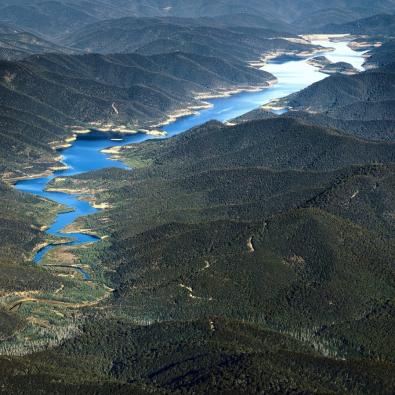
Melbourne draws the majority of its drinking water from forested mountain catchments in the Yarra Ranges and Central Highlands rather than from rivers running through farmland or cities. Public access restrictions on the Yan Yean catchment date to 1879, after poor water quality forced the Melbourne and Metropolitan Board of Works to act; by 1928 a formal agreement reserved 45,000 acres of Upper Yarra state forest for water supply, and today catchment areas have been closed to the public for over a century.
Melbourne Water's roughly 163,000-hectare total catchment area includes 80,500 ha of national park, 68,500 ha of state forest, 7,900 ha of Melbourne Water freehold land, 4,100 ha of Crown land and 2,000 ha of private freehold, kept closed to public access and farming.
Because these closed, largely undisturbed mountain-ash forests act as a natural filter, over 65% of Melbourne's water requires only disinfection rather than full filtration - Melbourne Water states this is 'more effective and less costly' than treating all of the city's supply to the same standard as unprotected catchments.
The approach is not without risk: the 2009 Black Saturday and 2019 bushfires burned close to Melbourne's Upper Yarra and Thomson catchments, and post-fire ash and sediment can force reservoirs offline for months, illustrating that avoided-cost watershed protection still requires active, ongoing fire and erosion management rather than passive conservation alone.
Where this practice's information was retrieved from, and when.
United Kingdom
Since 2010, South West Water has paid 2,000+ Devon and Cornwall farmers to cut diffuse pollution across 144,120 ha, investing …
United States of America
After 1996 and 2002 wildfires choked Denver's reservoirs with sediment, Denver Water and the US Forest Service treated 120,000+ acres …
Ecuador
Since 2000, Pimampiro's municipal water fund has paid 27 upstream households US$8–12 per hectare per year to conserve 638 hectares …
United States of America
By protecting 75% of the Quabbin, Ware River and Wachusett watersheds as forested open space and buying about 1,500 acres …
Open full copilot Grounded in cited practices — always check the sources.