Kosovo's 30% Gender Quota for Assembly Candidate Lists (Law No. 03/L-073, 2008)
Kosovo's Law No. 03/L-073 (2008) mandates ≥30% of each gender on Assembly candidate lists, alternating every 3 names. Women's Assembly …
Mongolia · Ulaanbaatar · See the Mongolia profile
Mongolia's 2023 electoral reform raised its gender candidate quota from 20% to 30% and introduced an alternating list, expanding parliament to 126 seats. Women's representation rose from 17.1% (2020) to a record 25.4% (32/126 seats) at the 2024 election.
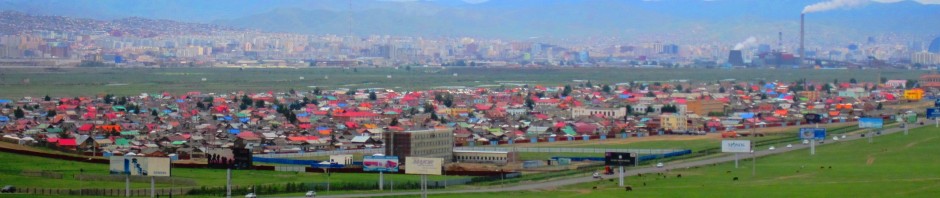
Mongolia introduced a mixed-member electoral system with a 20% women-candidate quota in 2011. A May 2023 constitutional amendment expanded the State Great Khural from 76 to 126 seats, restructured it into proportional-representation and constituency tiers, and raised the candidate quota to a minimum 30% for one gender, with parties required to alternate male and female candidates ("zipper" lists) on their proportional-representation slates. The General Electoral Commission can reject nomination lists that fail to meet the quota. Implementation was supported by UNDP Mongolia's 2021–2025 programme, funded by Korea's KOICA, working with the Secretariat of the National Committee on Gender Equality and the General Electoral Commission.
In the 28 June 2024 election — the first under the new system — 519 women stood as candidates, a record, and 32 women were elected out of 126 seats (25.4%), up from 13 of 76 seats (17.1%) in 2020. International IDEA describes this as exceeding the Asia-Pacific regional average (21.5%) and approaching the global average (26.9%).
The gains came almost entirely through the proportional/list mechanism: 24 of the 32 women elected won via party lists, while only 8 of 316 women constituency candidates won direct seats — a roughly 2.5% success rate in first-past-the-post races, per analysis by the University of British Columbia's Mongolia Focus project. A further quota increase to 40% is planned for the 2028 election. UNDP's own reporting notes a persistent gap between formal quota gains and underlying social attitudes: its cited 2023 Gender Social Norms Index found 97% of Mongolians hold some bias against women in leadership roles.
Read the full analysis: https://blogs.ubc.ca/mongolia/2024/women-mps-in-2024-election-result/
Implementation detail (cost, timeline, staffing, conditions for success) is not yet available for this practice.
Where this practice's information was retrieved from, and when.
Kosovo's Law No. 03/L-073 (2008) mandates ≥30% of each gender on Assembly candidate lists, alternating every 3 names. Women's Assembly …
Moldova
Moldova's Law No. 71/2016 requires ≥40% of each sex on party candidate lists for parliamentary and local elections. Women's share …
Armenia
Armenia's 2016 Electoral Code caps either sex at 70% of a party's list and requires gender alternation every 3 names. …
Togo
Togo's 2013 Electoral Code (Article 220) requires party candidate lists to alternate equally between women and men, one of only …
Open full copilot Grounded in cited practices — always check the sources.