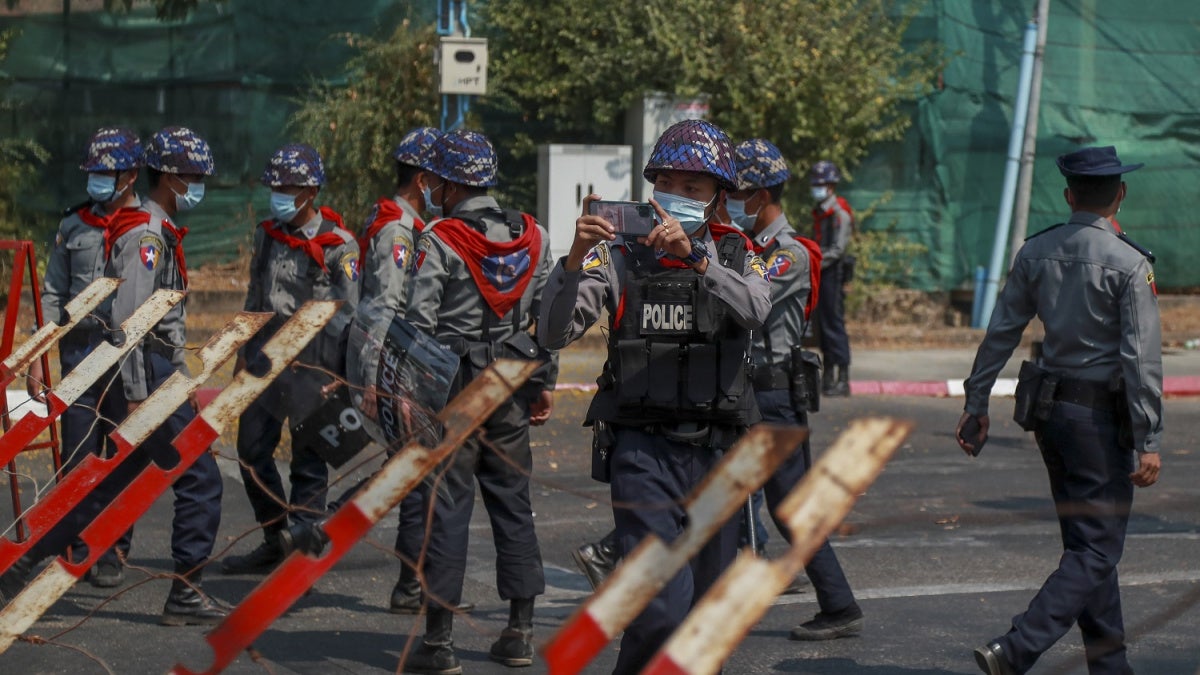
In Dec 2020 Myanmar activated 335 Huawei-supplied facial-recognition and licence-plate cameras in Naypyidaw; after the 2021 coup the junta expanded 'Safe City' networks to 10+ cities with no data-protection law, per HRW and Reuters reporting.
335 cameras
AI-enabled CCTV cameras activated in Naypyidaw (December 2020)
8 townships
Townships covered in Naypyidaw (December 2020)
~2.9 USD million (~4 billion kyat)
Naypyidaw system cost (2020)
60 days
Footage retention period (2020)
~1.5 USD million
Mandalay Safe City contract value (post-2021 coup)
200+ cameras
Dahua cameras deployed in Mawlamyine (post-2021 coup)
Details
Maturity
Scaling
Promoter
Naypyidaw City Development Committee / Myanmar Police Force
Period
2020–2022 (ongoing under military junta)
Keywords
public security, surveillance, law enforcement, facial recognition
Context
In December 2020, authorities in Naypyidaw activated 335 AI-enabled CCTV cameras, supplied by Huawei, across eight townships of Myanmar's capital. The cameras combine facial recognition with automatic licence-plate recognition and alert police when a scanned face or plate matches a 'wanted' watchlist. Human Rights Watch and Biometric Update report the system cost roughly $2.9 million (about 4 billion kyat) and retains footage for 60 days at a central control room.
Activities
Following the February 2021 military coup, the junta accelerated the rollout of similar Huawei-, Dahua- and Hikvision-supplied 'Safe City' networks: a roughly $1.5 million contract covering three of Mandalay's seven townships, over 200 Dahua cameras in Mawlamyine, and 'hundreds' more in Taunggyi and Dawei. The junta has stated an intent to extend coverage to all of Myanmar's states and regions.
Conclusions
Human Rights Watch documented that the system was deployed with no public consultation and no data-protection law governing who can access the footage or how, directly raising fears it would be used to track and identify pro-democracy protesters and dissidents. No independent technical audit of the facial-recognition accuracy or of individual cases of misuse was found; camera-count figures vary slightly across outlets and dates as the rollout expanded.
Implementation
Indicative cost
High (€500k–€5M) — Naypyidaw system cost roughly $2.9 million (~4 billion kyat); a separate Mandalay contract (three of seven townships) cost roughly $1.5 million; costs for the Mawlamyine, Taunggyi and Dawei deployments are not disclosed.
Time to results
Long (> 3 years) — Naypyidaw cameras activated December 2020; rollout to Mandalay, Mawlamyine, Taunggyi and Dawei accelerated after the February 2021 coup, with the junta stating intent to extend to all states and regions.
Staffing & skills
Naypyidaw City Development Committee and Myanmar Police Force as operating authorities, Huawei, Dahua and Hikvision as camera/technology suppliers across different city deployments
Conditions for success
Central control room aggregates footage across townships with automated watchlist matching
Rollout accelerated by military-junta support following the February 2021 coup, extending to additional cities via multiple Chinese suppliers
Common failure modes
Deployed with no public consultation and no data-protection law governing footage access
No independent technical audit of facial-recognition accuracy or documented misuse cases
Human Rights Watch raised direct concerns the system could be used to track and identify pro-democracy protesters and dissidents
Camera-count figures vary slightly across outlets and dates as the rollout expanded
Where it fits
Governance type
national capital-city authority / military junta (post-coup)
Scale
national, expanding from the capital to multiple cities
Income level
low-income
Do you run this practice?
Claim it —
verified implementers get a public contact pathway and can propose corrections.
Data sources
Where this practice's information was retrieved from, and when.
Mauritius built a nationwide facial-recognition and licence-plate camera network for policing, but an undisclosed contract, a national-security data exemption, and …