National Peatland Rewetting Programme (Sweden)
Sweden
Sweden's government-funded wetland rewetting budget line restored 2,100 ha of drained land in 2023 alone (1,500 ha peatland, 588 projects), …
Norway · Trondheim · See the Norway profile · See the Trondheim profile
Evidence: Observational / pre–post Top 58% 40/100 · Ask Evidence Copilot about this practice
Norway's Environment Agency has rewetted more than 200 drained peatlands since 2015, sealing 550,000 metres of drainage ditches; state grant funding for nature restoration quadrupled to NOK 43.6M in 2026, though only a handful of sites carry long-term ecological monitoring.
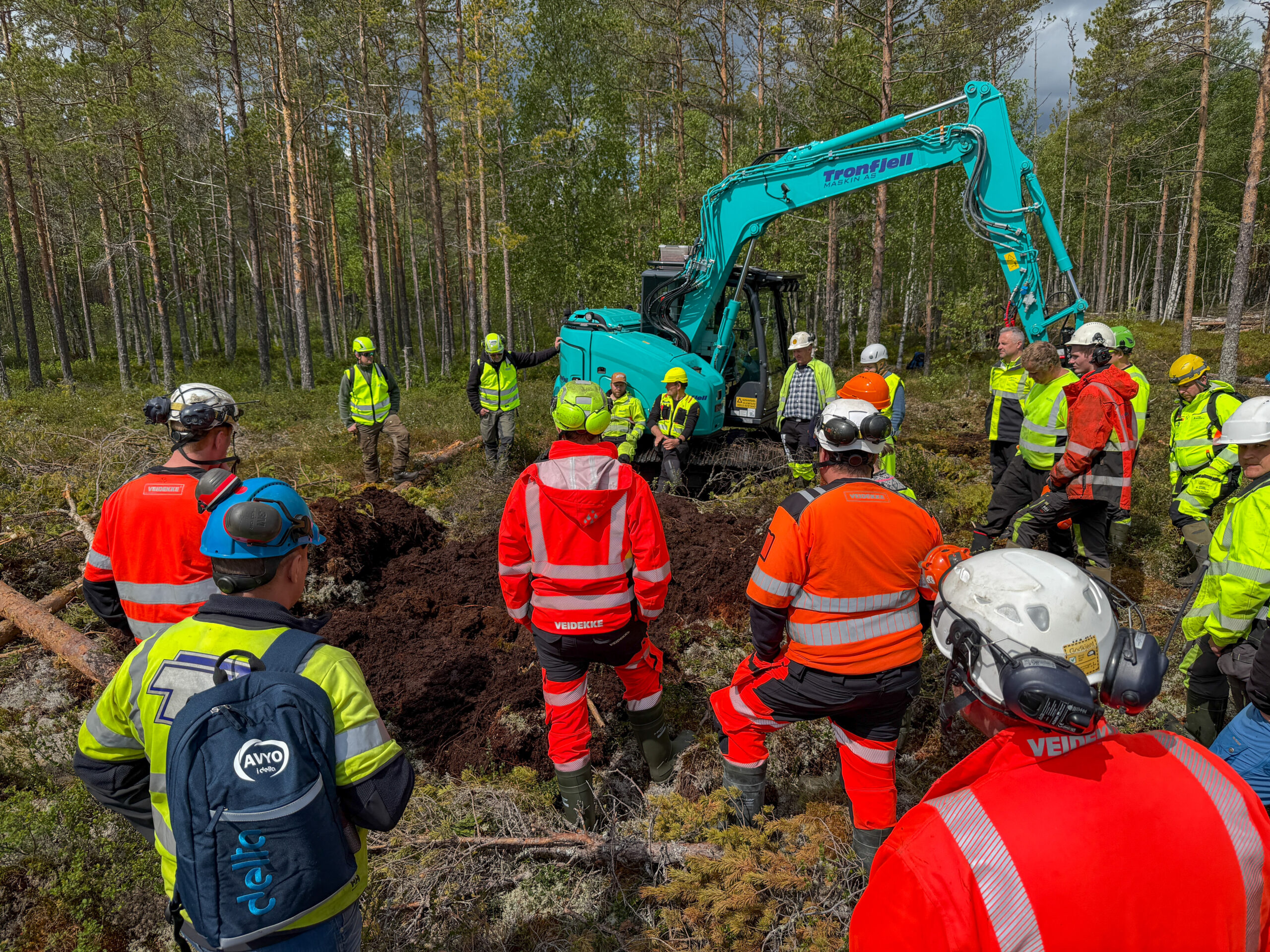
Since 2015, Norway's Environment Agency (Miljødirektoratet) has run a standing national programme to rewet drained peatlands, blocking and filling artificial drainage ditches dug for historic agriculture and forestry, in order to restore water tables and re-establish peat-forming vegetation.
Reduce greenhouse gas emissions, aid climate adaptation and improve biodiversity by restoring drained peatlands across Norway.
Work is delivered on state and municipal land by the Norwegian Nature Inspectorate and County Governors, and via a competitive grant scheme open to municipalities, counties, NGOs and private landowners, under a first five-year national action plan (2016-2020) renewed for 2021-2025.
As of October 2025, more than 200 drained peatland areas had been restored since the programme began, with roughly 550,000 metres of drainage ditches sealed. Funding has grown sharply: the national grant scheme totalled NOK 10 million in the 2024 state budget, rose to NOK 21.5 million in 2025, and reached a record NOK 43.6 million (about EUR 4 million) across 61 projects in 2026, selected from 154 applications requesting NOK 111.7 million, of which NOK 11.2 million was earmarked specifically for peatland restoration.
Official Nordic Council reporting notes an important limitation: of roughly 180 mires restored by the time of that review, only five sites had established long-term ecological monitoring, meaning most restoration outcomes lack follow-up measurement of vegetation recovery or greenhouse-gas impact. The programme's stated goals are therefore better evidenced by restoration extent than by measured ecological or carbon outcomes.
National / regional programmes
Indicative funding routes for practices of this type — always check each programme's current calls and eligibility rules.
Do you run this practice? Claim it — verified implementers get a public contact pathway and can propose corrections.
Where this practice's information was retrieved from, and when.
Sweden
Sweden's government-funded wetland rewetting budget line restored 2,100 ha of drained land in 2023 alone (1,500 ha peatland, 588 projects), …
Estonia
Estonia's 2015–2021 LIFE Mires programme restored natural water conditions on nearly 8,000 hectares of drained peatland by closing 317km of …
Russia
After catastrophic 2010 peat fires blanketed Moscow in smog, the Moscow Province Administration rewetted 73,000 ha of fire-prone peatlands (2010-2013) …
New Zealand
DOC manages the 10,201 ha Kopuatai Peat Dome, New Zealand's largest unmodified restiad bog and a Ramsar site since 1989, …
Open full copilot Grounded in cited practices — always check the sources.