Fes Enying Community Agroforestry Carbon Project (Cameroon)
Cameroon
Plan Vivo-certified agroforestry project run by Graine de Vie with Bankim, Banyo and Mayo-Darlé communes in Cameroon's Adamawa Region pays …
Mozambique · Gorongosa · See the Mozambique profile
One of Plan Vivo's founding projects paid ~1,000 Mozambican smallholders near Gorongosa National Park $242.60/ha over 7 years for agroforestry carbon, but developer Envirotrade's financial collapse led to decertification in 2015 — a widely studied cautionary case.
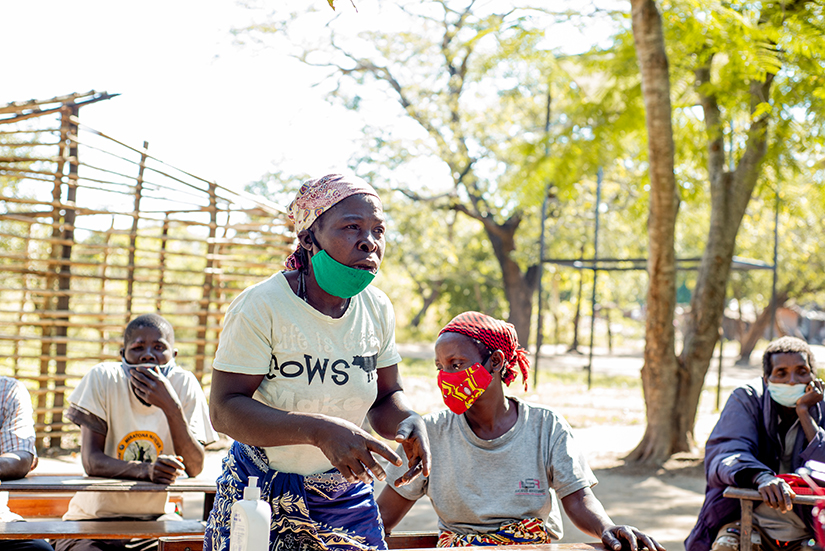
Launched as a pilot in 2002 and scaled up from August 2003, the N'hambita Community Carbon Project operated in the buffer zone of Gorongosa National Park, Sofala Province, Mozambique. It was developed by the private company Envirotrade with technical support from the University of Edinburgh's Edinburgh Centre for Carbon Management, with EU co-funding from 2003-2008, and became one of Plan Vivo's founding projects, later also validated under the CCBA Standard.
Smallholders signed seven-year agroforestry contracts, planting native and fruit trees in home gardens and along miombo woodland edges, and were paid US$242.60 per hectare over the contract term for verified carbon sequestration. By mid-2004 the project had 49 farmers covering 63 ha; at its peak it involved roughly 1,000 farmers, against a stated ambition of rehabilitating 10,000 ha across the buffer zone.
Envirotrade ran into financial difficulty, and Plan Vivo decertified the project on 13 October 2015; the company exited the area entirely by 2018, leaving villagers with unpaid balances on their agroforestry contracts. Peer-reviewed research (Environment and Development Economics, Cambridge University Press) documented household participation patterns and income trade-offs, while a 2018 World Rainforest Movement retrospective recorded lasting community disillusionment. N'hambita remains one of the most thoroughly documented failures in community carbon markets and is widely cited as a cautionary case on financing risk and the dangers of relying on a single private intermediary for long-term smallholder payments.
Read the full analysis: https://www.wrm.org.uy/15-years-of-redd-Legacy-Community-Carbon-Project-Nhambita-Mozambique
Implementation detail (cost, timeline, staffing, conditions for success) is not yet available for this practice.
Where this practice's information was retrieved from, and when.
Cameroon
Plan Vivo-certified agroforestry project run by Graine de Vie with Bankim, Banyo and Mayo-Darlé communes in Cameroon's Adamawa Region pays …
Ethiopia
Plan Vivo- and Gold Standard-certified dryland restoration in Tigray, Ethiopia: landless and smallholder farmers have restored 30,000+ ha since 2016, …
Nicaragua
Plan Vivo–certified community reforestation with 4,000+ smallholder families across 17,000+ ha in Estelí highlands. All 2015–2021 credits independently verified; US$3.1M …
Tanzania
Plan Vivo-verified REDD+ project protecting 110,500 ha of Hadza and Datoga community land in northern Tanzania, avoiding a cumulative 652,082 …
Open full copilot Grounded in cited practices — always check the sources.