LRCO Paraná — A Cautionary Case of Facial-Recognition School Attendance Facing an LGPD Lawsuit
Brazil
Paraná, Brazil has used facial recognition for school attendance since 2023 (~1M students, 1,700+ schools). A 2025 UNESP audit found …
India · Bengaluru · See the India profile
Karnataka's education department is rolling out 'Nirantara,' an Aadhaar-linked facial-recognition attendance app, to 52,686 government/aided schools (5.2M+ students) after a 2025 pilot in Uttara Kannada. No independent accuracy or efficacy evaluation has yet been published.
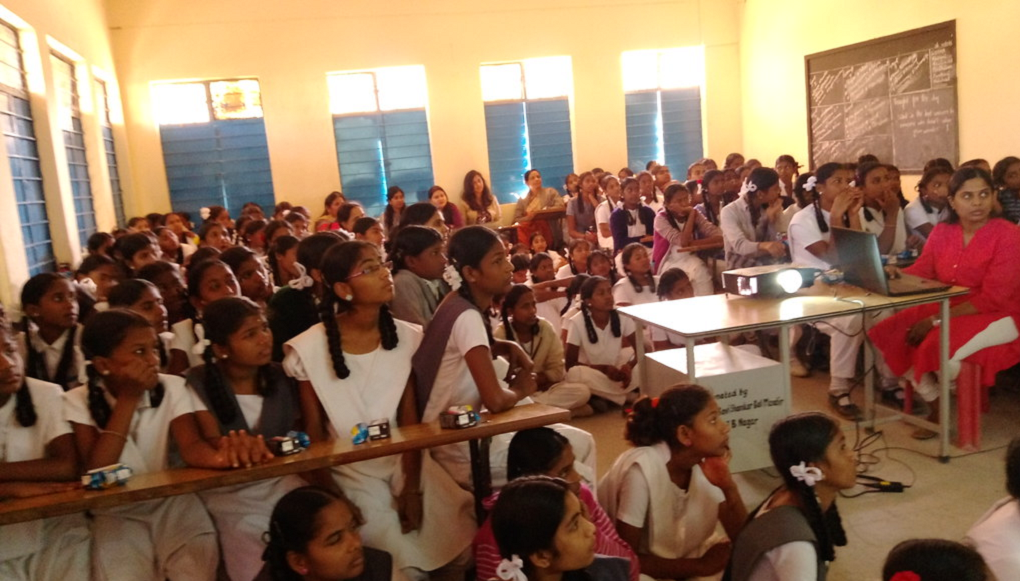
In its 2025-26 state budget, Karnataka's Chief Minister Siddaramaiah announced "Nirantara" ("continuous"), an AI-based facial-recognition attendance system for the state's Department of School Education and Literacy, intended to replace manual roll calls across all government and aided schools.
The system uses a vector-based facial-recognition engine that converts each student's photo into an encrypted biometric ID, integrated with the state's existing Students Achievement Tracking System (SATS) and linked to Aadhaar, India's national identity system. Software and data are hosted at the Karnataka State Data Centre (Vikasa Soudha, Bengaluru). Teachers use a dedicated mobile app to photograph the classroom, and the department says the app can register the attendance of 50 students within seconds, including in low-light classrooms. Beyond attendance, officials plan to use the same app to track delivery of welfare schemes such as midday meals and free footwear.
Following a pilot in Uttara Kannada district that officials described as successful, the state approved a phased rollout to 52,686 schools — 46,460 government and 6,226 aided institutions — covering more than 5.2 million students, beginning in the 2025-26 academic year and reaching full statewide coverage in 2026-27.
As of mid-2026, no independent third-party study of Nirantara's recognition accuracy, error rate, or effect on actual attendance or learning has been published — in contrast to comparable systems elsewhere, such as Paraná, Brazil, where an academic accuracy audit and a teachers' union survey were later commissioned. Karnataka officials describe the encrypted-ID design as a privacy safeguard, but no data-protection impact assessment has been made public, and collecting biometric data from more than 5 million children — tied to Aadhaar — raises consent and retention questions that remain unaddressed in public reporting to date.
At 5.2 million students, Nirantara would be among the largest deployments of biometric school-attendance technology anywhere, making its eventual, still-unpublished evaluation results — on accuracy, cost, and any welfare-eligibility effects — important for the wider policy debate about AI-based attendance systems in schools.
Read the full analysis: https://thesouthfirst.com/karnataka/karnataka-news-wrap-karnataka-to-roll-out-ai-based-facial-recognition-attendance-in-schools/
Implementation detail (cost, timeline, staffing, conditions for success) is not yet available for this practice.
Where this practice's information was retrieved from, and when.
Brazil
Paraná, Brazil has used facial recognition for school attendance since 2023 (~1M students, 1,700+ schools). A 2025 UNESP audit found …
Georgia
Georgia's Ministry built a Teams-based national school-administration and distance-learning platform, with a chatbot answering 1,177 users; the wider platform's daily …
United States of America
Facing enrollment decline and the end of pandemic-era funding, Lubbock and Edgewood ISDs (Texas) used AI-optimized master scheduling to rebalance …
Nigeria
Nigeria's JAMB uses AI facial recognition plus fingerprint biometrics to verify over 2.2 million UTME candidates a year and block …
Open full copilot Grounded in cited practices — always check the sources.