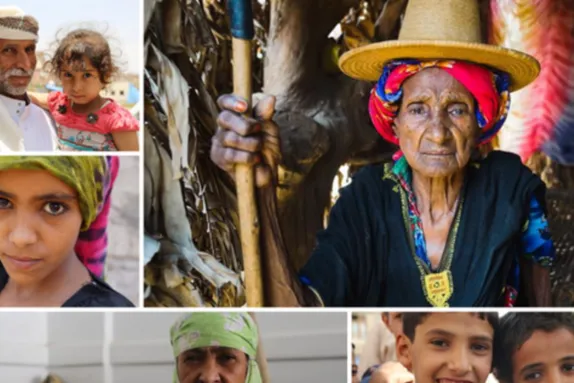
On 8 and 9 June 2020 the Office of the Special Envoy of the Secretary-General for Yemen (OSESGY), with the Innovation Cell of the UN Department of Political and Peacebuilding Affairs (DPPA) and technology partners, held an AI-powered, large-scale online dialogue with more than 500 Yemenis. It was designed before the pandemic but was able to go ahead under COVID-19 travel restrictions because it had always been planned as a virtual event. The UN describes it as the first deployment of this technology by an active UN mediation process.
The platform, which DPPA ran with the New York firm Remesh, lets one facilitator hold a real-time conversation with up to 1,000 people while machine learning groups and ranks their free-text responses. Over three hours of anonymous discussion, participants gave views on a nationwide ceasefire, the future of the political process and humanitarian relief. An overwhelming majority expressed grave concern about COVID-19 in Yemen, linked the failed response to the continuing war and supported resuming peace talks.
Special Envoy Martin Griffiths said he was 'cognizant of the limitations of digital consultations in terms of reach and representation'. He called the exercise a step to reach Yemenis outside the office's usual circles and to inform its mediation strategy. Participants interviewed by the office valued the anonymity, which let people speak freely.
The evidence is thin. The only published results are qualitative summaries from the office itself, with no participant breakdown by gender, region or affiliation and no evaluation of effects on the negotiations. In the parallel Libyan dialogues run with the same method, women never exceeded 15% of participants. DPPA has reused the approach in Libya, Iraq, Bolivia and Sudan. The practice is therefore best read as a replicable, low-cost listening tool for mediators, not as proven public value.
Read the full analysis: https://osesgy.unmissions.org/en/node/15560
Where this practice's information was retrieved from, and when.