Colombo Wetland Management Strategy — Ramsar Wetland City Flood Buffer
Sri Lanka
Colombo's 2016 Wetland Strategy protects a 1,900-hectare wetland complex absorbing roughly 40% of the city's floodwater; Sri Lanka must keep …
India · Chennai · See the India profile · See the Chennai profile
Evidence: Observational / pre–post Top 27% 53/100 · Ask Evidence Copilot about this practice
Pallikaranai Marsh, a 1,247-hectare Ramsar wetland (designated 2022) in Chennai, buffers monsoon floods for the city's south and hosts 120+ bird species, yet has shrunk from roughly 6,000 to under 600 hectares since the 1960s despite a 2018 state restoration effort.
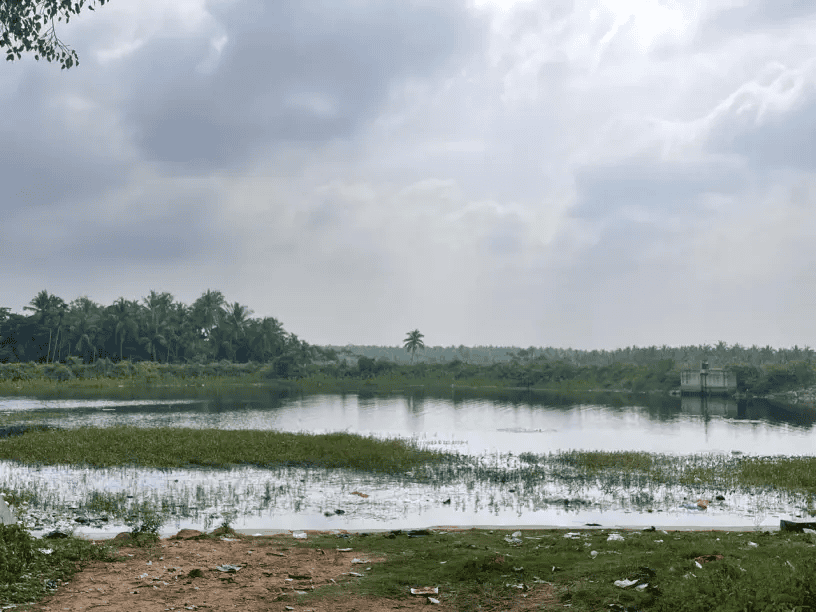
Pallikaranai Marsh is a freshwater marsh in south Chennai, Tamil Nadu, that historically covered an estimated 6,000 hectares and served as the natural floodplain for the surrounding area. It was declared a reserve forest by the Tamil Nadu government in 2007 and designated a Wetland of International Importance under the Ramsar Convention in April 2022 (Ramsar Site No. 2481), with 1,247.5 hectares formally notified.
The marsh is one of South India's most biodiverse urban wetlands, with more than 120 recorded bird species — including flamingo, glossy ibis and purple swamphen — alongside reptiles, mammals, fish and molluscs. It drains monsoon runoff from a network of interconnected waterbodies across neighbourhoods including Velachery, Injambakkam, Sembakkam, Nanganallur and Hasthinapuram, making it South Chennai's principal natural flood buffer and freshwater aquifer recharge zone. Despite active restoration since 2018 and a 2024 National Green Tribunal order to remove illegal encroachments, urbanisation has cut the marsh from its historical extent of roughly 6,000 hectares to under 600 hectares today.
Waste dumping from an adjacent landfill remains an active pressure, an honest illustration that formal protection and restoration funding have not yet resolved the encroachment driving the wetland's decline.
National / regional programmes
Indicative funding routes for practices of this type — always check each programme's current calls and eligibility rules.
Do you run this practice? Claim it — verified implementers get a public contact pathway and can propose corrections.
Where this practice's information was retrieved from, and when.
Sri Lanka
Colombo's 2016 Wetland Strategy protects a 1,900-hectare wetland complex absorbing roughly 40% of the city's floodwater; Sri Lanka must keep …
Georgia
A World Bank/GEF-backed coastal wetland park in Georgia protects Ramsar-listed wetlands hosting 194 bird species, was inscribed as a 2021 …
United Kingdom
Sheffield turned a redundant dual carriageway into the UK's largest retrofit SuDS scheme (2014-2022): swales cut peak flow up to …
Singapore
Singapore's national tree-planting programme, run by NParks under the Green Plan 2030, had planted over 832,000 of a targeted 1 …
Open full copilot Grounded in cited practices — always check the sources.