Guaratinguetá's Produtor de Água — Municipal Watershed Payments for Ecosystem Services (Brazil)
Brazil
A municipal PES scheme in São Paulo state pays smallholders to restore riparian forest and protect springs in the Ribeirão …
Brazil · Planaltina · See the Brazil profile
Top 27% 53/100 · Ask Evidence Copilot about this practice
Since 2011, Brasília's water regulator ADASA and utility Caesb have paid producers in the Pipiripau basin to restore riparian buffers and control erosion; canal relining cut conveyance losses ~50%, and over R$3.4 million was disbursed across 115+ active contracts by 2024.
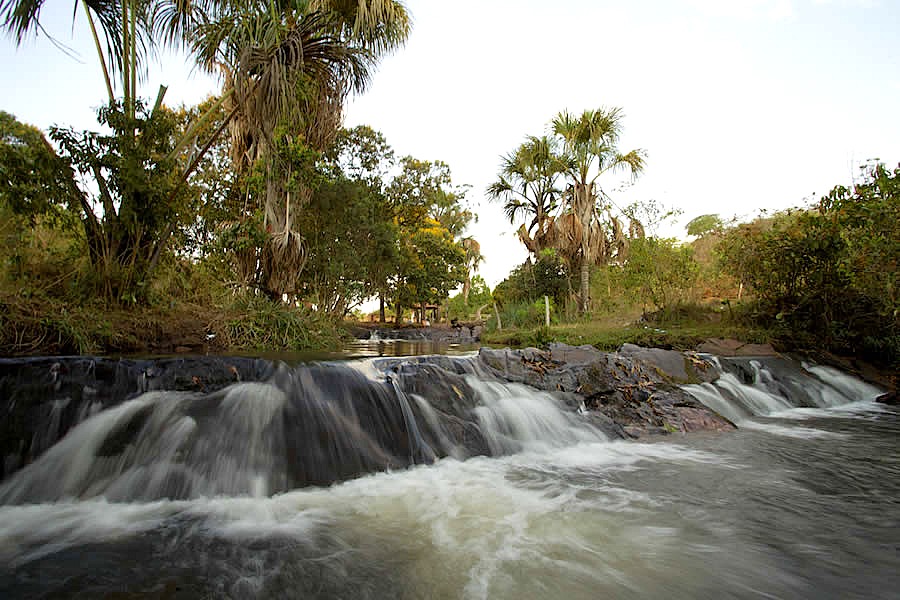
The Ribeirão Pipiripau, a stream that rises in Goiás state and flows mostly through Brazil's Federal District, supplies irrigation and drinking water to roughly 200,000 people in the Sobradinho and Planaltina regions of Brasília. Decades of unregulated agriculture in the basin degraded springs and silted waterways, fuelling conflict between irrigators, the water utility Caesb, and downstream users.
Launched in December 2011 by the Federal District water regulator ADASA in partnership with utility Caesb, the national water agency ANA, The Nature Conservancy, WWF, EMBRAPA, the University of Brasília and, in total, 13 partner institutions, the "Produtor de Água" project pays farmers, through a formal Payment for Protection of Water Resources (PPRH) mechanism, under five-year contracts, to restore degraded riparian areas, rebuild rural access roads to reduce erosion, and build small retention ponds (barraginhas) that increase infiltration.
By mid-2024 the project had signed 318 contracts since inception (115 active at any one time, covering roughly 287 properties historically) and disbursed more than R$3.4 million to participating landowners, about 70% of it between 2019 and 2024. A parallel infrastructure measure — relining the Santos Dumont irrigation canal — cut water losses to infiltration and evaporation by an estimated 50%. These are programme-reported figures; no independently peer-reviewed evaluation of biodiversity or streamflow outcomes was found.
Read the full analysis: https://jornaldebrasilia.com.br/brasilia/projeto-produtor-de-agua-do-pipiripau-amplia-contratos-e-chega-a-115-ativos/
Implementation detail (cost, timeline, staffing, conditions for success) is not yet available for this practice.
Do you run this practice? Claim it — verified implementers get a public contact pathway and can propose corrections.
Where this practice's information was retrieved from, and when.
Brazil
A municipal PES scheme in São Paulo state pays smallholders to restore riparian forest and protect springs in the Ribeirão …
Rwanda
Rwanda's Water Resources Board ran a Rwf22bn (~$24M) cash-for-work programme (2019–2023) building terraces across the 286km² Sebeya catchment: erosion fell …
China
World Bank-financed terracing, afforestation and grazing bans across 1.56M ha of China's Loess Plateau (1994-2002) cut Yellow River sediment by …
Jordan
Jordan's largest wastewater plant treats ~70% of the country's sewage and discharges 133 million m³/year of high-quality effluent into the …
Open full copilot Grounded in cited practices — always check the sources.