ITU–EY AI Skills Accelerator for Girls — Egypt University of Informatics, Cairo
Egypt
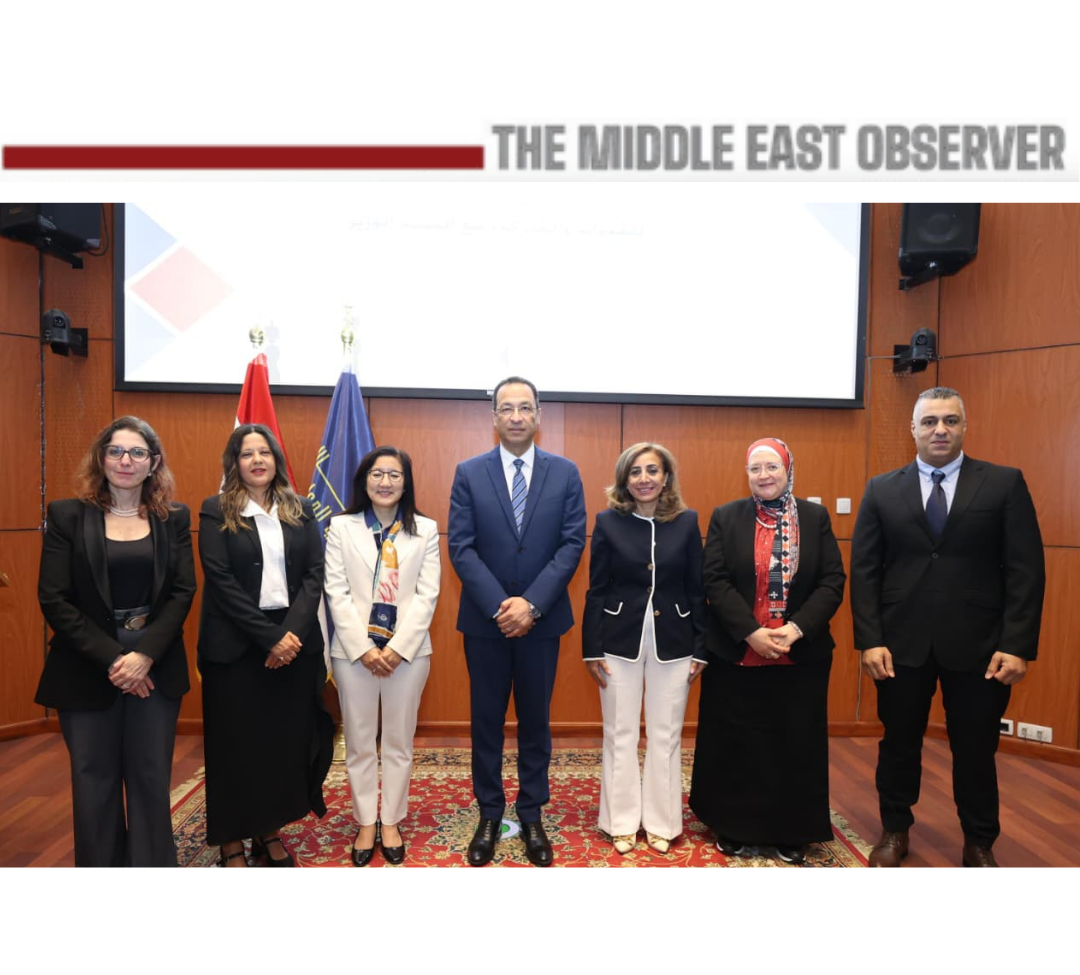
In October 2025, Egypt University of Informatics (Cairo) hosted an ITU–EY 'AI Skills Accelerator for Girls' workshop on AI, machine …
Egypt · Cairo · See the Egypt profile · See the Cairo profile
Evidence: Descriptive / self-reported Top 14% 67/100 · Ask Evidence Copilot about this practice
Egypt's MCIT-run Qodwa.Tech program for women, active since 2019 across all 27 governorates, added generative-AI cohorts in October 2025, training 330 women entrepreneurs in AI marketing tools within a program reaching over 43,000 women overall.
Qodwa.Tech is a national digital-skills programme run by Egypt's Ministry of Communications and Information Technology (MCIT) under its 'Digital Transformation for Sustainable Development in Egypt' project, in partnership with UNDP, aimed at closing Egypt's gender digital divide.
Reach economically marginalised women, particularly artisans and small-business owners in remote governorates, with digital marketing, e-commerce and fintech skills, and — since October 2025 — dedicated generative-AI skills for producing marketing content.
The programme uses a peer-to-peer 'Knowledge Pioneers' train-the-trainer model. Since October 2025 it has added generative-AI tracks — cohorts of about 21 hours across seven sessions, delivered in partnership with applied technology schools such as the Egypt Gold School of Applied Technology — teaching women entrepreneurs to use generative-AI tools, including Google AI Studio, LTX Studio, Veo 3 and DreamFace, to produce marketing video and visual content for their businesses.
According to MCIT programme data reported in May 2026, the programme has reached 43,270 women nationwide, including 5,500 in tailored training programmes, 19,700 in digital-awareness sessions, roughly 18,000 in peer-learning/entrepreneurship activities, and 70 women trained as 'Knowledge Ambassadors.' As of the most recent reporting, 330 women entrepreneurs had completed the dedicated generative-AI track.
MCIT reporting attributes income increases of up to 60% to participating women entrepreneurs, but this figure is self-reported by the programme rather than the product of an independent evaluation, and no third-party academic or audit study quantifying causal impact was found. The AI framing applies to a recent, still-modest component (330 women) nested inside a much larger and longer-running digital-inclusion initiative, rather than to the programme as a whole.
National / regional programmes ESF+ — European Social Fund Plus Digital Europe Programme
Indicative funding routes for practices of this type — always check each programme's current calls and eligibility rules.
Do you run this practice? Claim it — verified implementers get a public contact pathway and can propose corrections.
Where this practice's information was retrieved from, and when.
Egypt
In October 2025, Egypt University of Informatics (Cairo) hosted an ITU–EY 'AI Skills Accelerator for Girls' workshop on AI, machine …
United States of America
Randomised experiment with 211 Middlebury undergraduates: AI access raised immediate test scores by 0.27 SD, with gains persisting a week …
Lesotho
Lesotho's Ministry of Gender, Youth and Social Development and the U.S. Embassy launched an AI Skills Development Programme under the …
Finland
A free online AI-literacy course from the University of Helsinki: 1M+ completions and 2M+ sign-ups from 170+ countries, translated into …
Open full copilot Grounded in cited practices — always check the sources.