Bord na Móna Peatlands Climate Action Scheme (Ireland)
Ireland
Ireland's largest peatland restoration: 33,000 ha across 82 midland bogs, €108M EU-funded. By end 2024: 18,861 ha done (57%). Net …
Malaysia · Kuala Selangor · See the Malaysia profile
Evidence: Descriptive / self-reported Top 27% 53/100 · Ask Evidence Copilot about this practice
Since 2008, Selangor's Forestry Department and NGO Global Environment Centre have rewetted and replanted Raja Musa Forest Reserve, Peninsular Malaysia's second-largest peat swamp forest, planting 113,000+ seedlings; ASEAN named it a 2025 regional model.
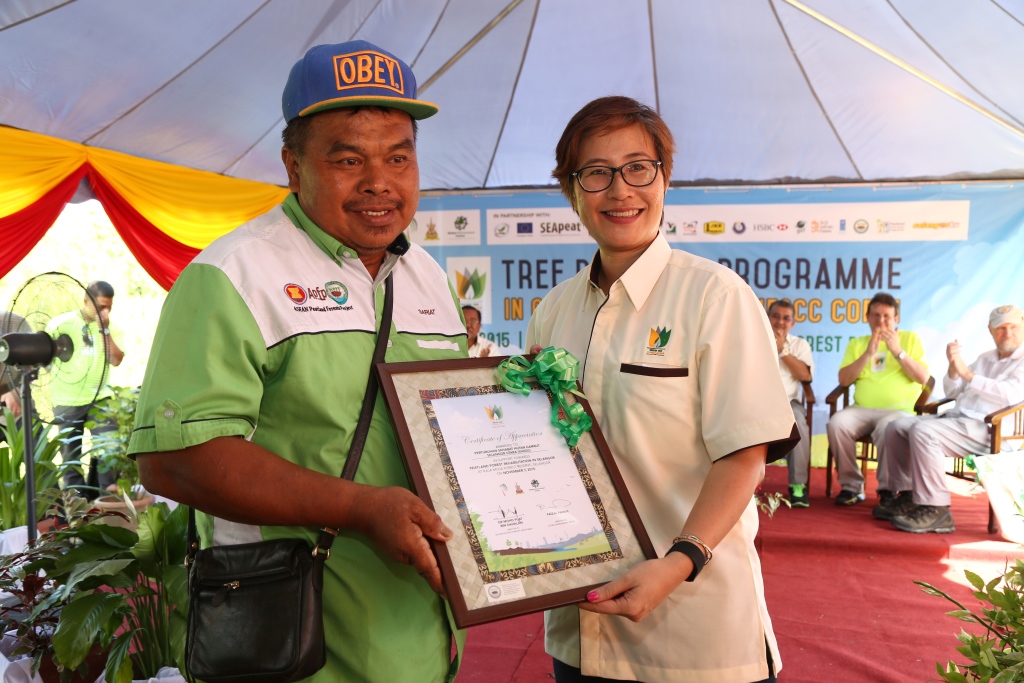
Peninsular Malaysia's North Selangor Peat Swamp Forest, anchored by the 35,656-hectare Raja Musa Forest Reserve, is the region's second-largest contiguous peat swamp forest. Decades of logging, drainage and agricultural conversion left large areas degraded and prone to fire and haze.
Since 2008, the Selangor State Forestry Department has worked with the NGO Global Environment Centre, the Kuala Selangor District Council and local communities under Malaysia's GEF-supported Sustainable Management of Peatland Ecosystems programme to rewet and replant degraded sections. Measures include canal-blocking and clay dikes to raise water tables, underground peat-fire suppression works, and community tree-planting, with trained community fire patrols and 'Peatland Forest Rangers'.
Across the wider programme, 113,642 seedlings were planted over about 190 hectares of a 1,000-hectare restoration target, while a HSBC-funded 2014-2017 phase added 6,375 saplings on 10.13 hectares with 1,695 volunteers for planting and 395 for canal construction. In 2025, delegates from the ASEAN Task Force on Peatlands cited Raja Musa as a regional model for community-based peatland restoration. Reported outcomes include qualitative signs of biodiversity recovery and reduced fire risk, though no quantified before/after fire-incidence or carbon-sequestration figure was found for the site.
National / regional programmes
Indicative funding routes for practices of this type — always check each programme's current calls and eligibility rules.
Do you run this practice? Claim it — verified implementers get a public contact pathway and can propose corrections.
Where this practice's information was retrieved from, and when.
Ireland
Ireland's largest peatland restoration: 33,000 ha across 82 midland bogs, €108M EU-funded. By end 2024: 18,861 ha done (57%). Net …
Vietnam
Since 2009, U Minh Thượng National Park, Vietnam, has had zero forest fires by keeping dry-season water tables above a …
New Zealand
DOC manages the 10,201 ha Kopuatai Peat Dome, New Zealand's largest unmodified restiad bog and a Ramsar site since 1989, …
Australia
NSW has removed over 9,000 feral horses from Kosciuszko National Park toward a legal target of 3,000 by 2027; a …
Open full copilot Grounded in cited practices — always check the sources.