Portugal Ecosystem Services Remuneration Programme — Serra do Açor & Tejo Internacional
Portugal
Portugal's national PES pilot (Resolução 121/2019): Fundo Ambiental pays 14 landowners €3.7M over 20 years to conserve 27,674 ha — …
United States of America · Santa Fe · See the United States of America profile · See the Santa Fe profile
Top 41% 47/100 · Ask Evidence Copilot about this practice
Since 2014 a 100+ signatory network, with TNC as fiscal agent, has treated 251,000 acres of Rio Grande headwater forest toward a 600,000-acre goal, leveraging ~$52.8M public money on $5.2M private.
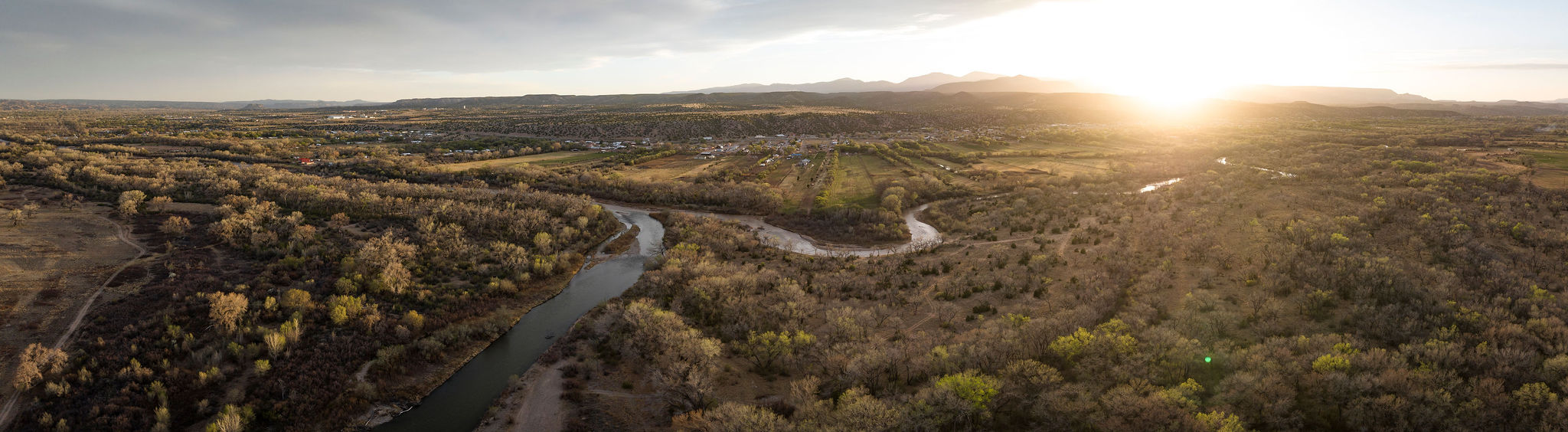
The Rio Grande Water Fund (RGWF) was created after the 2011 Las Conchas fire, whose burn scars degraded the water supply of Albuquerque, Santa Fe and Pueblo communities. The Rio Grande and its tributaries supply more than half of New Mexico's population. Charter signatories first signed in 2014; by 2022 there were 103 signatories including municipalities, federal, state and tribal agencies, irrigation districts and NGOs. The Nature Conservancy acts as fiscal agent.
The 20-year goal (2014-2034) is 600,000 acres of thinning, prescribed and managed fire, at roughly $21M a year ($420M in total). Through 2022 the peer-reviewed governance analysis (Frontiers in Climate, 2023) reports 251,000 acres of forest restoration activity facilitated, $5.2M of private investment and $52.8M of public funding leveraged; TNC's own summary cites 140,000 acres thinned. The two acreage figures use different scopes (all restoration activity vs thinning) and should not be summed.
The model is not a classic buyer-seller payment scheme: the Executive Committee is advisory and each signatory decides alone whether to fund or implement a project. Private and public money pays contractors for restoration work (a TNC economic study reports ~$900,000 to contractors in the studied year, 25 jobs, $1.7M output).
Cautions: legal injunctions in 2018-2020 and COVID-19 halted forestry work; growing membership adds administrative complexity; the authors note that fire-risk and water-quality outcomes are not yet quantified and that working at the pace and scale needed before the next big fire is the central challenge.
Read the full analysis: https://riograndewaterfund.org/
Implementation detail (cost, timeline, staffing, conditions for success) is not yet available for this practice.
Do you run this practice? Claim it — verified implementers get a public contact pathway and can propose corrections.
Where this practice's information was retrieved from, and when.
Portugal
Portugal's national PES pilot (Resolução 121/2019): Fundo Ambiental pays 14 landowners €3.7M over 20 years to conserve 27,674 ha — …
Bhutan
Asia's first 'Project Finance for Permanence' secures 1.1 M ha of protected Himalayan forest in Bhutan via a USD 118 …
China
World's largest PES programme: China's Grain for Green converted 34.3M ha of sloped farmland to forest and grassland since 1999, …
Guatemala
Guatemala's 28-year statutory forest PES: PINFOR (1996-2016) and PROBOSQUE (2015-present). ~USD 260 M paid, 38,000+ contracts, ~600,000 ha enrolled across …
Open full copilot Grounded in cited practices — always check the sources.