Duck Bay Rice Grass (Spartina) Removal — Saltmarsh and Fish Habitat Recovery in North-West Tasmania
Australia
After Australian Government-funded herbicide control of invasive rice grass (Spartina anglica) at Duck Bay, fish species rose from 5 to …
United Kingdom · Ottery St Mary · See the United Kingdom profile
Top 27% 53/100 · Ask Evidence Copilot about this practice
Ten years of University of Exeter research on wild beavers on the River Otter: storm peak flows ~30% lower on average, 6 million litres stored per territory, and slow release in the 2022 drought; findings come from only four territories.
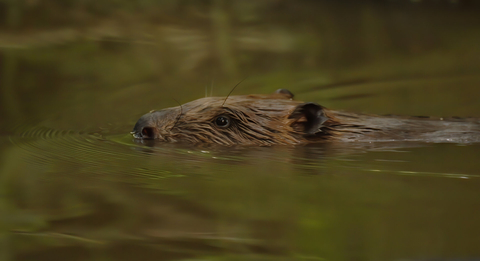
A wild-living beaver population was discovered on East Devon's River Otter in 2014 after 400 years of absence. Devon Wildlife Trust and the University of Exeter studied it for ten years, and the animals were granted a legal right to remain in 2020.
Published in 2024, the research reports that beaver dams and their wetlands reduced storm flows by an average of ~30% in heavy rain, with an earlier Exeter site study measuring peak flows leaving a dammed section ~30% lower than those entering it. Four monitored beaver territories store about 24 million litres of water (about 6 million litres each, ~10 Olympic pools); roughly 20 family territories are estimated along the river and tributaries.
During the 2022 drought, beaver wetlands released stored water slowly and kept flows going and created refuges for species such as toads and dragonflies.
Caveats: the quantified results come from a handful of territories in one lowland catchment and may not generalise; the original source of the animals is unknown; and landowner conflicts over flooding and tree felling need active management. The programme is evidence of function rather than a payment scheme, and no carbon or wildfire effect is quantified.
Read the full analysis: https://www.devonwildlifetrust.org/news/research-backs-beavers-fight-against-flooding-and-droughts
Implementation detail (cost, timeline, staffing, conditions for success) is not yet available for this practice.
Do you run this practice? Claim it — verified implementers get a public contact pathway and can propose corrections.
Where this practice's information was retrieved from, and when.
Australia
After Australian Government-funded herbicide control of invasive rice grass (Spartina anglica) at Duck Bay, fish species rose from 5 to …
Belgium
None
Belgium
None
Burkina Faso
From 1980, farmer Yacouba Sawadogo revived zaï planting pits in Burkina Faso's Yatenga province, helping plots reach ~1,500 kg/ha of …
Open full copilot Grounded in cited practices — always check the sources.