Innovation Fund of Montenegro — National Grant Financing for Startups and SME Innovation
Montenegro
Montenegro's Innovation Fund, operating since 2021 under a 2020 law, has financed 278 projects worth €12.2M across 23 calls. In …
Trinidad and Tobago · Port of Spain · See the Trinidad and Tobago profile · See the Port of Spain profile
Evidence: Descriptive / self-reported Top 74% 57/100 · Ask Evidence Copilot about this practice
A US$7.5M EU–IDB Lab Innovation Challenge Facility executed by CARIRI has funded 34 Trinidad & Tobago SMEs across two competitive calls (15 firms, then 19 of 67 applicants in June 2023), backing innovation commercialisation and industry–academia linkages.
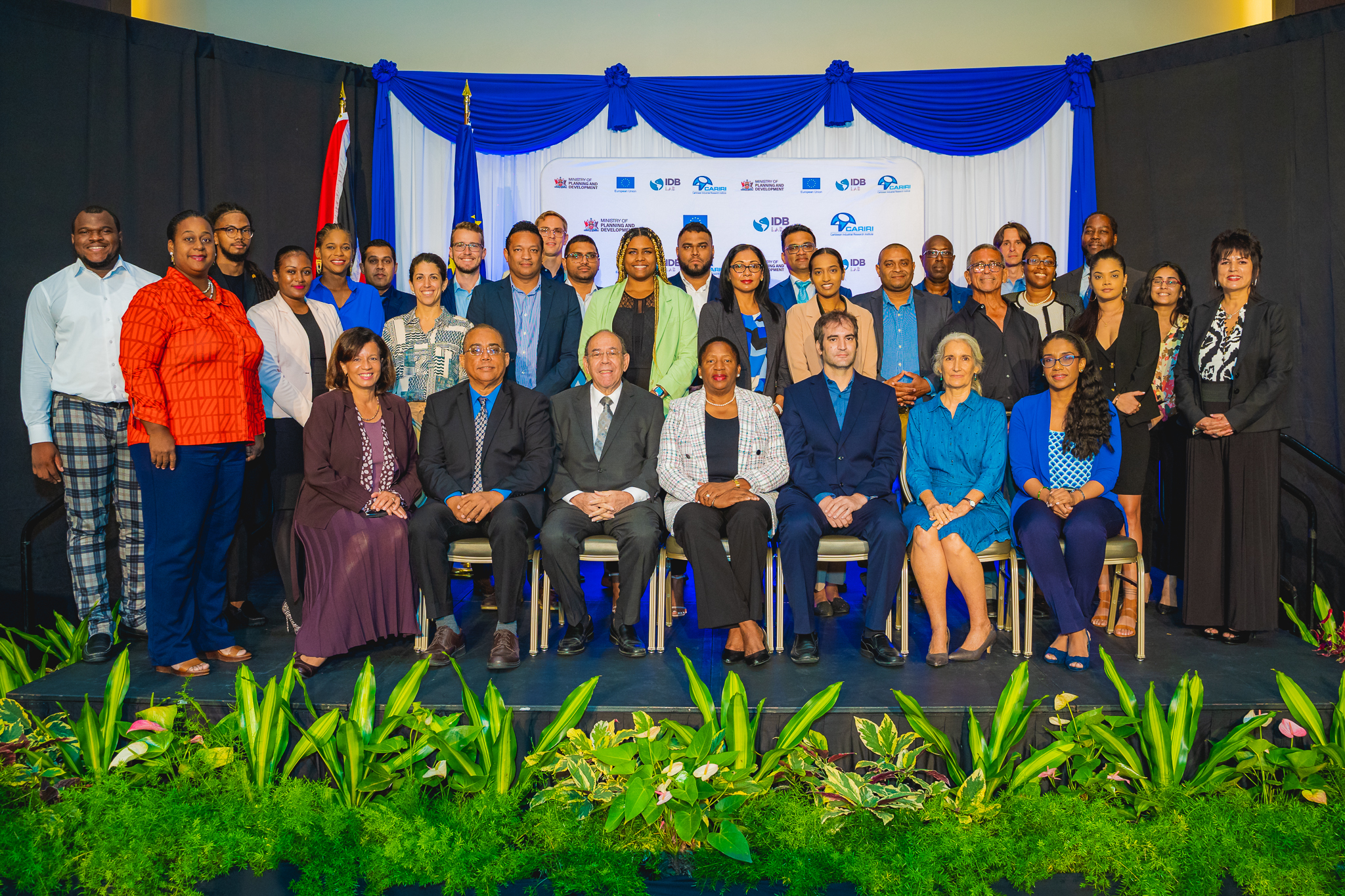
Trinidad and Tobago's 'Shaping the Future of Innovation' programme pairs a government agency, a regional research institute and two international development funders to help small and medium enterprises turn ideas into commercial products. Its flagship instrument, the Innovation Challenge Facility (ICF), is financed by the European Union and IDB Lab (the innovation arm of the Inter-American Development Bank Group) and executed by the Caribbean Industrial Research Institute (CARIRI) together with Trinidad and Tobago's Ministry of Planning and Development.
Fund non-reimbursable innovation-commercialisation grants for SMEs, build formal links between industry and academic/research institutions, and build a national innovation network.
The ICF has run two competitive grant calls to date, drawing on part of a US$7.5 million facility for non-reimbursable innovation-commercialisation grants. A third call was expected to follow later in 2023.
The first call selected 15 firms for funding; the second, decided in June 2023, drew 67 eligible SME applications and funded 19 of them.
Independent, firm-level evidence of downstream outcomes — revenue growth, jobs created, survival rates of funded ventures — has not yet been published; what is verified is the scale and structure of grant disbursement itself, across a small but growing cohort of Caribbean SMEs.
Do you run this practice? Claim it — verified implementers get a public contact pathway and can propose corrections.
Where this practice's information was retrieved from, and when.
Montenegro
Montenegro's Innovation Fund, operating since 2021 under a 2020 law, has financed 278 projects worth €12.2M across 23 calls. In …
Denmark
Erhvervshus Hovedstaden is one of six regional business houses in Denmark. At Erhvervshus Hovedstaden, they help more than 5,000 companies …
Kazakhstan
Kazakhstan's Damu Fund tested three SME finance instruments; a 2026 World Bank study found market-aligned partial guarantees raised employment ~24% …
Estonia
Estonia's largest science park runs a startup incubator and themed accelerators (NATO DIANA, ESA BIC, AI, cyber) that have supported …
Open full copilot Grounded in cited practices — always check the sources.