SAP Autism at Work — Neurodiversity Hiring for Digital-Sector Careers
Germany
Since 2013, SAP's Autism at Work programme has hired 215+ autistic employees across 16 countries into tech roles, self-reporting ~90% …
Denmark · Copenhagen · See the Denmark profile · See the Copenhagen profile
Evidence: Descriptive / self-reported Top 10% 96/100 · Ask Evidence Copilot about this practice
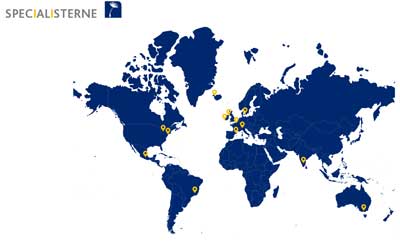
Founded in Denmark in 2004, Specialisterne uses structured, CV-free assessments — including Lego Mindstorms robotics tasks — to place autistic and neurodivergent adults into IT careers, and has grown into a franchise model now present in roughly 26 countries.
DK01Thorkil Sonne founded Specialisterne in Copenhagen in February 2004, after his son was diagnosed with autism, aiming to turn traits often associated with autism — attention to detail, pattern recognition — into paid jobs, primarily in software testing and other IT roles.
The model replaces conventional interviews and CVs with assessment centres built around structured exercises, including Lego Mindstorms robotics tasks; selected candidates then receive weeks of paid training before being placed with partner employers, who in turn receive training on inclusive management. The Specialist People Foundation (established 2008, later renamed Specialisterne Foundation and now Square Foundation) licenses the model internationally; national operations now exist in Denmark, the US, Ireland, Spain, Brazil, Canada, Iceland, Austria, Australia, Singapore and Italy, with partnerships in India, Czechia, Costa Rica, Poland, Argentina and China.
The organisation estimates it has generated roughly 10,000 jobs for autistic and neurodivergent adults since 2004; corporate partners include SAP's 'Autism at Work' programme (more than 160 hires across 13 countries since 2013) and HP's Dandelion Programme (11 hires in an early cohort), with past support from EU programmes such as Leonardo da Vinci, Progress and the European Social Fund.
The figures reported — including the cumulative jobs total and the stated goal of '1 million jobs by 2030' — are self-reported by the Specialisterne network rather than independently audited, and country-level franchises vary widely in scale and documentation: some rest on large, well-documented corporate partnerships, others remain small local pilots without published outcome data.
Philanthropic / foundation funding ESF+ — European Social Fund Plus
Indicative funding routes for practices of this type — always check each programme's current calls and eligibility rules.
Do you run this practice? Claim it — verified implementers get a public contact pathway and can propose corrections.
Where this practice's information was retrieved from, and when.
Germany
Since 2013, SAP's Autism at Work programme has hired 215+ autistic employees across 16 countries into tech roles, self-reporting ~90% …
Iraq
A non-profit running intensive coding and IT bootcamps for refugees, IDPs and host-community youth in Erbil, Iraq, pairing technical training …
Gibraltar
A Gibraltar charity trains residents as Microsoft-certified IT technicians via a free four-month course with guaranteed work placement, funded by …
United States of America
US nonprofit giving underserved young adults and military veterans/spouses free IT training plus job placement. Operating since 1999, it has …
Open full copilot Grounded in cited practices — always check the sources.