CNP Group vs. Individual Management Consulting for Auto-Parts SMEs
Colombia
Colombia's CNP ran a randomized trial testing individual versus lower-cost group-based management consulting for 159 auto-parts SMEs; both raised management …
Georgia · Tbilisi · See the Georgia profile · See the Tbilisi profile
Evidence: Descriptive / self-reported Top 63% 62/100 · Ask Evidence Copilot about this practice
Since 2003, EBRD advisers have run ~1,150 subsidised consulting projects with Georgian SMEs — half outside Tbilisi, a fifth women-led. Case example ASP-GEORGIA: +71% turnover, +90% staff. EU4Business reports ~170 Georgian firms reached via its EBRD credit line since 2016.
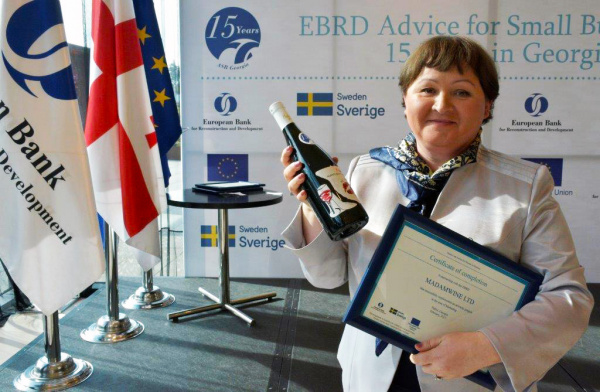
Georgian small and medium enterprises historically had limited access to affordable, vetted business consulting on topics such as export readiness, quality certification and financial management.
Since 2016, the EBRD's Advice for Small Businesses programme has aimed to close that gap by co-funding fixed-scope consulting assignments delivered by local consultants vetted and matched by EBRD staff in Tbilisi, with EU4Business layering grant incentives and international advisers on top since 2009.
The EBRD typically co-funds 50-70% of each consulting assignment, drawing on financing from the EU's EU4Business initiative, the Early Transition Countries Fund, Sweden and the EBRD's own Shareholder Special Fund.
Since its 2003 launch the programme has completed around 1,150 subsidised consulting projects with Georgian SMEs, roughly half outside Tbilisi and about a fifth with women leading or managing the enterprise; publicised case studies include ASP-GEORGIA, whose turnover grew 71% and headcount grew 90% after support, and Lopota Tour Services, which grew from 55 to 117 employees, while EU4Business reports close to 170 Georgian companies supported through the EBRD credit-line channel alone since 2016.
EBRD's Independent Evaluation Department published a fresh Small Business Initiative Phase II review in April 2026, but country-disaggregated causal results could not be extracted from it in this round of research, so the programme's typical effect on the broader caseload remains unestablished beyond the publicised case studies.
National / regional programmes
Indicative funding routes for practices of this type — always check each programme's current calls and eligibility rules.
Do you run this practice? Claim it — verified implementers get a public contact pathway and can propose corrections.
Where this practice's information was retrieved from, and when.
Colombia
Colombia's CNP ran a randomized trial testing individual versus lower-cost group-based management consulting for 159 auto-parts SMEs; both raised management …
Denmark
Denmark's national digitalisation-voucher and advisory scheme has backed over 7,000 SME projects since 2018 through the country's regional business hubs; …
Mexico
A Puebla RCT offered 150 of 432 interested SMEs a year of subsidised IPPC consulting; only 80 took it up. …
Mexico
A randomized trial gave 432 small and medium Puebla firms a year of subsidized management consulting; treated firms' monthly sales …
Open full copilot Grounded in cited practices — always check the sources.