Spain PEPAC Eco-scheme for Dehesa & Agroforestry Systems (2023-2027)
Spain
Spain's CAP Strategic Plan (PEPAC 2023-2027) pays farmers in dehesa and agroforestry systems—~3.5 million ha of Extremadura, Andalusia and Castilla …
Burundi · Bururi · See the Burundi profile
Evidence: Descriptive / self-reported Top 40% 47/100 · Ask Evidence Copilot about this practice
A World Bank/GEF-financed shade-coffee agroforestry programme brought over 4,400 hectares of Burundi's erosion-prone hillsides under sustainable land and water management, reaching 18,700+ people and seeding a $30M national scale-up.
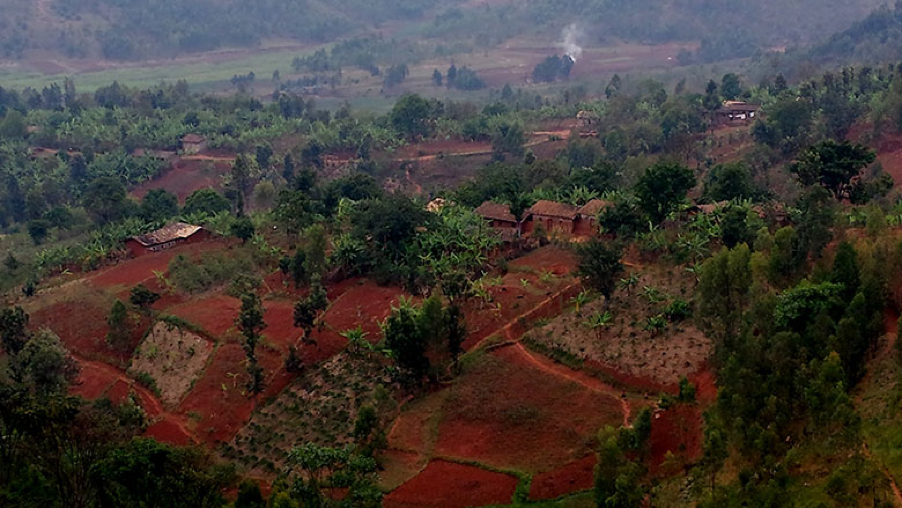
In Burundi, where about 90% of the population depends directly on natural resources and coffee provides roughly 90% of foreign-exchange earnings, decades of hillside cultivation without erosion control degraded farmland and cut coffee output from about 40,000 tonnes in the mid-1990s to 5,700 tonnes by 2003, with land degradation estimated to cost 4% of GDP a year. From 2013 to 2018 the Government of Burundi, financed by a Global Environment Facility grant channelled through the World Bank, ran the Sustainable Coffee Landscapes Project in Bubanza, Bururi and Muyinga provinces.
Farmers were trained to intercrop coffee with shade trees, bananas, beans and maize, apply terracing and other sustainable land and water management techniques, and the project supported conservation activities around the Bururi Natural Forest Reserve.
The World Bank reports more than 18,700 people benefited, with over 9,600 households — nearly half female-headed — adopting shade-grown coffee across more than 4,400 hectares brought under sustainable management. Batwa community members earned enough from forest-protection and tourism work to buy land independently for what the Bank describes as the first time in Burundi's history. The approach was then scaled nationally through the $30 million Landscape Restoration and Resilience Project, targeting 80,000 households and 90,000 hectares.
The hectare and beneficiary figures come from World Bank programme reporting rather than an independent third-party evaluation, and no separate biodiversity, carbon-stock or fire-risk data are published for the project.
National / regional programmes Philanthropic / foundation funding
Indicative funding routes for practices of this type — always check each programme's current calls and eligibility rules.
Do you run this practice? Claim it — verified implementers get a public contact pathway and can propose corrections.
Where this practice's information was retrieved from, and when.
Spain
Spain's CAP Strategic Plan (PEPAC 2023-2027) pays farmers in dehesa and agroforestry systems—~3.5 million ha of Extremadura, Andalusia and Castilla …
Guatemala
Guatemala's 28-year statutory forest PES: PINFOR (1996-2016) and PROBOSQUE (2015-present). ~USD 260 M paid, 38,000+ contracts, ~600,000 ha enrolled across …
Sudan
A $10M Green Climate Fund grant backing FAO-led gum-arabic agroforestry and rangeland restoration across Sudan's Kordofan states, targeting 275,000 hectares …
Comoros
Comorian NGO Dahari pays Anjouan highland farmers to fallow degrading plots; a CEPF-funded pilot restored 429 ha of water catchment …
Open full copilot Grounded in cited practices — always check the sources.