Zenzeleni Networks – Rural Cooperative-Owned ISP
South Africa
South Africa's first rural cooperative-owned ISP, Zenzeleni built a solar WiFi mesh network in Mankosi, Eastern Cape, selling access far …
Kenya · Nairobi · See the Kenya profile · See the Nairobi profile
Top 10% 96/100 · Ask Evidence Copilot about this practice
TunapandaNET is a locally hosted wireless intranet built by Nairobi's Tunapanda Institute since 2015 to bring low-cost digital learning and literacy training to Kibera, one of Africa's largest informal settlements, now linking schools, youth centres and a women's centre.
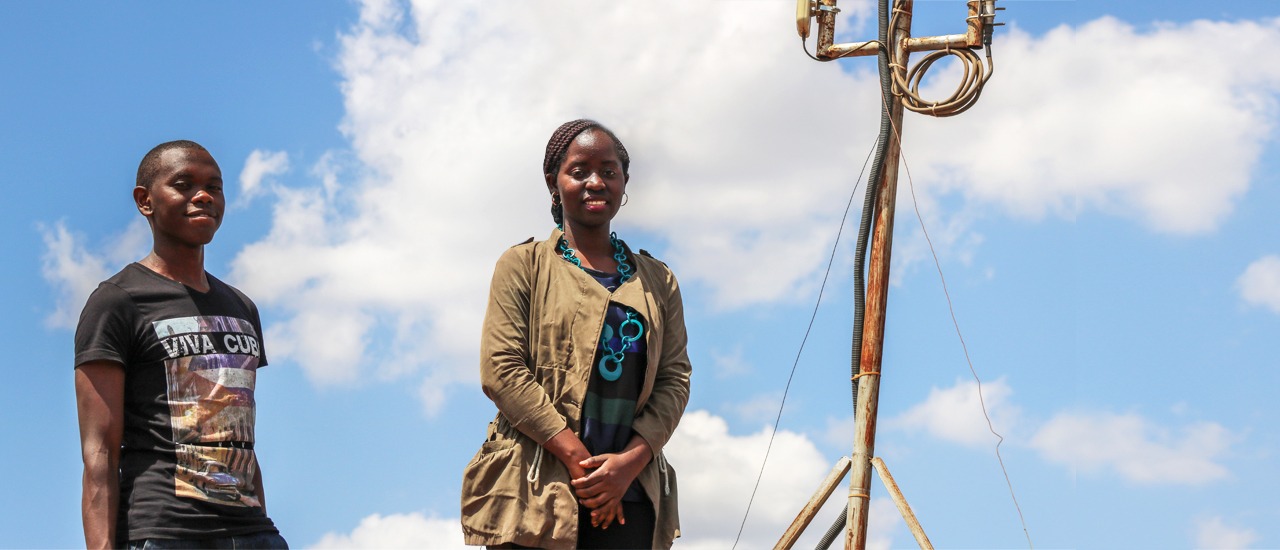
Tunapanda Institute, a non-profit running technology, design and business training in Kibera, Nairobi's largest informal settlement, built TunapandaNET in 2015 to give local youth affordable access to digital learning content without relying on costly commercial data plans.
In 2017, in partnership with the Internet Society, Italy's International Centre for Theoretical Physics and Denmark's Rhinotivity, TunapandaNET installed four wireless nodes connecting Tunapanda's learning facility to two schools and a youth centre, reaching about 1,800 young people, according to the Internet Society. In 2018, a further ten nodes were added with the Internet Society's Kenya Chapter, extending the network to seven schools, two youth centres and a women's centre, as reported by Kenya's ICT policy network KICTANet.
The network runs on unlicensed 2.4GHz and 5.8GHz spectrum and hosts educational content locally as an intranet, cutting the cost of access far below that of a standard mobile data connection.
Training under the network has specifically targeted marginalised groups, including women and young people with disabilities; a linked mentorship strand, Tech Dada (Tech Sisters), launched in 2016 for girls aged 14–20. Independent development-news outlet Devex has covered the network's role in bringing education online in Kibera.
In 2022 TunapandaNET formally transitioned into a registered Community Network; published figures (node counts, the 1,800-youth reach estimate) date mainly from 2017–2018 progress reports rather than a recent independent audit, so current scale should be treated as an estimate pending newer verification.
Read the full analysis: https://www.internetsociety.org/blog/2018/06/tunapandanet-paves-the-way-for-kenya-to-connect-the-underserved/
Implementation detail (cost, timeline, staffing, conditions for success) is not yet available for this practice.
Do you run this practice? Claim it — verified implementers get a public contact pathway and can propose corrections.
Where this practice's information was retrieved from, and when.
South Africa
South Africa's first rural cooperative-owned ISP, Zenzeleni built a solar WiFi mesh network in Mankosi, Eastern Cape, selling access far …
Ethiopia
UNCDF, Ethiopia's Ministry of Innovation and Technology, two national banks and Ethio Telecom ran a 3-day digital-and-financial literacy campaign reaching …
Zambia
Viamo's Ask Viamo Anything lets anyone with a basic phone call a free line and ask a question in a …
Mexico
TIC A.C. operates the world's largest community-owned mobile network, covering 63 indigenous localities across five Mexican states; its 2016 Social …
Open full copilot Grounded in cited practices — always check the sources.