Gender-Responsive Budgeting Across the National Budget
Albania
Since 2012, Albania has embedded gender analysis into national budget planning, growing tracked gender-equality programmes from 9 to 77 and …
Kenya · Kwale · See the Kenya profile
Evidence: Descriptive / self-reported Top 45% 70/100 · Ask Evidence Copilot about this practice
A four-year, €278,606 COVAW project trained women, youth and persons with disabilities in Kwale County, Kenya, to engage the budget process; 32 proposals were adopted into the 2022/23 county budget and GBV recovery centres entered the 2023–2027 development plan.
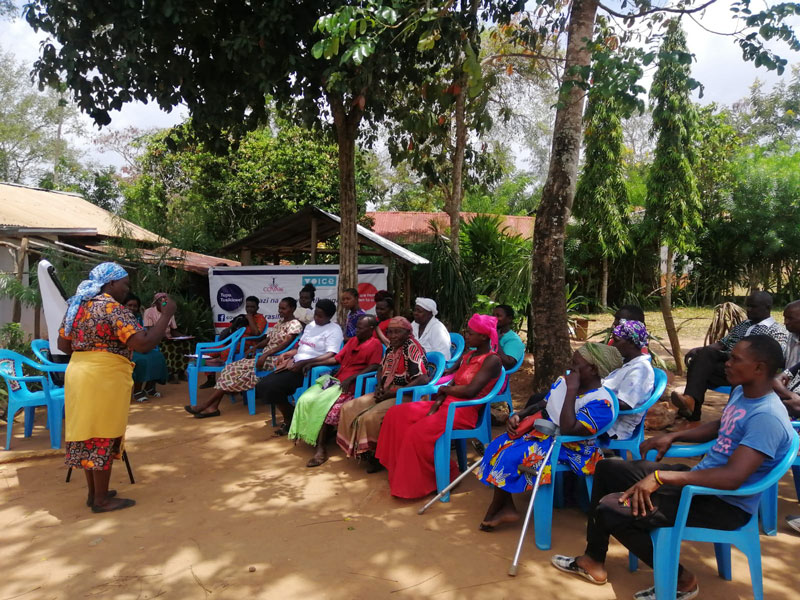
Tupo.Tusikizwe ('We are here. Listen to us') is a gender-responsive budgeting programme run by the Coalition on Violence Against Women (COVAW) in Kwale County, Kenya, with funding from Voice Global. It ran from August 2020 to March 2025 on a grant of €278,606.
The programme aimed to train and organise women, youth and persons with disabilities — including 30 women-led Disabled Persons Organisations — across the sub-counties of Matuga, Msambweni and Lungalunga to scrutinise and influence Kwale County's budget cycle.
Activities combined direct training and organising of marginalised groups with radio, social media and dialogue campaigns on budget accountability.
According to Voice Global's grantee reporting, 32 community-driven proposals were adopted into Kwale County's 2022/2023 budget, women's and persons-with-disabilities' representation in public participation forums rose by 35%, and awareness campaigns reached over 2.4 million people. COVAW's own account adds that the county government released previously stalled women's, youth's and PWD funds following the advocacy, and that four GBV recovery centres and gender-responsive budgeting priorities were written into Kwale's County Integrated Development Plan 2023-2027.
This is a sub-national, civil-society-led model rather than a national government mandate, and its figures come mainly from the funder's and implementer's own reporting rather than an independent external evaluation; a commissioned end-line evaluation was not independently located, so results should be read as programme-reported rather than externally verified.
Do you run this practice? Claim it — verified implementers get a public contact pathway and can propose corrections.
Where this practice's information was retrieved from, and when.
Albania
Since 2012, Albania has embedded gender analysis into national budget planning, growing tracked gender-equality programmes from 9 to 77 and …
Uganda
Under the 2015 Public Finance Management Act, every Ugandan ministry, department, agency and local government must score at least 50% …
South Africa
In 1995, South African civil-society organisations and women MPs launched the world's first parliamentary gender-responsive budget analysis, contributing to VAT …
Mexico
Created in 2008, Latin America's first such mechanism, Mexico's federal budget Annex 13 earmarks spending for women's equality; the total …
Open full copilot Grounded in cited practices — always check the sources.