Melbourne's Protected Forested Water Catchments (Australia)
Australia
Melbourne has kept the public and farming out of its mountain-ash forest catchments since 1879, so over 65% of its …
United Kingdom · Exeter · See the United Kingdom profile
Since 2010, South West Water has paid 2,000+ Devon and Cornwall farmers to cut diffuse pollution across 144,120 ha, investing over £20m because preventing runoff is cheaper than treating it — independently monitored by the University of Exeter and now expanding to Bristol Water.
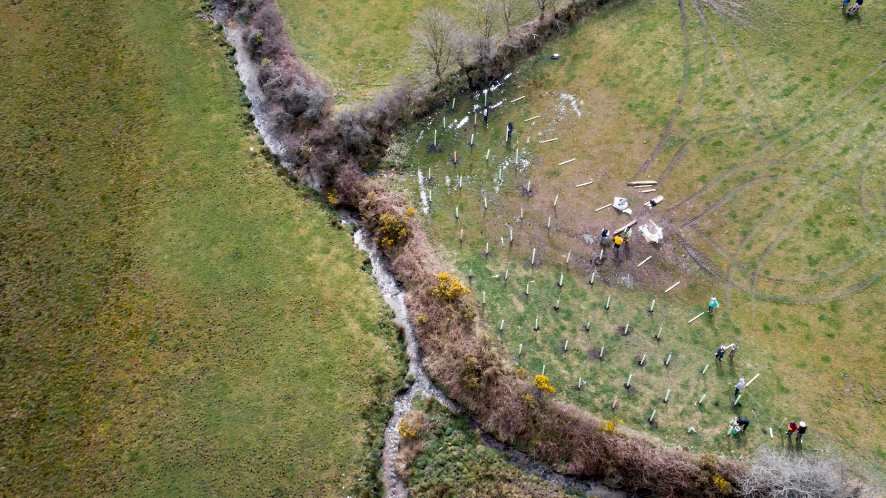
South West Water launched Upstream Thinking in 2010 as one of the UK's first water-company schemes to pay upstream land managers to protect the raw water it later treats, working with the Westcountry Rivers Trust, Devon Wildlife Trust and Cornwall Wildlife Trust across Devon and Cornwall. The programme rests on an avoided-cost logic: helping farmers cut diffuse pollution and soil erosion at source is cheaper than building extra filtration capacity to treat polluted river water.
To reduce diffuse agricultural pollution and soil erosion at source in order to protect drinking-water quality and avoid the cost of additional water treatment infrastructure.
Farm advisors work one-to-one with landowners next to rivers and reservoirs on soil testing, nutrient management planning, manure and slurry storage, farm-track improvements and riparian tree planting. The programme also ran a fertiliser trial in the Otter catchment and a 2016-2019 pesticide amnesty to remove obsolete farm chemicals.
Between 2015 and 2025 the programme worked across 144,120 hectares of farmland, engaged more than 2,000 farms, and planted over 390,000 trees along watercourses. South West Water invested more than £20 million of its own funds over the programme's first decade, with matched grant funding roughly tripling the total catchment spend. The Otter catchment fertiliser trial cut nitrogen use by more than half while delivering a 20% cost saving for participating farmers, and the 2016-2019 pesticide amnesty safely removed 4.8 tonnes of obsolete chemicals.
Outcomes have been independently monitored since the scheme began by the University of Exeter's Centre for Resilience in Environment, Water and Waste (CREWW). On the strength of this evidence, South West Water is running a third phase (2025-2030) that for the first time also covers Bristol Water's supply area, though isolating the programme's specific water-quality contribution from other catchment changes remains methodologically difficult.
Where this practice's information was retrieved from, and when.
Australia
Melbourne has kept the public and farming out of its mountain-ash forest catchments since 1879, so over 65% of its …
United Kingdom
United Utilities' £22.2M Sustainable Catchment Management Programme (2005-2015) paid tenant farmers across 57,000 hectares of Peak District and Forest of …
United States of America
After 1996 and 2002 wildfires choked Denver's reservoirs with sediment, Denver Water and the US Forest Service treated 120,000+ acres …
United States of America
By protecting 75% of the Quabbin, Ware River and Wachusett watersheds as forested open space and buying about 1,500 acres …
Open full copilot Grounded in cited practices — always check the sources.