Poste Italiane's Fraud Prevention Center — €25 Million Blocked, Then a €12.5 Million Fine Over Device Scanning
Italy
Poste Italiane's 24/7 Fraud Prevention Center blocked about €25 million in fraud across 2 billion transactions in 2024 via ML …
United States of America · Washington, D.C. · See the United States of America profile · See the Washington, D.C. profile
Top 89% 33/100 · Ask Evidence Copilot about this practice
USPS says AI tools helped close 1,250 fraudulent accounts since January 2026, but its own Inspector General found counterfeit postage cost $3.1 billion since March 2024, with 97% of fake labels still delivered and only about 1% of identified losses recovered through prosecution.
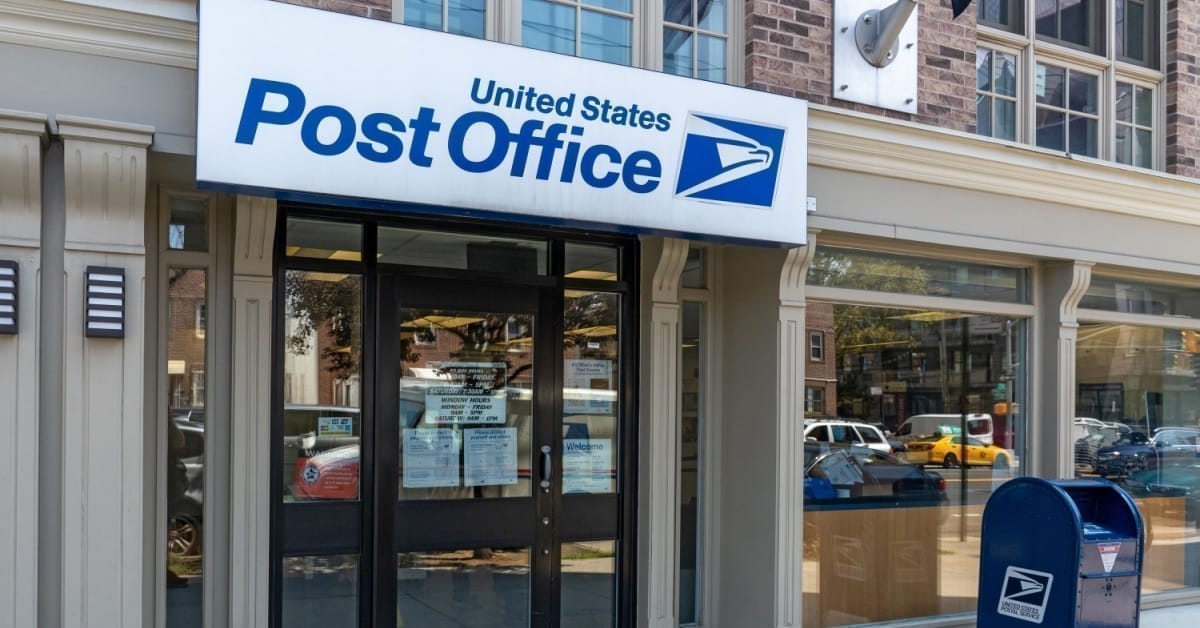
The United States Postal Service operates package-scanning and label-verification infrastructure intended to help detect counterfeit postage, and has expanded its use of AI more broadly: USPS reports 35-plus approved or in-testing AI use cases, and said in mid-2026 that AI tools had helped identify and close 1,250 accounts generating counterfeit postage labels since January 2026, according to Federal News Network.
A September 2026 audit by the USPS Office of Inspector General, 'Management Alert – Issues Identified with Counterfeit Postage,' found that counterfeit postage cost the Postal Service an estimated $3.1 billion in unrecoverable revenue between March 2024 and February 2026; in fiscal year 2025 alone the loss was $1.6 billion against $32.6 billion in total shipping revenue from 6.8 billion packages. Counterfeit label volume rose more than 200%, from 9.7 million in October 2023 to a peak of 29.4 million in December 2025, and the audit found that 97% of counterfeit labels from October 2023 through February 2026 were still processed for delivery.
The same audit found that overly aggressive filters caused about 2 million legitimate, already-paid packages to be mistakenly routed for additional processing between December 2024 and February 2026, an error the Inspector General estimated cost USPS $7.2 million, and separately projected a further $520 million in losses through February 2028 if the underlying issues were not addressed. Between March 2020 and March 2025, inspectors presented 44 counterfeit-label cases to the Department of Justice, but only nine were accepted for prosecution, recovering $572,250 against $57 million in identified losses — about 1%.
The Inspector General attributed these outcomes to governance gaps: vulnerabilities that surfaced in internal meetings as early as January 2025 were not acted on until fraudsters exploited them, resulting in more than $600 million in additional losses by February 2026; internal dashboards failed to surface emerging fraud patterns; and staff at multiple mail-processing centres had detection-capable scanners but were unaware of, or did not use, that functionality.
Read the full analysis: https://www.valueaddedresource.net/usps-counterfeit-label-oig-report/
Implementation detail (cost, timeline, staffing, conditions for success) is not yet available for this practice.
Do you run this practice? Claim it — verified implementers get a public contact pathway and can propose corrections.
Where this practice's information was retrieved from, and when.
Italy
Poste Italiane's 24/7 Fraud Prevention Center blocked about €25 million in fraud across 2 billion transactions in 2024 via ML …
United States of America
The US Treasury's Office of Payment Integrity uses ML to screen federal disbursements. In FY2024, ML-driven processes prevented or recovered …
Peru
A University of Sheffield machine-learning system detects illegally logged trees from very-high-resolution satellite imagery, cross-checked against Peru's forestry registers. OSINFOR …
United Kingdom
The UK's Pensions Regulator and Pension Scams Action Group built a machine-learning tool to flag fraudulent pension websites: 830 sites …
Open full copilot Grounded in cited practices — always check the sources.