Guyana Mangrove Restoration Programme — Nature-Based Sea Defence vs. Concrete Seawalls
Guyana
Guyana has restored over 500 hectares of coastal mangroves as a lower-cost alternative to concrete sea defences, which cost the …
Vietnam · Thai Binh · See the Vietnam profile
Evidence: Observational / pre–post Top 27% 53/100 · Ask Evidence Copilot about this practice
Since 1994 Vietnam Red Cross mangrove replanting across eight coastal provinces has re-established roughly 9,000-12,000 hectares of forest, cutting wave heights from 4m to 0.5m at protected dykes and avoiding an estimated $7.3m/year in dyke-repair costs for a $1.1m outlay.
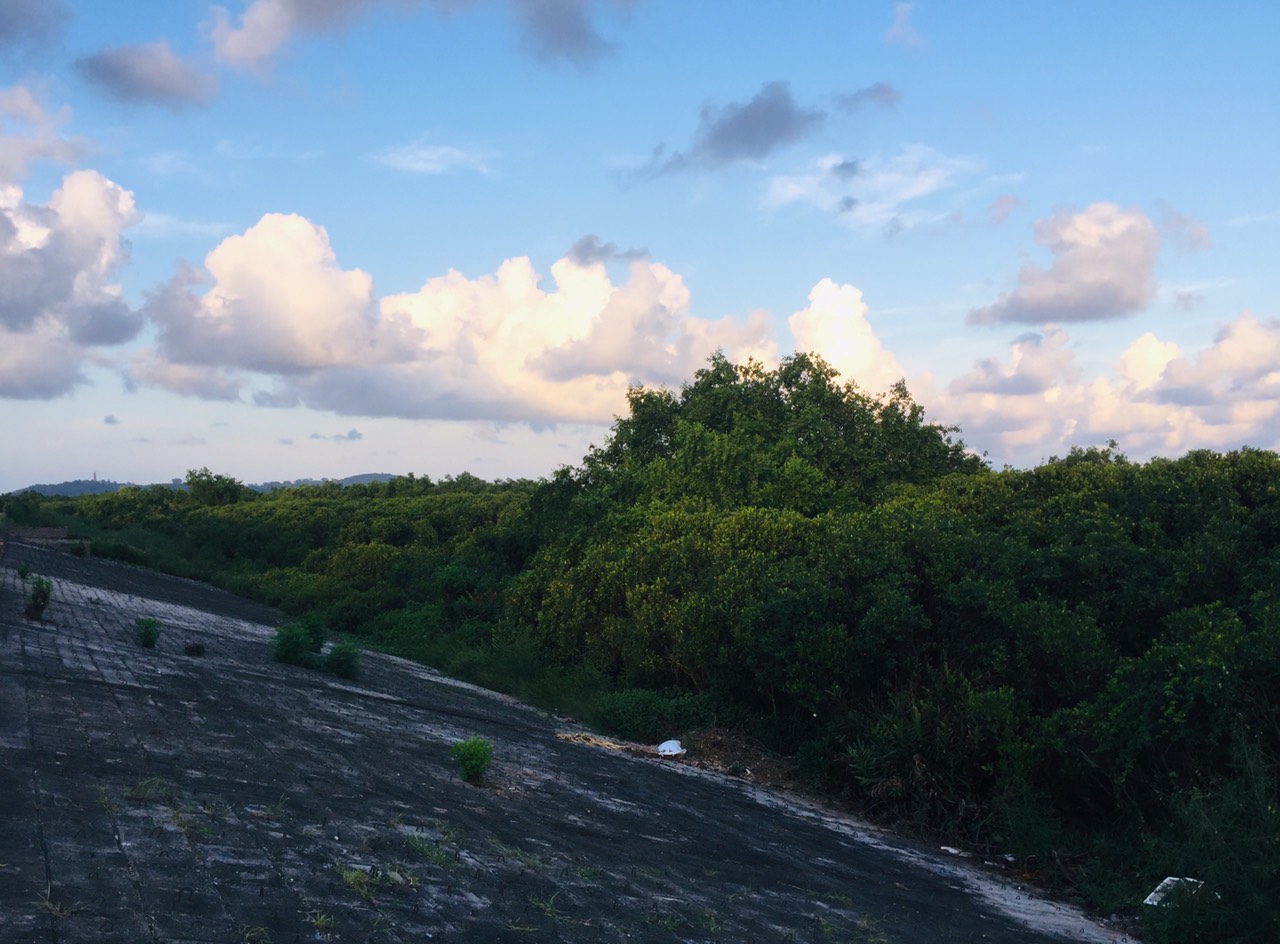
In 1994 the Vietnam Red Cross (VNRC) began a pilot mangrove-planting programme in five communities of Thai Binh province on Vietnam's typhoon-exposed Red River Delta coast, rebuilding coastal forest that aquaculture conversion and wartime clearance had stripped away in front of earthen sea dykes.
Rebuild coastal mangrove belts to reduce storm-surge and wave damage to sea dykes and coastal communities.
The programme scaled to more than 100 coastal communities across eight provinces, replanting an estimated 9,000-12,000 hectares on a budget of around $1.1 million in early outlays, paying local planters roughly $20 per hectare of forest successfully established.
Vietnam's national mangrove area grew about 6.4% between 1999 and 2013, partly attributed to the programme. Independent post-typhoon assessments credit the restored belts with reducing wave heights from around 4 metres to 0.5 metres at protected dyke sections, avoiding an estimated $7.3 million/year in dyke-repair costs, with direct benefits to about 350,000 people and indirect benefits to a further 2 million. Participating communes reported aquaculture yields rising by more than 200% as restored mangrove nurseries replenished fish and crab stocks.
The reported fall in coastal typhoon mortality (from 6,000+ deaths across 1996-2002 storms to four deaths in a 2003 typhoon) reflects the combined effect of early warning, evacuation planning and mangrove restoration together, not tree-planting alone — an explicit caveat in the source. A cited $218 million cumulative CO2-value estimate (1997-2025) is a modelled valuation, not a measured carbon stock, and a 2020 academic review cautions that survival/growth rates vary considerably by site and species choice.
Do you run this practice? Claim it — verified implementers get a public contact pathway and can propose corrections.
Where this practice's information was retrieved from, and when.
Guyana
Guyana has restored over 500 hectares of coastal mangroves as a lower-cost alternative to concrete sea defences, which cost the …
China
China's first Verra- and CCB Gold-certified blue carbon project restored 380 hectares of mangroves in Zhanjiang (2015–2019), expected to offset …
Bangladesh
Bangladesh's Cyclone Preparedness Programme trains 76,000+ Red Crescent volunteers across 13 coastal districts and evacuated 2.1 million people ahead of …
Vietnam
Since 1978, Ho Chi Minh City has replanted roughly 20,000 ha of mangroves defoliated by US wartime herbicide spraying, earning …
Open full copilot Grounded in cited practices — always check the sources.