Fes Enying Community Agroforestry Carbon Project (Cameroon)
Cameroon
Plan Vivo-certified agroforestry project run by Graine de Vie with Bankim, Banyo and Mayo-Darlé communes in Cameroon's Adamawa Region pays …
Guatemala · Flores · See the Guatemala profile
Evidence: Descriptive / self-reported Top 58% 40/100 · Ask Evidence Copilot about this practice
Plan Vivo-certified agroforestry programme restoring degraded pasture in Petén, Guatemala since 2019; a genuine, certified effort, but the developer's own reported scale and CO2 figures vary three- to four-fold across its materials.
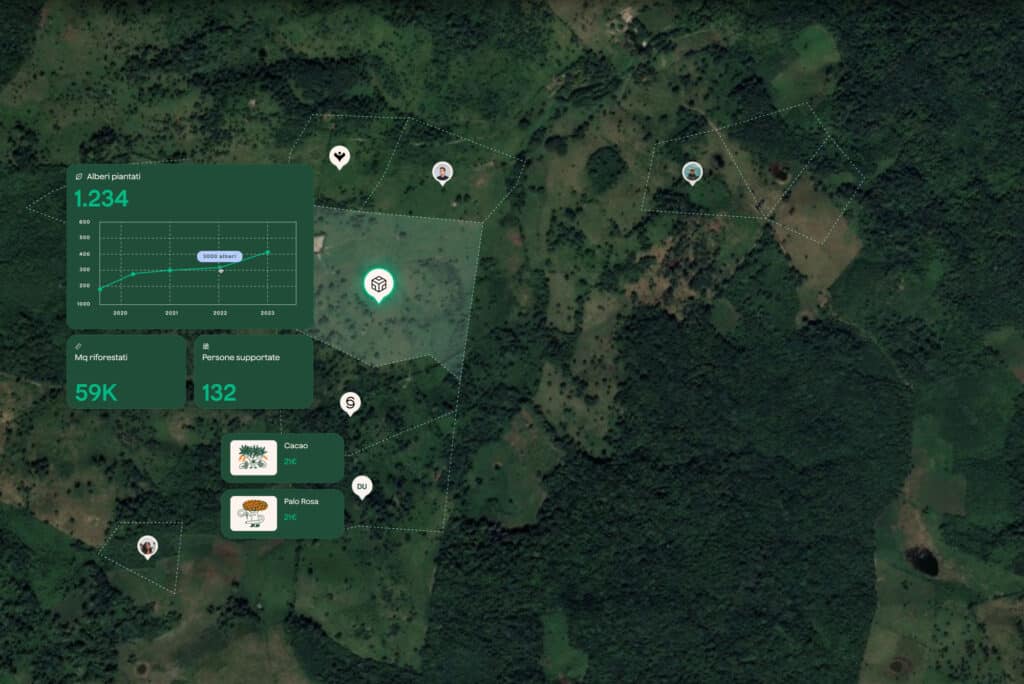
zeroCARBON is a Plan Vivo-certified agroforestry and reforestation programme run since 2019 by the Guatemalan-founded social enterprise zeroCO2 with farming communities in the Petén department of Guatemala, a region that lost roughly 20% of its forest cover between 2001 and 2020 to cattle ranching and monoculture expansion.
Convert degraded pasture into productive tree cover by providing participating families with fruit, timber and native tree seedlings (including cacao, avocado, cedar and mahogany) together with agroforestry training.
Implemented in partnership with the NGO Comparte ONLUS, delivering seedlings and agroforestry training to farming families across the Petén department.
Published figures for the programme's scale vary across zeroCO2's own communications: general 'Resistance through reforestation' materials cite 106 communities, roughly 4,000 families, 1.3 million trees planted and an estimated 683,000 tonnes of CO2 absorbed cumulatively since 2019, while Plan Vivo project-specific reporting elsewhere lists a narrower scope of around 46 communities and 209 registered participants across nine municipalities.
This gap suggests the wider figures describe zeroCO2's total reforestation activity, of which only part is Plan Vivo-registered and carbon-verified; no single, independently reconciled figure for verified tonnes of CO2 or issued Plan Vivo certificates was found in the sources reviewed. The programme is a genuine, multi-year, third-party-certified community reforestation effort, but its core carbon and participation metrics are inconsistently reported.
Philanthropic / foundation funding
Indicative funding routes for practices of this type — always check each programme's current calls and eligibility rules.
Do you run this practice? Claim it — verified implementers get a public contact pathway and can propose corrections.
Where this practice's information was retrieved from, and when.
Cameroon
Plan Vivo-certified agroforestry project run by Graine de Vie with Bankim, Banyo and Mayo-Darlé communes in Cameroon's Adamawa Region pays …
Nicaragua
Plan Vivo–certified community reforestation with 4,000+ smallholder families across 17,000+ ha in Estelí highlands. All 2015–2021 credits independently verified; US$3.1M …
Ethiopia
Plan Vivo- and Gold Standard-certified dryland restoration in Tigray, Ethiopia: landless and smallholder farmers have restored 30,000+ ha since 2016, …
Mexico
World's oldest operational carbon market project (1994), led by indigenous and mestizo farming communities in Chiapas under Plan Vivo. Covers …
Open full copilot Grounded in cited practices — always check the sources.