Sinapses — Brazil's Mandatory National Registry and Risk-Audit Platform for Judicial AI
Brazil
Brazil's National Council of Justice runs Sinapses, a national catalogue where all AI models used or developed by the Brazilian …
Afghanistan · Kabul · See the Afghanistan profile · See the Kabul profile
Top 100% 13/100 · Ask Evidence Copilot about this practice
Two U.S.-funded biometric databases built to modernise Afghan public administration — a $38m payroll system and a national ID system that once targeted 80% population coverage — were abandoned intact to the Taliban in August 2021, exposing hundreds of thousands of people.
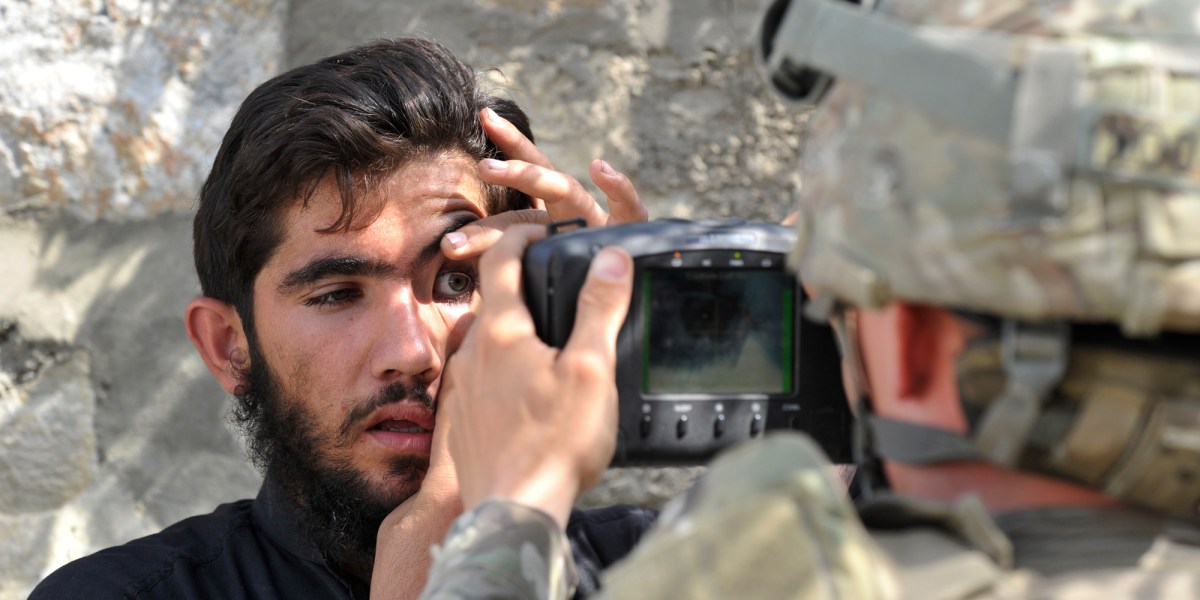
Between the mid-2000s and 2021, the United States and the Afghan government built a set of biometric systems meant to professionalise Afghanistan's public sector: the Afghan Personnel and Pay System (APPS), introduced in 2016 by the Ministries of Interior and Defense to curb "ghost soldier" payroll fraud in the Afghan National Army and Police; the Afghan Automated Biometric Identification System (AABIS), which by 2012 aimed to enrol 80% of the population; and the e-Tazkira electronic national ID card.
APPS held roughly 500,000 personnel records with at least 40 data fields each (name, family relationships, tribal-elder guarantors, biometrics) after $38 million in US spending through 2019. A figure of 8.1 million AABIS biometric records has circulated (traced to a program manager's public profile and not independently confirmed), and roughly 6.2 million e-Tazkira applications were still in process when the government collapsed.
When the Afghan government fell in August 2021, these systems — along with handheld HIIDE biometric scanners — were left running under Taliban control. Human Rights Watch's March 2022 investigation examined six government biometric and payroll systems and found the Taliban had gained access to sensitive personal and biometric data, including of Afghans who had worked with coalition forces, documenting indications the data may already have been used to locate people.
The case is included here as a cautionary one: a public-sector AI/biometric investment that appears to have delivered some of its intended administrative benefit before 2021 became, once governance and exit planning failed, a serious ongoing protection risk for the population it was built to serve — no destruction, transfer-of-control, or safeguarding plan was in place when the government it served ceased to exist.
Read the full analysis: https://theintercept.com/2021/08/17/afghanistan-taliban-military-biometrics/
Implementation detail (cost, timeline, staffing, conditions for success) is not yet available for this practice.
Do you run this practice? Claim it — verified implementers get a public contact pathway and can propose corrections.
Where this practice's information was retrieved from, and when.
Brazil
Brazil's National Council of Justice runs Sinapses, a national catalogue where all AI models used or developed by the Brazilian …
United Kingdom
The UK's Algorithmic Transparency Recording Standard grew from a 2022 pilot into a mandatory register covering all central government departments, …
South Korea
Ahead of April 2024 elections, South Korea banned AI-generated deepfakes in campaigning within 90 days of polling. The National Election …
Australia
Australia's Digital Transformation Agency piloted a draft AI impact-assessment framework with 21 volunteer federal agencies, testing whether it caught risks …
Open full copilot Grounded in cited practices — always check the sources.