Guyana's Safe Road Intelligence System — AI-Assisted Traffic Camera Enforcement
Guyana
Guyana's police and e-government agency deployed camera-based speed/seatbelt detection with automated e-ticketing, later adding AI video analytics and a mobile …
South Korea · Gwacheon · See the South Korea profile
Evidence: Observational / pre–post Top 6% 87/100 · Ask Evidence Copilot about this practice
Ahead of April 2024 elections, South Korea banned AI-generated deepfakes in campaigning within 90 days of polling. The National Election Commission identified 129 violations, backed by a jointly built AI detection model, with penalties up to 7 years in prison.
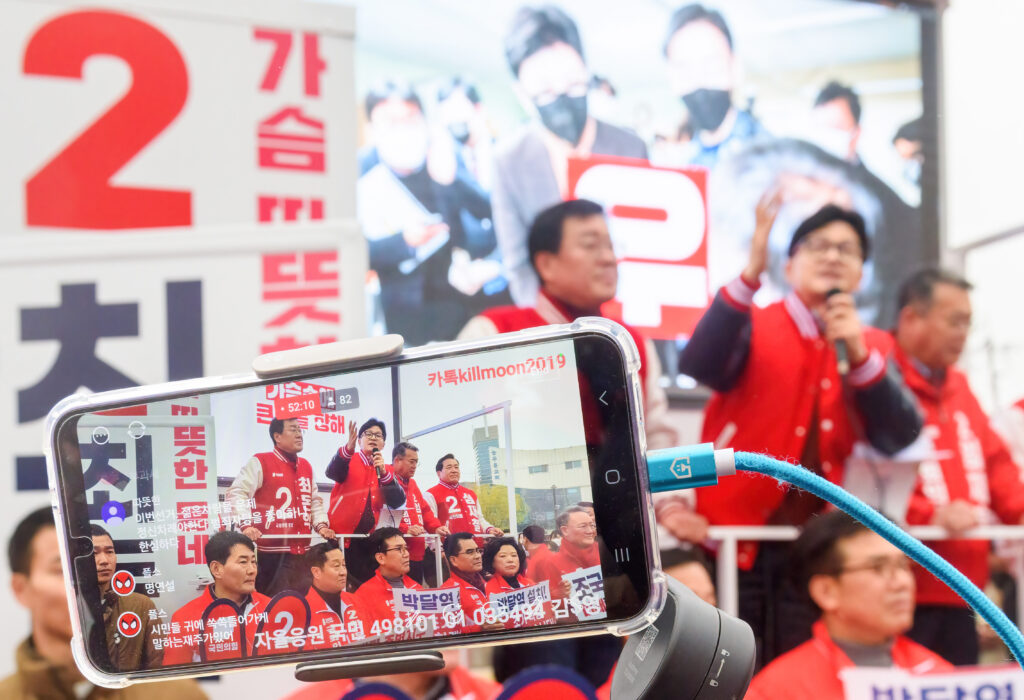
Ahead of South Korea's April 2024 legislative elections, lawmakers amended the Public Official Election Act to criminalise producing or distributing AI-generated deepfake content for campaign purposes within 90 days of polling day, with penalties of up to seven years in prison or fines of 10-50 million won.
The National Election Commission (NEC) and partner agencies aimed to detect and enforce against AI-generated deepfakes that could distort the election before voters went to the polls.
Enforcement was distributed across government: the Ministry of the Interior and Safety and the National Forensic Service jointly built an AI deepfake detection and analysis model for investigators; the National Police Agency targeted websites spreading flagged content; the Ministry of Justice used digital forensics to trace distribution networks; and the Ministry of Science and ICT funded further detection and blocking technology. Major technology platforms signed voluntary pledges to combat election-related deepfakes.
The NEC identified 129 AI-generated deepfake videos and images violating election law between 29 January and 16 February 2024 alone. Independent analysis (East Asia Forum, The Diplomat) credits the coordinated legal-and-technical response with limiting deepfakes' practical impact on the election outcome.
Observers note the 90-day pre-election window leaves campaign-adjacent deepfake activity outside that window largely unaddressed, and that detection accuracy against rapidly improving generative models remains an open challenge.
Do you run this practice? Claim it — verified implementers get a public contact pathway and can propose corrections.
Where this practice's information was retrieved from, and when.
Guyana
Guyana's police and e-government agency deployed camera-based speed/seatbelt detection with automated e-ticketing, later adding AI video analytics and a mobile …
South Korea
Ahead of its April 2024 general election, South Korea's NEC ran a task force under a new deepfake ban and …
South Korea
South Korea's Ministry of the Interior and Safety and National Forensic Service built an AI deepfake-detection model from a 268-team …
Netherlands
Dutch police used the Crime Anticipation System to predict 125x125m crime hotspots nationwide from 2017. A 2025 review found it …
Open full copilot Grounded in cited practices — always check the sources.