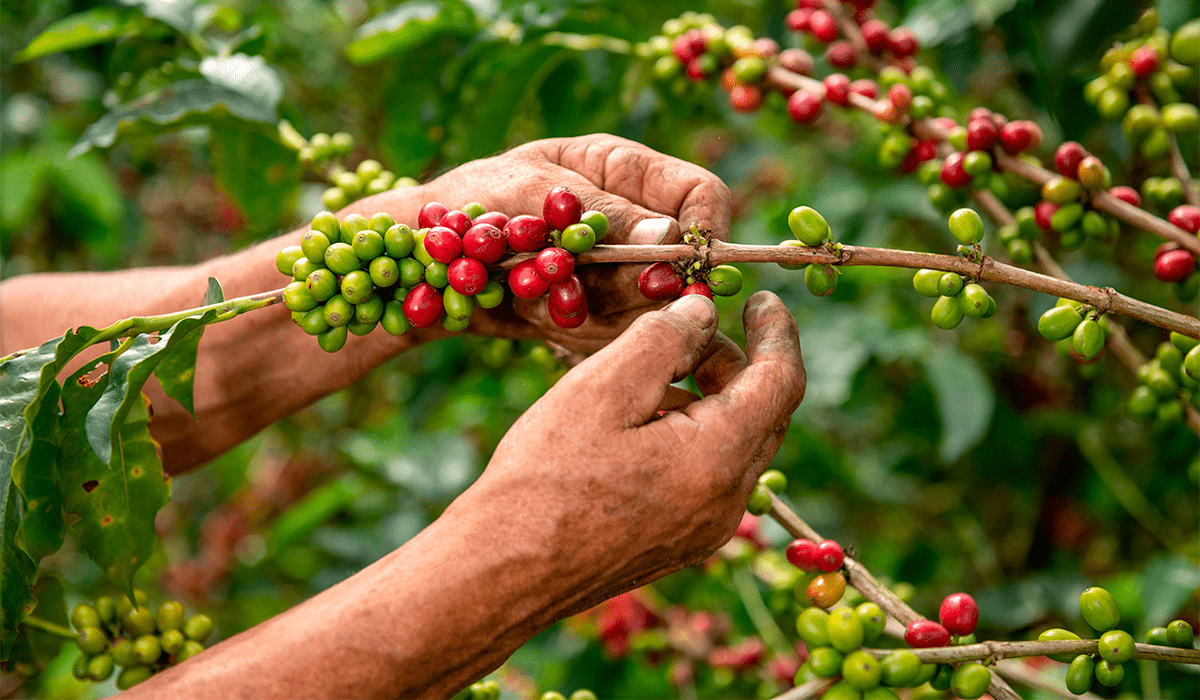
Rabobank Acorn / Solidaridad / Lutheran World Relief agroforestry programme with ~1,000 coffee producers in San Martín, Peru; over 10,000 tCO2 removed and €160,000 in ex-post, satellite-verified Plan Vivo carbon payments to producers to date.
10,000+ tCO2
CO2 removed by San Martín cohort
~€160,000
Community benefit payments generated (San Martín)
~1,000
Coffee producers enrolled in San Martín
€20 per tonne CO2
Minimum guaranteed carbon price
€31 per tonne CO2
Market sale price (elsewhere in programme)
80%
Revenue share to producers
~11,500
Acorn Latin America participants (mid-2024) (mid-2024)
Details
Maturity
Scaling
Promoter
Rabobank Acorn / Solidaridad / Lutheran World Relief (Corus International)
The Acorn programme, developed by Rabobank with NGO partner Solidaridad and, in Peru, Lutheran World Relief (Corus International), pays smallholder coffee farmers for carbon removed by planting native shade and fruit trees on their existing coffee plots. The underlying Acorn Agroforestry Methodology was certified by the Plan Vivo Foundation in November 2021 and is subject to ongoing annual review; carbon growth is measured, not merely projected, using satellite imagery, machine learning and LiDAR, with certificates issued ex-post once sequestration has actually occurred.
Activities
In Peru's San Martín region, around 1,000 coffee producers have enrolled, integrating additional tree species into their plots.
Results
The San Martín cohort has removed more than 10,000 tonnes of CO2 and generated roughly €160,000 in community benefit payments. Producers receive a minimum guaranteed price of €20 per tonne of CO2 (with market sales in the programme reaching €31/tonne elsewhere), and 80% of certificate revenue goes directly to producers, with 10% to the Acorn platform and 10% to the implementing NGO. By mid-2024 the wider Acorn Latin America partnership (Peru and Colombia) had engaged roughly 11,500 smallholder participants, with plans to expand into Honduras, Brazil, Mexico and Central America.
Conclusions
Because payments only begin around three years after planting — once trees are reliably satellite-detectable — farmers face a multi-year gap before receiving carbon income, and the ex-post model means income is inherently variable with actual tree survival and growth rather than guaranteed at enrolment.
Implementation
Indicative cost
Medium (€50k–€500k) — ~€160,000 in community benefit payments disbursed to the San Martín cohort to date, placing the programme in the medium cost band; total platform/implementation costs beyond farmer payments are not disclosed.
Time to results
Long (> 3 years) — Certification since November 2021; payments only begin around three years after planting once trees are satellite-detectable, so the full-cycle programme timeline exceeds three years (long band).
Staffing & skills
Rabobank (Acorn platform), Solidaridad (NGO partner), Lutheran World Relief / Corus International (Peru implementing NGO), smallholder coffee producers
Conditions for success
independent Plan Vivo certification with annual review
satellite/AI/LiDAR MRV providing ex-post (measured) rather than projected verification
transparent revenue-sharing (80/10/10) and a guaranteed minimum price floor
Common failure modes
multi-year (~3-year) gap between planting and first payment
ex-post model means farmer income is inherently variable with actual tree survival and growth, not guaranteed at enrolment
Where it fits
Governance type
bank-run carbon platform with NGO delivery partnership
Scale
regional smallholder cohort (San Martín region, ~1,000 producers)
Income level
upper-middle income (Peru)
Commonly funded by
Philanthropic / foundation funding
Indicative funding routes for practices of this type — always check each programme's current calls and eligibility rules.
Do you run this practice?
Claim it —
verified implementers get a public contact pathway and can propose corrections.
Data sources
Where this practice's information was retrieved from, and when.
A 20-year Plan Vivo agroforestry-carbon scheme run by ECOTRUST: 50,000+ smallholders, 34,000 ha, ~7.5 MtCO2, US$8.7M in performance-based payments, with …
Plan Vivo- and Gold Standard-certified dryland restoration in Tigray, Ethiopia: landless and smallholder farmers have restored 30,000+ ha since 2016, …