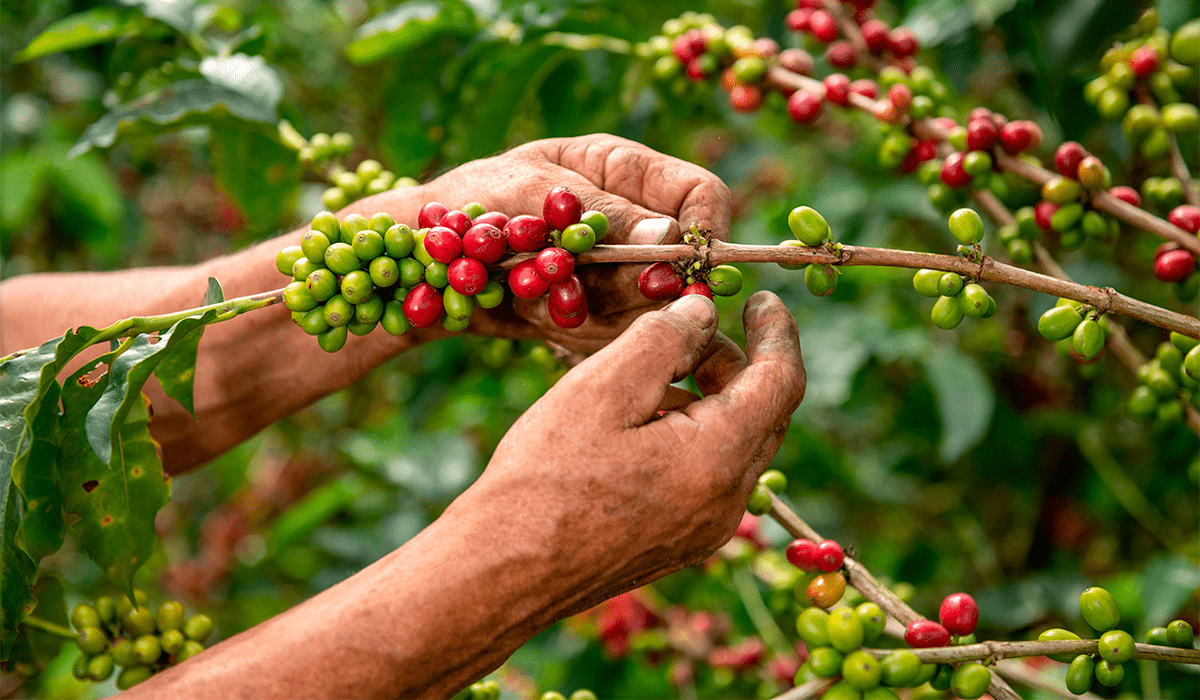
The Acorn programme, developed by Rabobank with NGO partner Solidaridad and, in Peru, Lutheran World Relief (part of Corus International), pays smallholder coffee farmers for carbon removed by planting native shade and fruit trees on their existing coffee plots. The underlying Acorn Agroforestry Methodology for Small-Scale Agroforestry was certified by the Plan Vivo Foundation in November 2021 and is subject to ongoing annual review; carbon growth is measured, not merely projected, using satellite imagery, machine learning and LiDAR, with certificates issued ex-post once sequestration has actually occurred.
In Peru's San Martín region, around 1,000 coffee producers have enrolled, integrating additional tree species into their plots. As of the most recent reporting, the San Martín cohort had removed more than 10,000 tonnes of CO2 and generated roughly €160,000 in community benefit payments. Producers receive a minimum guaranteed price of €20 per tonne of CO2 (with market sales in the programme reaching €31/tonne elsewhere), and 80% of certificate revenue goes directly to producers, with 10% to the Acorn platform and 10% to the implementing NGO for programme delivery.
By mid-2024, the wider Acorn Latin America partnership (spanning Peru and Colombia) had engaged roughly 11,500 smallholder participants, mostly cacao and coffee farmers, with plans to expand into Honduras, Brazil, Mexico and Central America. Because payments only begin around three years after planting - once trees are reliably satellite-detectable - farmers face a multi-year gap before receiving carbon income, and the ex-post model means income is inherently variable with actual tree survival and growth rather than guaranteed at enrolment.
Read the full analysis: https://www.green.earth/news/agroforestry-and-technology-unite-acorns-impact-on-small-farmers-in-peru-and-colombia
Where this practice's information was retrieved from, and when.