Eddleston Water Project — Whole-Catchment Natural Flood Management Trial in the Scottish Borders
United Kingdom
A decade-plus monitored NFM experiment across 24 farms: 300,000+ native trees, ~40 leaky ponds and ~136 flow restrictors; reported ~30% …
United Kingdom · See the United Kingdom profile
Evidence: Descriptive / self-reported · Ask Evidence Copilot about this practice
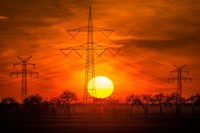
The frequency of extreme heatwaves in the UK is expected to increase in the future. The UK Climate Projections 2009 project that summer temperatures will increase by up to 4°C in parts of the UK under a medium emissions scenario by 2080. Such ambient temperature increases pose a threat to transmission and distribution operators due to the thermal expansion of power lines when they are heated. Such thermal expansion can cause lines to sag, meaning their clearance from land can become a danger to the general public. Sagging may also result in contact with trees and other structures, which could result in electrocution or fires. Most European countries, including the UK, have legislation in place to maintain a minimum distance between power lines and the ground or structures, in order to ensure that potential instances of electrocution or fires are avoided. Higher ambient temperatures means that the electrical current that passes through overhead power lines must be reduced to prevent the overheating of equipment. Furthermore, warmer power lines can result in decreased efficiency due to a process known as de-rating. UK power utilities have assessed that increasing temperatures under climate change could cause carrying capacity to decrease by 4-9% by the mid-21 st century. All of these impacts ultimately result in risks of accidents, power cuts and revenue losses, as well as cascading network failures. These impacts are compounded by increasing electricity demand during heat episodes, for example due to air conditioning.
UK transmission and distribution networks have set out to review and update overhead line ratings throughout their whole network. This entails establishing the operational maximum temperature which overhead lines may be subjected under climate change scenarios, and determining a design standard to accommodate the projected increases in line sagging. These adaptation measures increase energy security and reduce risks of electrocution and fire.
Western Power Distribution (WPD) are delivering electricity to 8 million customers throughout a 55,500 km 2 service area in the UK. WPD have benefited from a study led by the UK Met Office (the national weather service). The study ‘Energy Project 2 Climate Change Impacts on the U.K. Energy Industry Project’ utilised energy-sector expertise to identify climate change impacts on energy generation, distribution, transmission and demand. WPD cooperated with the Energy Network Association (ENA) (a trade body organisation funded by transmission and distribution licence holders) in order to operationalise adaptation measures based on the study and to make plans to combat power line de-rating. Adaptation measures identified included increasing the height of poles supporting power lines, installing conductors with hotter operating limits or implementing the use of ‘low-sag’ conductors. WPD assessed that the increased exposure to higher temperatures under projected climate changes would result in a reduced allowable current with their current design standards of wood poles. This would result in efficiency losses, and potentially economic losses, for the operator. The most cost-effective measure identified was to increase the minimum design temperature of new overhead line routes, the achievement of which would typically increase the design height of wood poles by 0.5 metres. This increased height could accommodate the projected increases in sagging without exceeding legal limits on the height of overhead lines. Furthermore, WPD have, in partnership with other UK DNOs, recently completed a project to update the UK Distribution Industry’s understanding of conductor ratings for overhead lines. Through their cooperation with ENA, WPD will be implementing the findings as an update to national standards. As part of this ongoing process, WPD and various other UK energy companies are also developing a software tool that will allow UK energy companies to optimise their overhead line ratings.
The costs of procuring wooden overhead poles 0.5 meters taller depend on the height of the original pole, but they can be as little as around £10 (€11) per pole.
Detailed climate change impacts on the energy system were identified through a collaboration with multiple stakeholders in the context of the ‘EP2 Climate Change Impacts on the U.K. Energy Industry’ project (lead by the Met Office). Such collaborations with weather information services can enable rapid provision of data sets that are directly relevant for decision-makers in the energy sector. The identification of likely climate change impacts on the energy system in advance allows time to implement measures to increase the resilience of the system. In addition, through engaging with the ENA, members of electricity network operators are brought together on the ENA-led Climate Change Adaptation Task Group with government and regulating agencies. The Task Group produces approaches to identify impacts of climate change on electricity TSO and DSO networks, and develop measures to adapt to the impacts of climate change. Such exchanges of information can form an integral component of selecting cost-effective and efficient adaptation measures that can benefit both private actors and the public realms.
Implementation detail (cost, timeline, staffing, conditions for success) is not yet available for this practice.
Own resources / municipal budget
Indicative funding routes for practices of this type — always check each programme's current calls and eligibility rules.
Do you run this practice? Claim it — verified implementers get a public contact pathway and can propose corrections.
Where this practice's information was retrieved from, and when.
United Kingdom
A decade-plus monitored NFM experiment across 24 farms: 300,000+ native trees, ~40 leaky ponds and ~136 flow restrictors; reported ~30% …
Canada
Since 2019, the Yunesit'in and Xeni Gwet'in First Nations have revived spring and fall cultural burning across Tsilhqot'in Territory, British …
Iceland
Since 2007, Iceland's Hekluskógar project has enlisted 210+ landowners to re-establish native birch woodland around the Hekla volcano, planting 2.3M+ …
United States of America
A 50/50 USACE-SFWMD project backfilled 22 miles of the C-38 flood-control canal and re-carved 44 miles of the Kissimmee River's …
Open full copilot Grounded in cited practices — always check the sources.