AGCCI TVET Coding and Robotics Boot Camp — AI Skills for Young Women at Motheo TVET College, Bloemfontein
South Africa
A 10-day AGCCI bootcamp at Motheo TVET College, Bloemfontein (29 June-9 July 2026) trained 40 young women from Motheo TVET …
Kenya · Nairobi · See the Kenya profile · See the Nairobi profile
Evidence: Descriptive / self-reported Top 40% 53/100 · Ask Evidence Copilot about this practice
Phase III of the African Girls Can Code Initiative trained 100 young women (14-25) at Kenya's CEMASTEA centre in AI, cybersecurity, civic tech and the digital platform economy; 113 girls have taken part in Kenya since 2022, with some graduates hired by Siemens and Safaricom.
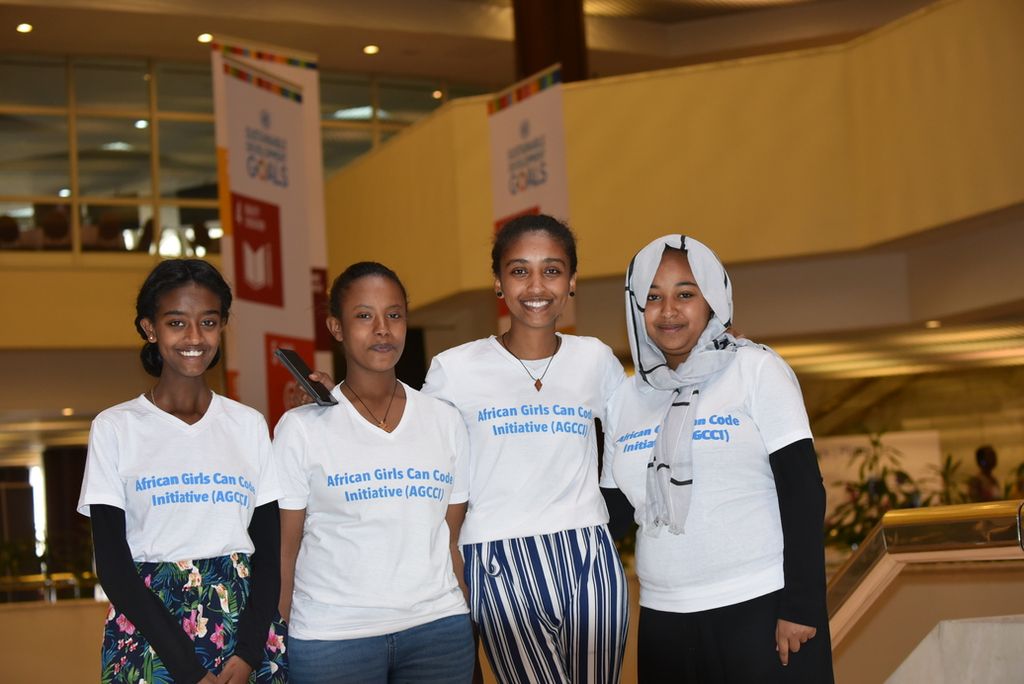
The African Girls Can Code Initiative (AGCCI), a joint UN Women/African Union/ITU programme, delivered its Phase III Kenyan cohort at CEMASTEA (Nairobi) in 2025, training 100 young women aged 14-25 in civic technology, cybersecurity, AI and the digital platform economy.
Cumulative participation in Kenya since 2022 reached 113 girls and young women; GoMyCode awarded 10 scholarships to graduates, and several graduates are reported to have secured jobs at Siemens and Safaricom, though no denominator or placement-rate verification is given.
UN Women cites regional context data: women hold only 23-30% of tech-sector roles in sub-Saharan Africa and received about 1% of tech venture funding in 2024.
National / regional programmes
Indicative funding routes for practices of this type — always check each programme's current calls and eligibility rules.
Do you run this practice? Claim it — verified implementers get a public contact pathway and can propose corrections.
Where this practice's information was retrieved from, and when.
South Africa
A 10-day AGCCI bootcamp at Motheo TVET College, Bloemfontein (29 June-9 July 2026) trained 40 young women from Motheo TVET …
Malawi
The Malawi Girls Can Code Too (MGCC2) project ran three 10-day bootcamps in Dowa, Mzuzu and at the Malawi University …
India
India's skills ministry and Microsoft built a hub-and-spoke AI-skilling network for women's colleges — 30 Centres of Excellence and 150 …
Cambodia
Cambodia's first all-girls coding club, run since 2019, trained 180 girls (110 graduating); pre/post surveys show belief that "not all …
Open full copilot Grounded in cited practices — always check the sources.