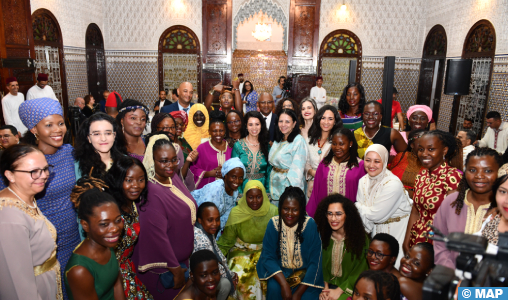
UNESCO, Ai Movement and Morocco's OCP Foundation run a 3-year, $500,000 AI programme for African women: 34 women from 11 countries in a 2023 pilot, then 80 women from 28 countries completing a 2024 course and Rabat summer camp, with 15 winning incubation grants.
114
Women trained across both cohorts (by end 2024)
500,000 US$
Programme funding
15
Women selected for funded incubation (2024 cohort)
Details
Maturity
Scaling
Promoter
UNESCO, Ai Movement (Mohammed VI Polytechnic University), OCP Foundation
Period
2023-2025
Keywords
AI literacy, entrepreneurship, gender equity, higher education
Context
African Women in Tech and AI (AWITAI), a three-year (2023–2025) UNESCO/Ai Movement/OCP Foundation project, trains African women entrepreneurs in AI, targeting 150 participants.
Results
By the end of 2024, a cumulative 114 women from across Africa had been trained across two cohorts, with 15 selected for funded incubation spanning agriculture, health and other sectors, but no independent third-party evaluation of incubated start-ups' survival, revenue or job-creation outcomes has been published.
Implementation
Indicative cost
Medium (€50k–€500k)
Time to results
Medium (1–3 years)
Staffing & skills
UNESCO, Ai Movement (Mohammed VI Polytechnic University), OCP Foundation
Conditions for success
Structured cohort model: online course plus in-person summer camp plus selective funded incubation
Commonly funded by
Philanthropic / foundation funding
Indicative funding routes for practices of this type — always check each programme's current calls and eligibility rules.
Do you run this practice?
Claim it —
verified implementers get a public contact pathway and can propose corrections.
Data sources
Where this practice's information was retrieved from, and when.
A 5-week AI-literacy module for pre-service physics teachers across nine Kazakhstani universities, led by Zhetysu University, raised literacy scores far …
MUST, Mongolia's IIOE National Centre, runs a train-the-trainer micro-certification scheme with UNESCO-ICHEI, giving AI and digital-competency micro-credentials to 1,800+ teachers …