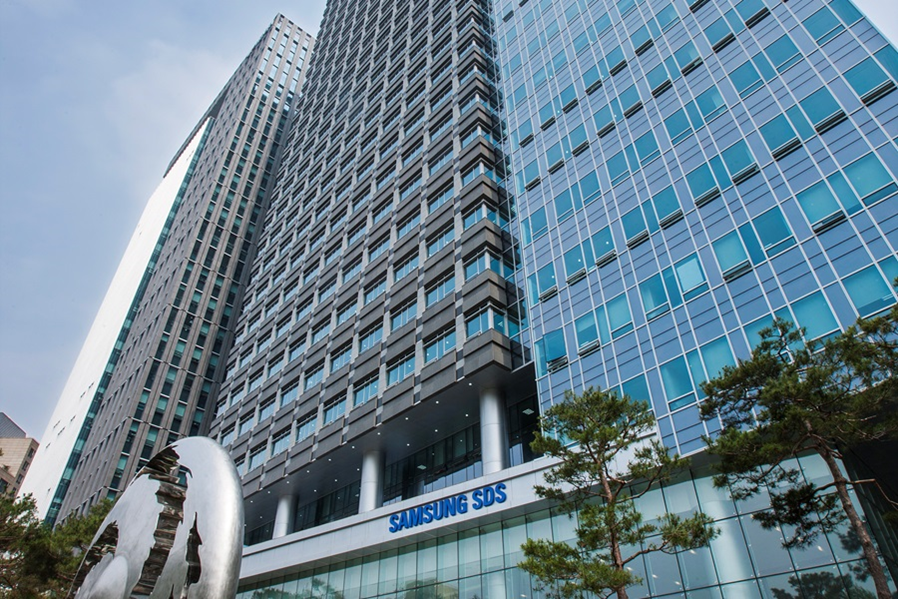
South Korea's National Assembly deployed an on-premises generative-AI platform built by Samsung SDS — combining a custom LLM, retrieval-augmented generation and bill/clause-recommendation tools — for roughly 5,000 lawmakers and aides across 320 organisations, in a three-phase rol
5,000 lawmakers and aides
Users served in Phase 1 (Phase 1 (2026))
320 organisations
Organisations covered by Intelligent Search
11.7 KRW billion
Phase 1 contract value
Details
Maturity
Scaling
Promoter
National Assembly of the Republic of Korea (built with Samsung SDS)
Period
2026–2027 (phased rollout)
Keywords
generative AI, legislative drafting, retrieval-augmented generation, digital government, parliamentary technology
Context
In April 2026, South Korea's National Assembly launched an AI-Powered Parliamentary Support Platform built by Samsung SDS on its on-premises 'FabriX' generative-AI stack, combining large and small language models with a custom National-Assembly model and a retrieval-augmented-generation pipeline, hosted in the Assembly's own data centre for security and data control.
Objectives
The three-phase rollout is planned to run through 2027, progressively extending the platform across the National Assembly.
Activities
The platform provides three linked services: an 'AI Assistant' chatbot for policy queries, document drafting and meeting-minutes summarisation; 'Intelligent Search', a natural-language semantic search spanning roughly 320 internal and external organisations; and a 'Legislative Bill Service' recommending comparable bills and matching statutory clauses for drafting support.
Results
Phase 1, valued at approximately KRW 11.7 billion, serves about 5,000 lawmakers and aides as the first stage of a three-phase project running through 2027. No independent (non-vendor) evaluation of accuracy, adoption or productivity impact has yet been published.
Implementation
Indicative cost
High (€500k–€5M) — Phase 1 is valued at approximately KRW 11.7 billion, covering roughly 5,000 users; the full project spans three budgeted phases through 2027.
Time to results
Long (> 3 years) — Launched April 2026; three-phase rollout through 2027.
Staffing & skills
Samsung SDS engineering team (vendor), National Assembly IT/data-centre staff hosting the on-premises deployment
Conditions for success
On-premises hosting for data security and control
Phased, budgeted rollout to manage risk across the multi-year project
Custom National Assembly LLM tailored to the legislative domain plus retrieval-augmented generation over legislative sources
Common failure modes
No independent evaluation of accuracy or productivity impact has been published
Reporting relies almost entirely on the vendor's own press materials, creating a transparency gap
Where it fits
Governance type
national legislature
Scale
national
Income level
high income
Commonly funded by
National / regional programmes
Indicative funding routes for practices of this type — always check each programme's current calls and eligibility rules.
Do you run this practice?
Claim it —
verified implementers get a public contact pathway and can propose corrections.
Data sources
Where this practice's information was retrieved from, and when.
New Zealand's Parliamentary Counsel Office ran a six-month, five-partner R&D programme fine-tuning an 8-billion-parameter model on 200 examples of NZ …
The UK's Government Digital Service piloted GOV.UK Chat, a retrieval-augmented generative-AI assistant answering citizens' tax, benefits and visa questions — …