Tiroler Lech LIFE Projects — Riverbed Widening on Austria's Last Wild Alpine River
Austria
Two EU LIFE projects widened and re-connected the Lech's gravel riverbed in Tyrol; bedload transport and gravel-bank birds recovered, though …
Sudan · Khartoum · See the Sudan profile · See the Khartoum profile
Top 99% 13/100 · Ask Evidence Copilot about this practice
Al-Sunut, a ~6 km² acacia forest by Khartoum's Nile confluence, was one of Sudan's three official bird sanctuaries (110+ species) and absorbed White Nile floods. Little damage showed in satellite checks to April 2025; by 2026 UNEP and officials reported it almost entirely felled.
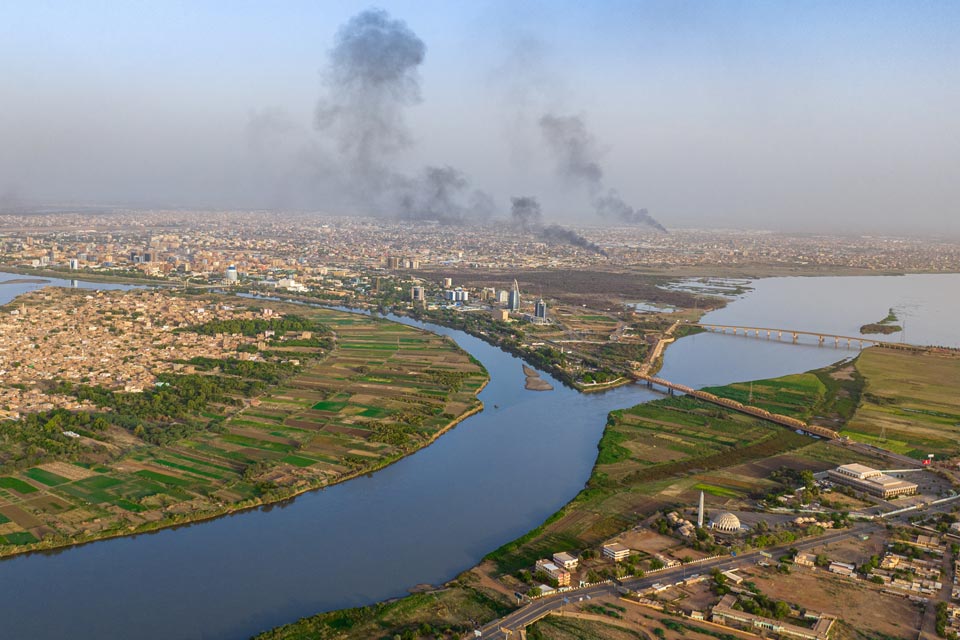
The Al-Sunut (Sunt) Forest is an acacia woodland on the White Nile floodplain in urban Khartoum, near the confluence of the Blue and White Niles. UNEP gives its area as about six square kilometres; Khartoum state officials quoted by AFP gave about 1,500 hectares. It was one of three officially designated bird sanctuaries in Sudan and supported at least 110 resident and migratory bird species. It also soaked up White Nile floodwaters, a flood-regulation service for the city. Even before the war, the site was stressed by construction pressure, waste dumping and repeated attempts to release its land for investment.
Sudan's war began in April 2023. A Conflict and Environment Observatory (CEOBS) satellite review found no significant deforestation or fire damage from April 2023 to January 2024, and Sentinel-2 NDVI comparisons through April 2025 showed only reduced greenness. By February 2026, a Khartoum state environment official told AFP the reserve had been 'completely wiped out', with century-old trees cut for timber and charcoal while fighting made patrols impossible. The same official estimated that Khartoum state had lost 60% of its green cover. UNEP's April 2026 story described the forest as almost completely cleared, with firewood collection by impoverished residents a key driver.
UNEP also reported natural regrowth, and the Higher Council for Environment and Natural Resources argues that protecting the new seedlings is the priority. Some residents question replanting while 41% of Sudanese face acute food insecurity. The case shows how fast an urban forest's flood and biodiversity services can collapse when enforcement and household energy supply fail together.
Read the full analysis: https://ceobs.org/?p=11498
Implementation detail (cost, timeline, staffing, conditions for success) is not yet available for this practice.
Do you run this practice? Claim it — verified implementers get a public contact pathway and can propose corrections.
Where this practice's information was retrieved from, and when.
Austria
Two EU LIFE projects widened and re-connected the Lech's gravel riverbed in Tyrol; bedload transport and gravel-bank birds recovered, though …
Germany
A €1.1M LIFE project lengthened streams by 3,760 m (target 3,000 m), converted 123 ha of spruce to oak and …
Nigeria
Typha covers ~35,000 of 58,100 ha of Hadejia-Nguru wetlands; trials found cutting 15 cm below water best. Basin governance exists …
Sri Lanka
Colombo's 2016 Wetland Strategy protects a 1,900-hectare wetland complex absorbing roughly 40% of the city's floodwater; Sri Lanka must keep …
Open full copilot Grounded in cited practices — always check the sources.