University of Sydney 'two-lane' assessment for the AI era
Australia
Instead of an unwinnable AI-detection arms race, Sydney redesigned assessment into two lanes — secure in-person assessment of core capability, …
El Salvador · San Salvador · See the El Salvador profile · See the San Salvador profile
Evidence: Descriptive / self-reported Top 56% 47/100 · Ask Evidence Copilot about this practice
A World Bank-financed AI-tutor pilot in 171 Salvadoran public schools posted PISA-for-Schools results the government says rival Germany and Sweden, but the sample was self-selected by infrastructure and willingness, not randomised, and the national PISA 2025 showed far smaller ga
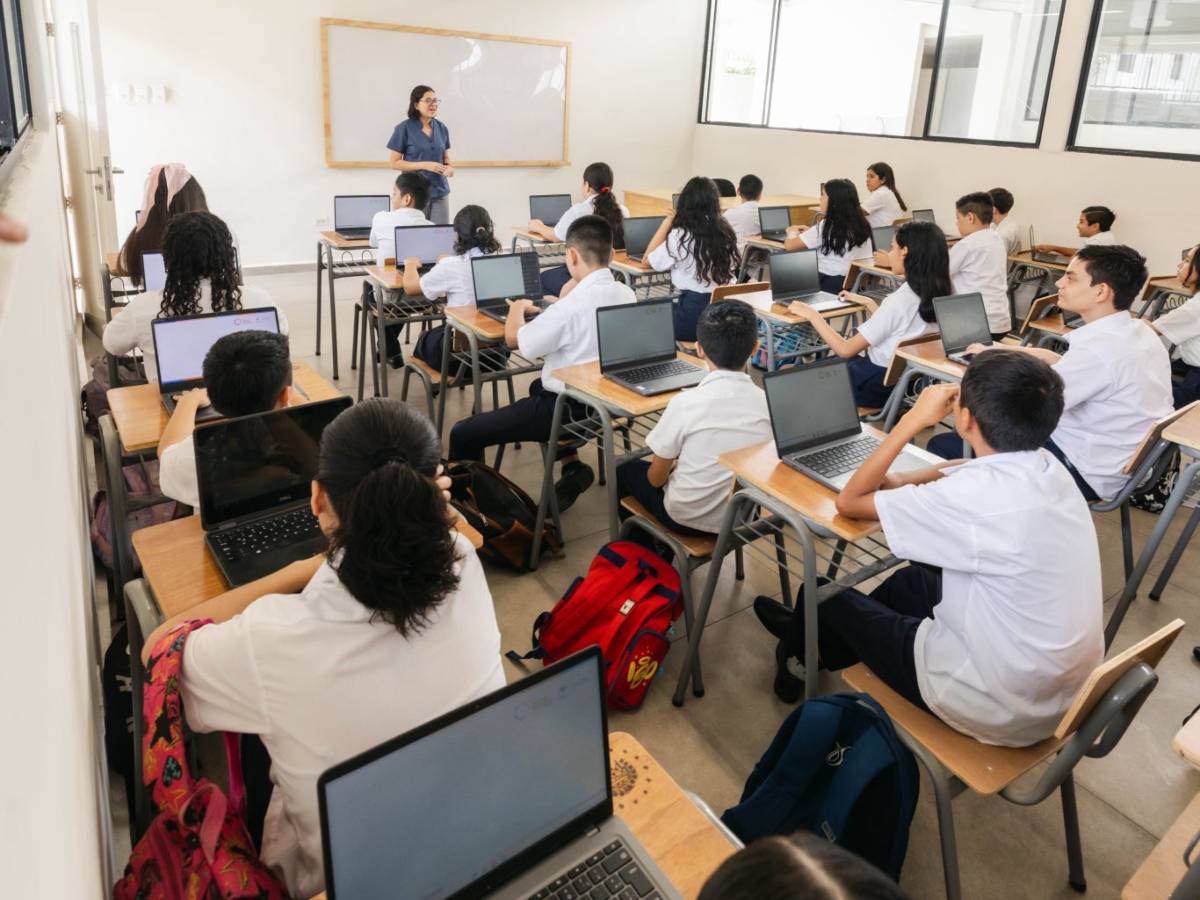
AprendES ('Acelerando el Aprendizaje en El Salvador con Innovación Digital') is a US$501 million World Bank-financed education modernisation project approved in March 2026, run by El Salvador's Ministry of Education, Science and Technology (MINEDUCYT) under Minister Karla Trigueros.
Bundle devices, connectivity, digital platforms, teacher and principal coaching, pedagogical materials and an AI tutoring tool that generates exercises, answers questions and adapts to each student's level, with a government ambition to reach all public schools within 18 months.
The pilot began in mid-2025 in a small set of schools and had expanded to more than 1,000 public schools by September 2026. In June 2026 the OECD's PISA-for-Schools instrument was administered to 1,198 volunteer students across 171 participating schools, chosen for infrastructure readiness, connectivity and willingness to participate rather than at random.
President Bukele announced that participating pilot schools scored above the national average in reading, mathematics and science, comparable to Germany's and Sweden's PISA 2022 averages. The government's own nationally representative PISA 2025 exercise (7,073 students across 278 schools) showed scores stable in mathematics and reading, with improvement only in science — a far more modest picture.
No independent evaluation has isolated what share of the pilot schools' gain, if any, is attributable to the AI tutor specifically versus the other bundled inputs or to the non-random selection of better-resourced, willing schools. Bukele himself acknowledged the results 'do not prove that every Salvadoran school has been transformed,' and the World Bank called them 'encouraging' while cautioning that scaling to the full system remains 'an immense effort.'
National / regional programmes
Indicative funding routes for practices of this type — always check each programme's current calls and eligibility rules.
Do you run this practice? Claim it — verified implementers get a public contact pathway and can propose corrections.
Where this practice's information was retrieved from, and when.
Australia
Instead of an unwinnable AI-detection arms race, Sydney redesigned assessment into two lanes — secure in-person assessment of core capability, …
Croatia
CARNET's ESF+-funded BrAIn project piloted Croatia's first AI curriculum in VET schools, covering responsible AI use, plagiarism and authorship crediting; …
United Kingdom
Free AI writing-feedback tool by Cambridge University Press & Assessment (Sept 2016); assigns CEFR A1–C2 levels to EFL essays and …
Nigeria
A six-week World Bank RCT in nine Edo State public schools showed GPT-4 tutoring (Microsoft Copilot) delivered English gains equivalent …
Open full copilot Grounded in cited practices — always check the sources.