LIFE Blue Natura — Andalusia's Posidonia Blue-Carbon Standard (Spain)
Spain
EU LIFE-funded project mapped carbon stocks across 13,000+ ha of Andalusian Posidonia oceanica meadows and salt marshes (13,085 ktCO2 stored), …
Kenya · Kwale · See the Kenya profile
Evidence: Descriptive / self-reported Top 89% 27/100 · Ask Evidence Copilot about this practice
Kenya's largest mineral sands mine linked its lease to Gongoni Forest Reserve via a biodiversity corridor, propagating 232,945 trees across 305 species — including 90+ IUCN Red List species — while independent reporting flagged gaps in closure-plan disclosure.
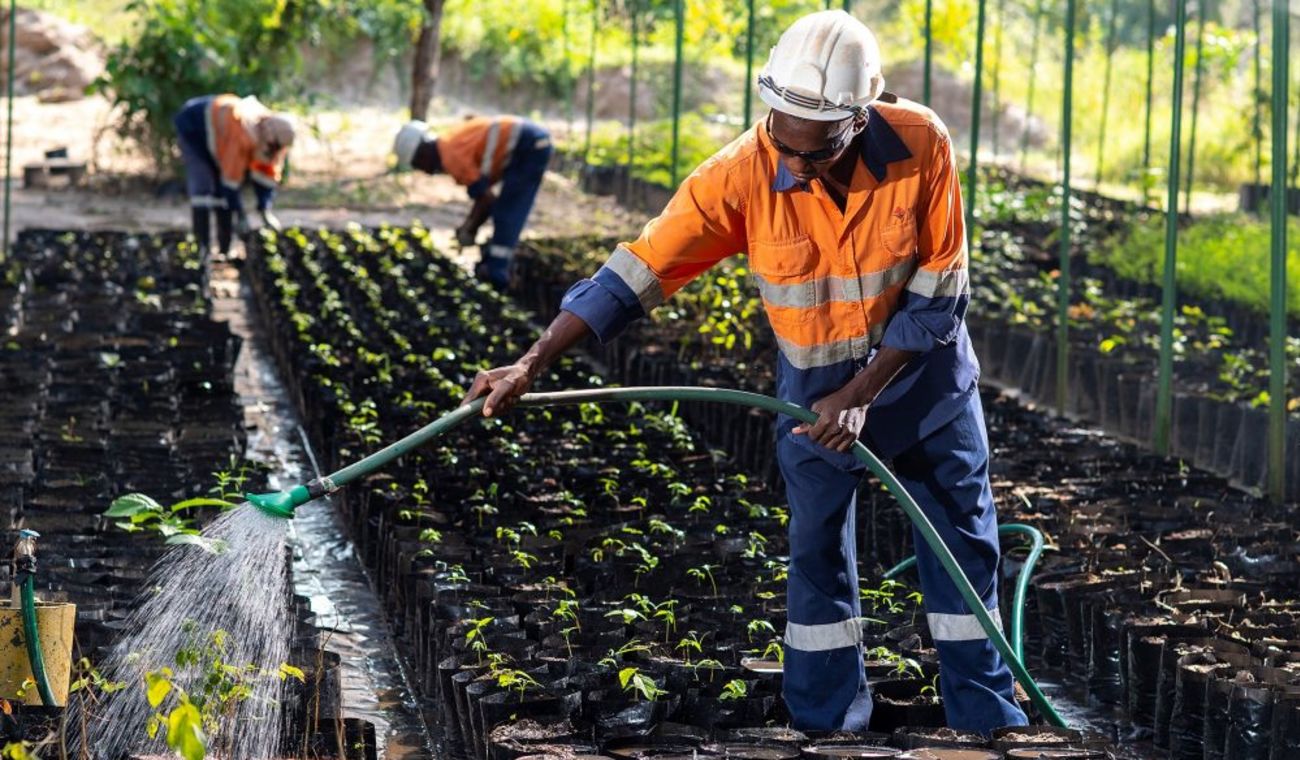
Base Titanium built a biodiversity corridor linking remnant patches of indigenous coastal forest inside its Kwale mineral sands mining lease to the adjacent Gongoni Forest Reserve, working with the National Museums of Kenya, Kenya Wildlife Service and Kenya Forest Service across the mine's 2013-2024 operating life. One of the largest indigenous tree nurseries in East and Central Africa underpins the programme.
The programme propagates rare and endangered species ex-situ and plants them out in the corridor and wider rehabilitation area.
As of December 2022, the company reported 232,945 trees propagated across 305 species, including 3,687 Critically Endangered trees propagated and 2,361 planted out, and 161,563 trees planted in the field overall. More than 90 IUCN Red List species were propagated for the first time, over 1,400 individuals of the Critically Endangered tree Gigasiphon macrosiphon were planted in the corridor, and independent monitoring by National Museums of Kenya specialists recorded 113 bird species on site.
NEMA publicly praised the land restoration roughly two years after mine closure, and the methodology was documented in a peer-reviewed 2024 international mine-closure conference paper. Set against this, The Standard reported that no comprehensive mine-closure plan, rehabilitation framework or independent environmental audit had been disclosed to affected villagers during decommissioning, and a national audit of Kenyan mining EIAs found sector-wide weaknesses in predicting biological impacts.
Own resources / municipal budget
Indicative funding routes for practices of this type — always check each programme's current calls and eligibility rules.
Reusable artefacts from this practice — as published by their sources.
Do you run this practice? Claim it — verified implementers get a public contact pathway and can propose corrections.
Where this practice's information was retrieved from, and when.
Spain
EU LIFE-funded project mapped carbon stocks across 13,000+ ha of Andalusian Posidonia oceanica meadows and salt marshes (13,085 ktCO2 stored), …
Chile
Chile's environmental court approved a binding, up to US$93m agreement forcing the world's largest copper mine to fund 19 measures …
Mauritania
Mauritania's BACoMaB endowment, seeded in 2009 by the government, KfW, AFD, FFEM and MAVA, funds Banc d'Arguin, Diawling and the …
Colombia
Colombia's first Habitat Bank to issue tradeable Voluntary Biodiversity Credits protects 340 ha of Andean cloud forest in Támesis, Antioquia; …
Open full copilot Grounded in cited practices — always check the sources.