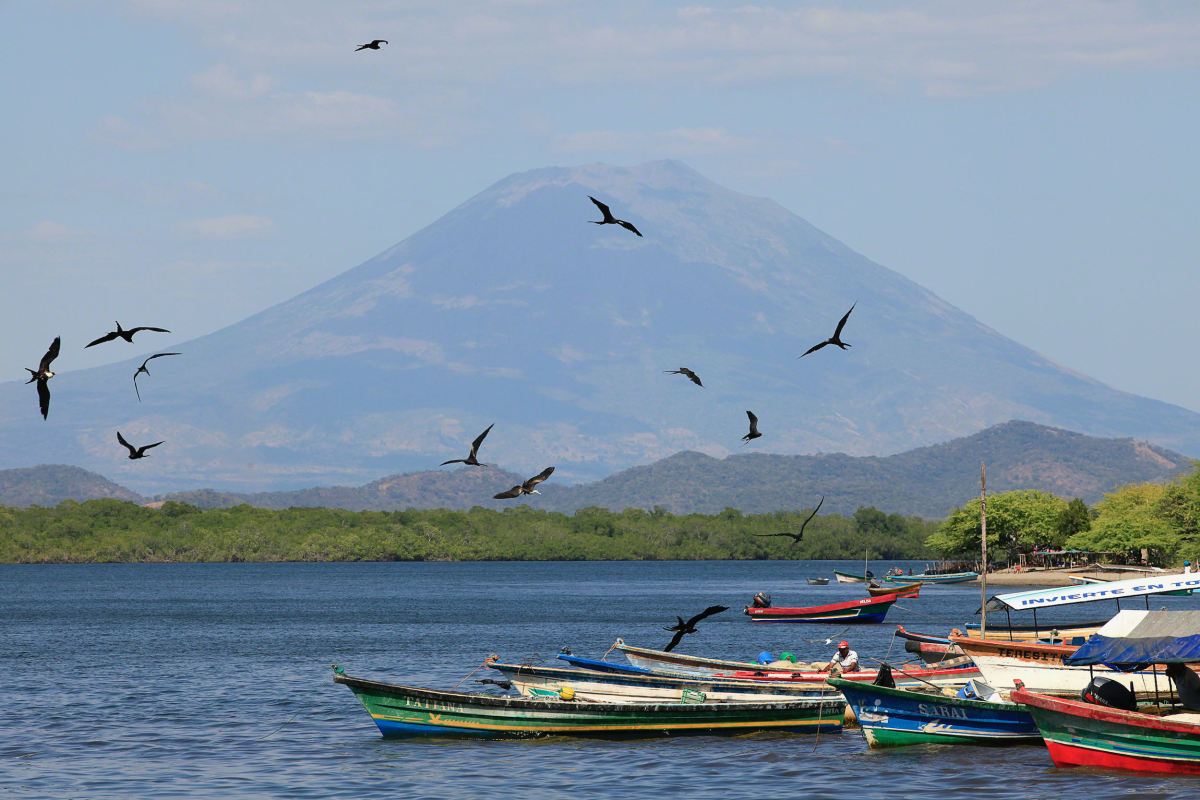
Jiquilisco Bay, in El Salvador's Usulután department, holds roughly 25,000 hectares of mangrove forest, the largest contiguous mangrove system in Central America, designated a UNESCO Biosphere Reserve and a Ramsar Wetland of International Importance. Decades of upstream sedimentation and infrastructure had silted up tidal channels across parts of the bay, cutting mangrove stands off from the twice-daily tidal flushing they need to survive and causing large-scale dieback in areas such as El Lloron and El Rico.
In 2011, the Mangrove Action Project (MAP) ran a training workshop introducing Community-Based Ecological Mangrove Restoration (CBEMR) — a method that restores hydrology and topography so mangroves regenerate on their own, rather than planting nursery-raised seedlings — to El Salvador's environment ministry (MARN), the FIAES conservation fund and the local NGO Asociación Mangle. Over the following decade, Asociación Mangle organised community members to reopen more than 10 kilometres of silted, blocked tidal channels by hand across the bay, including roughly 4.2 km cleared at El Lloron and a further 2 km plus 0.5 km of newly dug channel at El Rico, drawing in more than 300 residents from around 80 communities.
With tidal flow restored, mangroves regenerated naturally across hundreds of hectares without any planting. A 12-year follow-up assessment published by MAP in 2023 found the recovery had held, and El Salvador's Ministry of Environment has since named the community-led CBEMR method as the approach to follow in the national environmental plan for mangrove conservation.
The project's central lesson, highlighted in a 2025 Mongabay analysis of the case, is that restoration success should be measured by seedling survival over 10–25 years rather than by trees planted — many conventional mangrove-planting programmes elsewhere report high initial planting numbers but very low long-term survival because they never address the underlying hydrological blockage. Jiquilisco's channel-clearing approach cost far less than large-scale nursery planting, but independent, quantified biodiversity and carbon-stock monitoring of the restored area remains thin, and sustaining the reopened channels depends on continued community labour and upstream sediment management.
Read the full analysis: https://mangroveactionproject.org/2023/08/map-in-el-salvador/
Where this practice's information was retrieved from, and when.