Business Improvement Districts — Hamburg's 20-Year Model for Self-Funded District Revitalisation
Germany
In 2005 Hamburg became the first German state with a legal Business Improvement District framework. Property and business owners have …
Netherlands · Amsterdam · See the Netherlands profile · See the Amsterdam profile
Evidence: Observational / pre–post Top 17% 81/100 · Ask Evidence Copilot about this practice
The Netherlands' 2015 BIZ law lets local businesses vote to self-tax and jointly fund street cleaning, safety and marketing. It grew from about 30 pilot zones expected under a 2009 trial law to over 400 zones nationwide, generating €160 million in extra local investment.
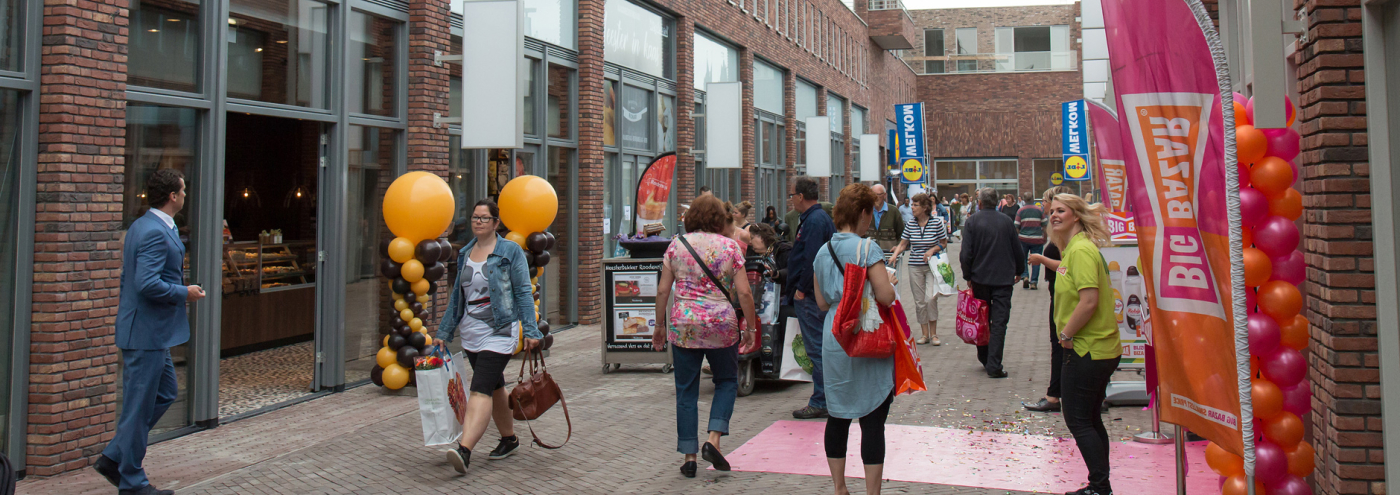
The Wet op de bedrijveninvesteringszones (BIZ Act) took effect on 1 January 2015, giving Dutch municipalities a permanent legal instrument to designate a shopping street or business park as a Bedrijveninvesteringszone (BIZ) at the request of local entrepreneurs. It formalised an earlier 2009 experimental law (Experimentenwet BI-zones).
The design aims to let local businesses that want joint improvements — such as street cleaning, lighting, security and area marketing — self-tax through a compulsory, vote-triggered levy, specifically to prevent large retailers free-riding on improvements funded by smaller neighbours, a common failure of voluntary business associations.
Within a BIZ, the municipality levies a compulsory contribution on all property users in the zone once a required threshold of local businesses votes in favour, and channels proceeds to a foundation or association that executes an improvement plan designed by the entrepreneurs themselves.
The 2009 experimental law, expected to produce around 30 pilot zones, in practice produced more than 100 before the permanent law took effect. By the mid-2020s more than 400 BIZs were active nationwide, financing roughly €160 million in additional local investment, entirely from the compulsory local levy with no ongoing central-government subsidy. Amsterdam alone grew from 49 BIZs in 2017 to 91 in 2026.
Evaluators have flagged two risks worth tracking: municipalities could quietly reduce baseline street maintenance knowing a BIZ will compensate, and the funding is almost entirely oriented toward commercial property interests rather than wider social-inclusion goals.
National / regional programmes Own resources / municipal budget
Indicative funding routes for practices of this type — always check each programme's current calls and eligibility rules.
Reusable artefacts from this practice — as published by their sources.
Do you run this practice? Claim it — verified implementers get a public contact pathway and can propose corrections.
Where this practice's information was retrieved from, and when.
Germany
In 2005 Hamburg became the first German state with a legal Business Improvement District framework. Property and business owners have …
Jamaica
Since 2025 Jamaica's Chamber of Commerce and Kingston Restoration Company have run a corporate-sponsored clean-up campaign across eight downtown Kingston …
South Africa
A property-owner-funded Special Rates Area has run Cape Town's CBD safety and cleaning services since 2000, cutting festive-season crime 34% …
Philippines
Founded in 2016 by IdeaSpace, J.P. Morgan, DOST and DTI, QBO grew to 540+ member startups, 10,000+ members and 240+ …
Open full copilot Grounded in cited practices — always check the sources.