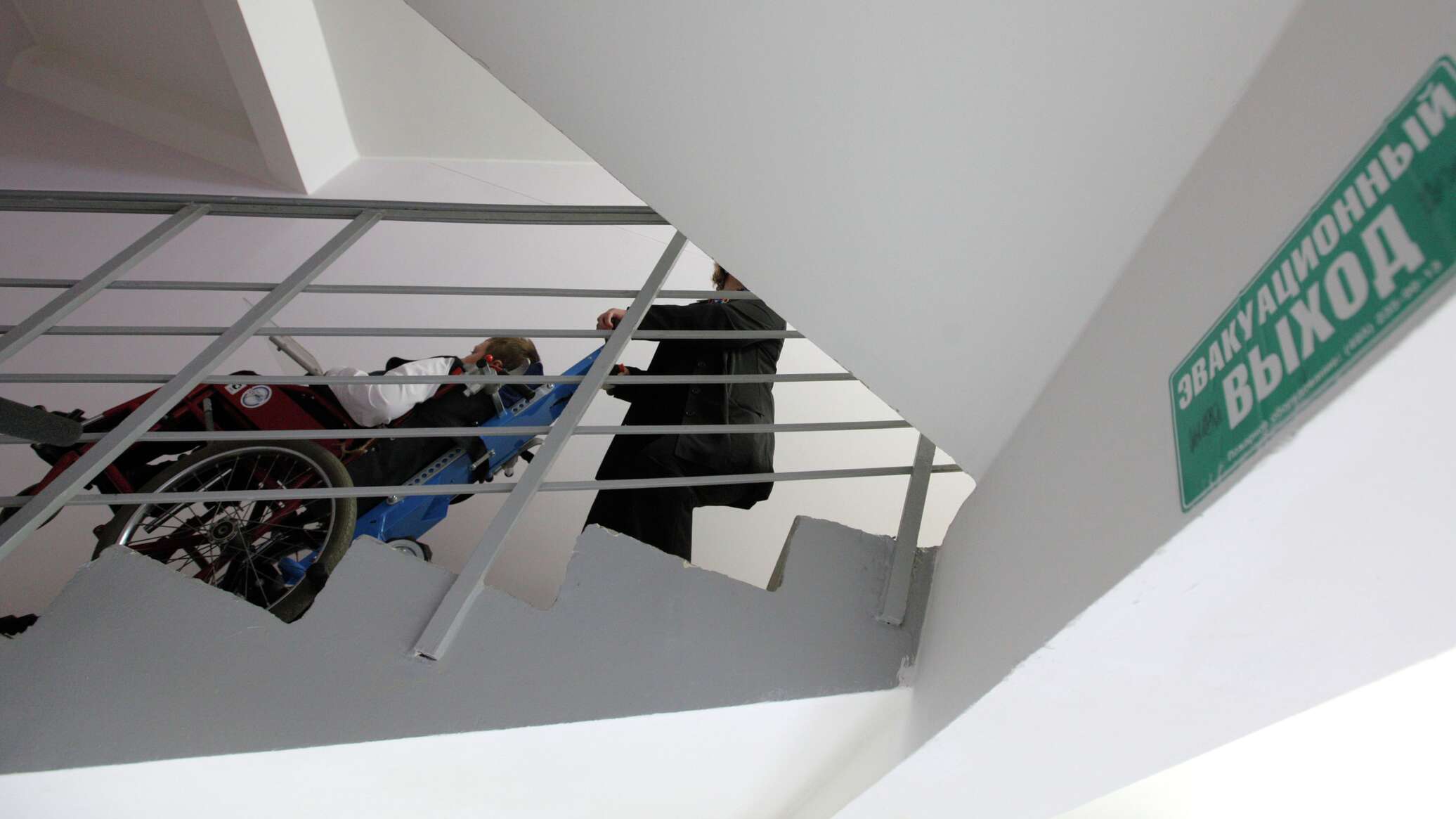
Kyrgyz Red Crescent volunteers audited over 3,000 Bishkek locations for disability access with OSCE support, feeding results into 2GIS — the mapping app residents already use — via an accessibility filter launched in December 2020.
3000 establishments (3,000+)
Locations audited for accessibility
Details
Promoter
OSCE Programme Office in Bishkek; Kyrgyz Red Crescent Society; 2GIS
Period
2020
Keywords
urban accessibility, civic tech, disability inclusion, digital mapping
Context
Before 2020, Bishkek had no consolidated public source telling wheelchair users or people with limited mobility which shops, cafes or government offices they could actually enter; the Kyrgyz Red Crescent Society, working with the OSCE Programme Office in Bishkek, set out to close that gap.
Objectives
Make disability-access information available through a platform residents already use daily, rather than asking them to discover and install a new standalone app.
Activities
Volunteers physically audited more than 3,000 establishments across Bishkek for step-free entrances, ramps and other access features, then fed the results into 2GIS — the mapping and directory app already widely used across Bishkek and Central Asia — as a dedicated 'accessible for persons with disabilities' filter launched on 18 December 2020.
Results
More than 3,000 locations were audited and added to the accessibility filter at launch.
Conclusions
Public reporting is limited to coverage of the December 2020 launch; no subsequent usage statistics, independent accuracy check, or account of whether the accessibility layer has been kept up to date since 2020 could be found.
Implementation
Indicative cost
Low (< €50k)
Time to results
Short (< 1 year)
Staffing & skills
Kyrgyz Red Crescent Society volunteers who physically audited locations; OSCE Programme Office in Bishkek providing support; 2GIS as the commercial mapping-platform partner hosting the accessibility filter
Conditions for success
Integrating into an existing, high-usage commercial platform (2GIS) rather than launching a standalone app, so users did not need to discover or install anything new
Businesses had a market incentive to keep accessibility information current to avoid losing customers
Common failure modes
No subsequent usage statistics, independent accuracy check, or confirmation that the accessibility layer has been kept up to date since the December 2020 launch could be found
Commonly funded by
Philanthropic / foundation funding
Indicative funding routes for practices of this type — always check each programme's current calls and eligibility rules.
Do you run this practice?
Claim it —
verified implementers get a public contact pathway and can propose corrections.
Data sources
Where this practice's information was retrieved from, and when.