Madrid Futuro
Spain
Madrid Futuro is an independent, non-profit entity created by the union of 100 public and private companies and institutions committed …
Singapore · Singapore · See the Singapore profile · See the Singapore profile
Evidence: Descriptive / self-reported Top 63% 62/100 · Ask Evidence Copilot about this practice
Since 2011, NUS Enterprise's BLOCK71 has anchored Singapore's one-north district, hosting 747 of a global 1,152 incubated startups by 2021 and drawing 933 investors (86% foreign); funding totals are self-reported and inconsistent across years.
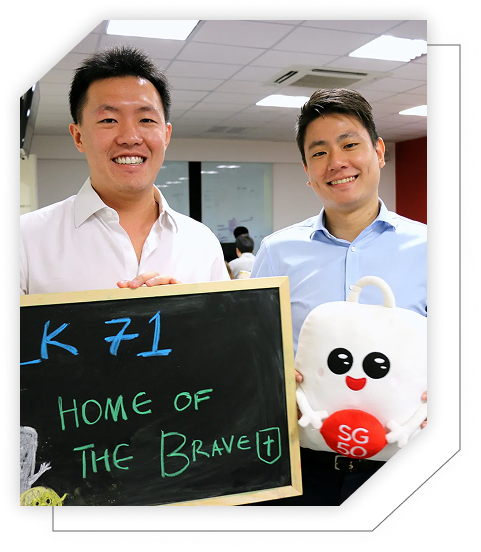
BLOCK71 (originally 'Plug-In @ Blk71') opened in April 2011 in Singapore's one-north innovation district, a joint initiative of NUS Enterprise, SingTel Innov8 and the former Media Development Authority of Singapore, built on land developed by state agency JTC Corporation as part of Singapore's one-north masterplan.
To anchor a dense, mixed-stakeholder startup ecosystem around National University of Singapore-affiliated entrepreneurship, spanning deep-tech, biotech, infocomm/media tech, fintech, e-commerce and healthtech.
NUS Enterprise now runs BLOCK71 as a global network across 11 cities (including Jakarta, Tokyo, Guangzhou and Ho Chi Minh City), with three Singapore facilities: The Hangar for early-stage NUS-affiliated founders, LaunchPad @ one-north for scale-ups, and a deep-tech facility at Singapore Science Park.
Over 2011-2021 the global network hosted 1,152 startups (747 at BLOCK71 Singapore), drew 933 unique investors (86% based outside Singapore), and held 4,000+ events for 250,000+ participants. Current NUS Enterprise materials cite 1,600+ startups incubated overall, 10 unicorns, and over US$2 billion raised by portfolio companies.
These figures are self-reported by NUS Enterprise/BLOCK71 with no independent audit found, and totals have varied across the organisation's own publications over time. The model is also heavily state-scaffolded — built on government-developed land with public agencies as co-founders — raising a fair question about how transferable its results are to cities without comparable public investment.
National / regional programmes
Indicative funding routes for practices of this type — always check each programme's current calls and eligibility rules.
Do you run this practice? Claim it — verified implementers get a public contact pathway and can propose corrections.
Where this practice's information was retrieved from, and when.
Documented replications and adaptations of this practice elsewhere.
| Place | When | Adopter | Outcome |
|---|---|---|---|
| Jakarta, Indonesia | — | NUS Enterprise BLOCK71 network | — |
| Tokyo, Japan | — | NUS Enterprise BLOCK71 network | — |
| Guangzhou, China | — | NUS Enterprise BLOCK71 network | — |
| Ho Chi Minh City, Vietnam | — | NUS Enterprise BLOCK71 network | — |
Spain
Madrid Futuro is an independent, non-profit entity created by the union of 100 public and private companies and institutions committed …
South Korea
South Korea's premier R&D cluster in Daejeon — 3,063 tenants, 99,715 employees, 131,644 cumulative patents and 2,057 technology transfers (INNOPOLIS …
Czechia
Publicly co-owned innovation agency in Brno, backed by the South Moravian Region, City of Brno and five universities. Since 2003 …
Switzerland
Science park attached to a technical university that has hosted 500+ deep-tech startups over three decades, with EPFL spin-offs raising …
Open full copilot Grounded in cited practices — always check the sources.