Vietnam Women's Union Savings & Credit Groups — Mass-Organisation Microfinance for Rural Women
Vietnam
Since 1992, the Vietnam Women's Union has organised village-level Savings and Credit Groups channelling collateral-free loans to rural women via …
Malawi · Lilongwe · See the Malawi profile
CARE's Village Savings and Loan Associations (VSLAs) organise rural Malawian women into self-governing groups of 20–25. An IPA RCT found women's savings rose 34%, monthly business profits grew 24%, and household decision-making control improved 4 pp — at USD 7.01 per household.
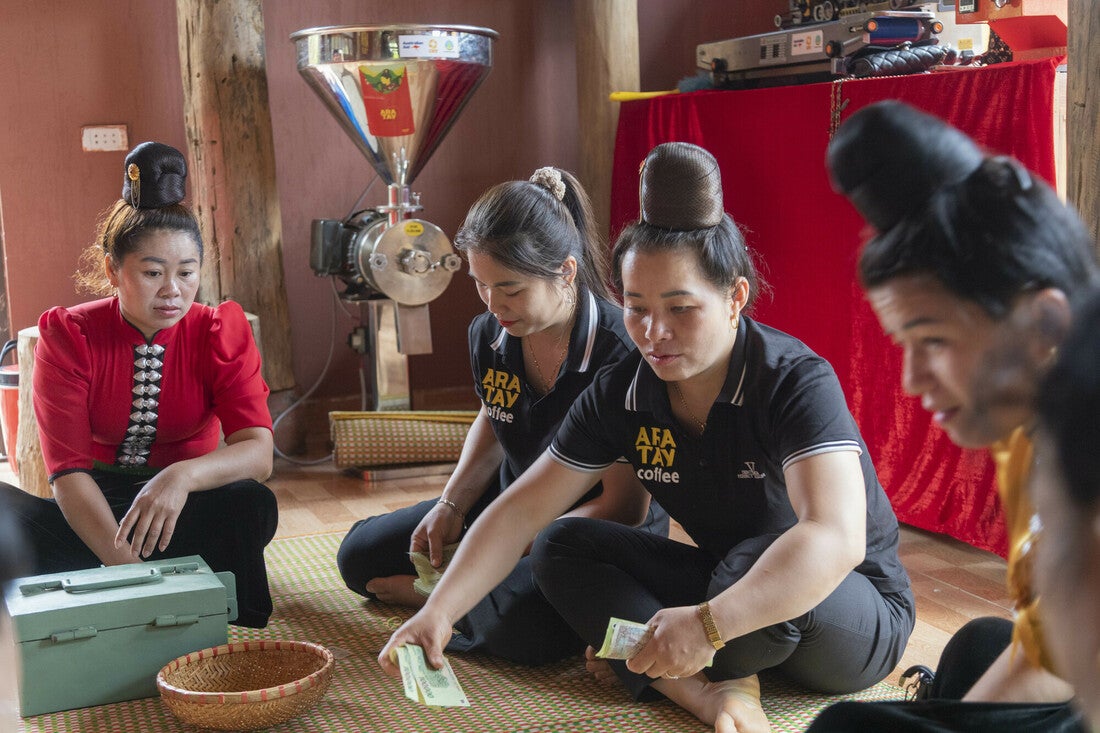
CARE International developed the Village Savings and Loan Association (VSLA) model in the 1990s as a cost-effective route to financial inclusion for rural women who cannot access formal banking. In Malawi, CARE has operated VSLAs since the early 2000s, organising women into self-governing groups of 20–25 members who pool weekly savings, issue internal loans at agreed interest, and distribute all accumulated funds at an annual share-out.
The most rigorous independent evidence comes from an Innovations for Poverty Action (IPA) randomised controlled trial spanning Ghana, Uganda, and Malawi, which tracked 15,221 rural households for 22–30 months. A separate peer-reviewed 2022 PMC study examined VSLA sustainability in Malawi specifically during the COVID-19 pandemic.
The RCT found women's savings increased by 34%, monthly business profits rose by 24%, the number of household businesses increased by 6%, and business survival improved by 9%. Programme take-up was 32%, with 61% completing a full 8–12 month savings cycle, at an average cost of USD 7.01 per household. Women recorded a 4 percentage-point improvement in high control over household business and food decisions, and 2–3 percentage-point gains in influence over education and health expenditures. Within programme clusters, 30% of households in non-targeted communities spontaneously formed their own VSLAs. The 2022 PMC study found Malawian VSLA groups remained active and continued providing income support and savings access despite COVID-19 disruption.
CARE's global VSLA network now reaches more than 7 million people across 50+ countries and has been adopted by over 40 organisations worldwide, recognised by UNCDF and the World Bank as a proven, scalable approach to women's financial inclusion.
Implementation detail (cost, timeline, staffing, conditions for success) is not yet available for this practice.
Where this practice's information was retrieved from, and when.
Vietnam
Since 1992, the Vietnam Women's Union has organised village-level Savings and Credit Groups channelling collateral-free loans to rural women via …
Jordan
Jordan's largest microfinance institution, Microfund for Women (MFW), has since 1994 extended 1.2 million loans worth USD 827 million across …
Rwanda
Rwanda's 2008-2013 land titling programme used low-cost, imagery-based adjudication to register nearly all land parcels, requiring both spouses' names on …
Bangladesh
Bangladesh's FSSAP (1994) provides conditional stipends and fee waivers to rural girls in secondary school. It supported 2 million+ girls …
Open full copilot Grounded in cited practices — always check the sources.