GuateCarbon — Community REDD+ in the Maya Biosphere Reserve (Guatemala)
Guatemala
VCS/CCB-certified REDD+ project covering 660,000 ha in Petén's Maya Biosphere Reserve; 12 community concessions managed by ACOFOP and CONAP project …
Nepal · Bharatpur · See the Nepal profile
Nepal's first REDD+ pilot paid 112 community forest user groups across three watersheds (Dolakha, Chitwan, Gorkha) via new Forest Carbon Trust Funds — $285,000 distributed 2010-2013 to 16,000+ households, 60% of it weighted toward social-equity criteria.
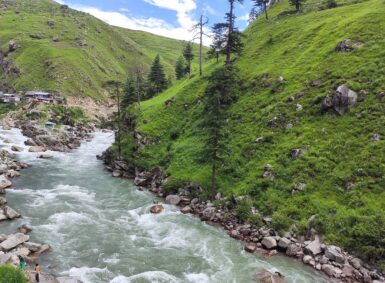
Between 2009 and 2013, ANSAB, ICIMOD and FECOFUN piloted Nepal's first sub-national REDD+ payment scheme with 112 community forest user groups across three watersheds — Charnawati (Dolakha district, 5,996 ha), Kayarkhola (Chitwan district, 2,382 ha) and Ludikhola (Gorkha district, 1,888 ha) — covering over 10,000 hectares and reaching more than 16,000 households and roughly 89,000 forest-dependent people. Funded by a $100,000 seed grant from Norway's development agency (Norad), the pilot established Nepal's first Forest Carbon Trust Funds, nested institutions with district monitoring committees and a central advisory committee overseeing disbursement.
Communities measured their own carbon stocks: local forest user groups were trained to run annual inventories across 570 permanent plots, following IPCC 2006 methodology and covering above- and below-ground biomass, litter and soil carbon. Between 2010 and 2013 the three watersheds registered a combined carbon dioxide saving of 343,339 tonnes, with annual increments averaging 2.62-3.53 tonnes per hectare. The trust funds disbursed $285,000 in total over the three years — $95,000 in the final year alone (Dolakha $45,535, Gorkha $27,560, Chitwan $21,905) — using a formula that weighted only 40% to measured carbon performance (24% stock, 16% enhancement) and 60% to social-equity criteria: indigenous populations (10%), Dalit households (15%), women (15%) and poor households (20%).
A 2014 peer-reviewed case study in the journal Forests, which evaluated the pilot, flagged an unresolved "additionality" question — the community forests were already gaining carbon before the project began — and cautioned that payment-based incentives of this kind work only where payments exceed communities' additional management costs, meaning long-term viability depends on sustained donor or carbon-market financing rather than on the pilot's structure alone. A separate peer-reviewed impact assessment published in Environmental Research Letters (2020) similarly characterised the pilot's measured impact as incremental rather than transformative. The pilot nonetheless demonstrated that Nepal's community forestry system, which already manages roughly a third of the country's forests, can administer performance- and equity-based carbon payments transparently down to the household level, a model since referenced in Nepal's national REDD+ readiness process.
Read the full analysis: https://ansab.org.np/news/the-first-forest-carbon-trust-fund-in-nepal-helps-communities-benefit-from-forest-conservation-and-sustainable-use/
Implementation detail (cost, timeline, staffing, conditions for success) is not yet available for this practice.
Where this practice's information was retrieved from, and when.
Guatemala
VCS/CCB-certified REDD+ project covering 660,000 ha in Petén's Maya Biosphere Reserve; 12 community concessions managed by ACOFOP and CONAP project …
Tanzania
Plan Vivo-verified REDD+ project protecting 110,500 ha of Hadza and Datoga community land in northern Tanzania, avoiding a cumulative 652,082 …
Kenya
Since 2013, Mikoko Pamoja has conserved 117 ha of mangrove in Gazi Bay, Kenya, the world's first community mangrove-carbon project. …
New Zealand
Since 2008, the Rowallan Alton Māori Incorporation has kept 738 ha of temperate rainforest near Fiordland National Park standing, financed …
Open full copilot Grounded in cited practices — always check the sources.