Bouche du Roy Blue Carbon Mangrove Restoration — Community-Led Coastal PES in the Mono Delta
Benin
Since 2014, Eco-Benin and partners have restored mangroves across the ~9,678 ha Bouche du Roy reserve on the Benin-Togo border; …
Kenya · Gazi · See the Kenya profile
Evidence: Observational / pre–post Top 27% 53/100 · Ask Evidence Copilot about this practice
Since 2013, Mikoko Pamoja has conserved 117 ha of mangrove in Gazi Bay, Kenya, the world's first community mangrove-carbon project. Plan Vivo-certified credits generated 18,052 tCO2e (2014-2023) and US$143,976 in community payments funding water, schools and forest guards.
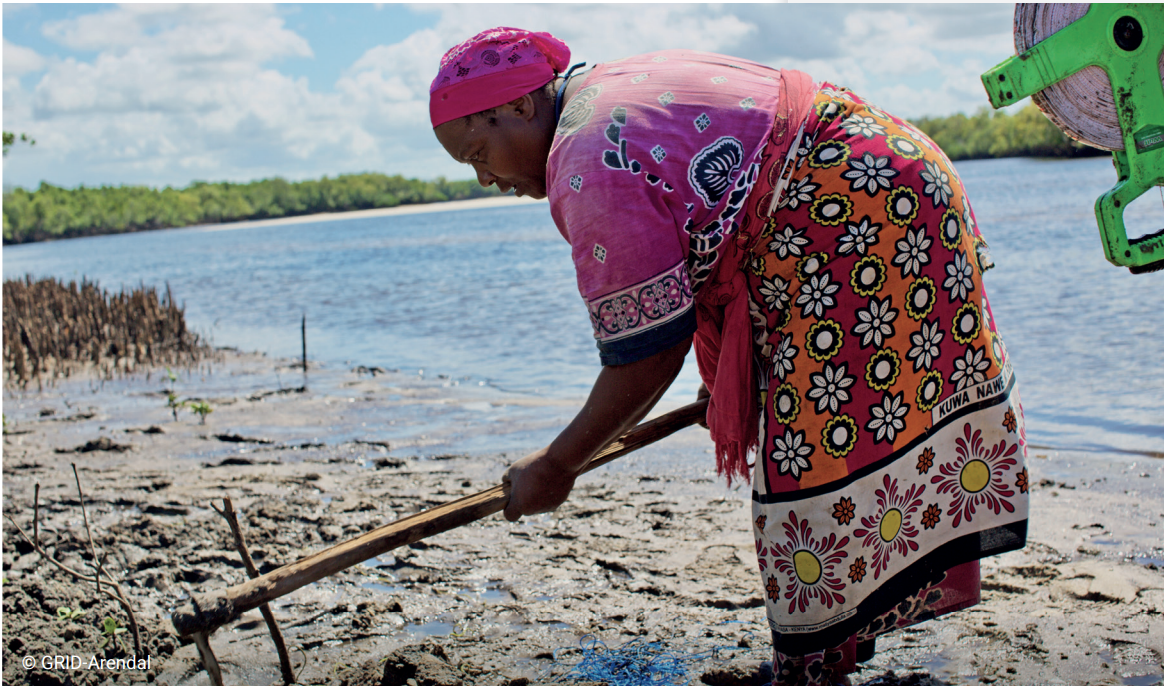
Gazi Bay, on Kenya's southern coast in Kwale County, is home to Mikoko Pamoja ('mangroves together' in Swahili), the world's first community-run mangrove carbon project, launched in 2013. It was established by the Kenya Marine and Fisheries Research Institute (KMFRI) together with the Association for Coastal Ecosystem Services (ACES), WWF Kenya, UNDP and the villages of Gazi and Makongeni. The project responds to decades of unregulated cutting of mangrove for building poles and firewood that had degraded the forest. Governance rests with the locally elected Mikoko Pamoja Community Organisation (MPCO), with technical oversight from ACES.
The project aims to conserve and restore degraded mangrove forest in Gazi Bay while generating independently certified carbon credits under the Plan Vivo Standard. Revenue from credit sales is intended to fund community services and livelihoods, replacing the incentive to cut mangrove for building poles and firewood. A further aim is to demonstrate a replicable, community-led model of blue carbon management.
The project protects 117 hectares of natural mangrove and plants thousands of seedlings a year on cleared plots. Illegal logging is monitored by community forest scouts who count cut stumps, with women prioritised for management roles. Emission reductions are certified under the Plan Vivo Standard and sold as Plan Vivo Certificates, with revenue managed by MPCO for community projects such as water supply, schools, beekeeping and woodlots.
Between 2014 and 2023 the project generated 18,052 tonnes of verified CO2e emission reductions, sold as Plan Vivo Certificates, and cumulative community payments reached US$143,976 over the same period. Revenue has funded a piped water supply for over 3,500 households, textbooks and furniture for local schools, and beekeeping and woodlot livelihoods, alongside community forest scouts who patrol against illegal cutting. The project won the UNDP Equator Prize in 2017.
While the carbon accounting is independently certified under the Plan Vivo Standard, no peer-reviewed biodiversity survey or hydrological monitoring has been published for the site. As a result, co-benefits beyond carbon sequestration and community income - such as biodiversity or water/soil impacts - remain descriptive rather than independently measured.
Philanthropic / foundation funding
Indicative funding routes for practices of this type — always check each programme's current calls and eligibility rules.
Do you run this practice? Claim it — verified implementers get a public contact pathway and can propose corrections.
Where this practice's information was retrieved from, and when.
Benin
Since 2014, Eco-Benin and partners have restored mangroves across the ~9,678 ha Bouche du Roy reserve on the Benin-Togo border; …
Mauritius
Mauritius's Odysseo Foundation restores mangroves and runs the Indian Ocean's first seagrass nursery at Le Morne; a 2026 peer-reviewed chronosequence …
Senegal
Since 2008, Océanium and the Livelihoods Carbon Fund replanted 79 million mangroves on 10,000+ hectares in Senegal; a 2020 peer-reviewed …
Ethiopia
Plan Vivo- and Gold Standard-certified dryland restoration in Tigray, Ethiopia: landless and smallholder farmers have restored 30,000+ ha since 2016, …
Open full copilot Grounded in cited practices — always check the sources.