BongoHive — Zambia's First Technology & Innovation Hub
Zambia
Zambia's first tech hub, founded in 2011, had aided ~1,300 startups and channelled $2m+ by 2020 (TechCabal); by 2026 it …
Niger · Niamey · See the Niger profile · See the Niamey profile
Evidence: Descriptive / self-reported Top 89% 48/100 · Ask Evidence Copilot about this practice
Founded in Niamey in 2014 as a public-private partnership, CIPMEN incubates small firms in environment, agribusiness and green energy; by 2023 it had supported 222 companies and trained over 7,901 people, backed by Niger's government, the World Bank and AFD.
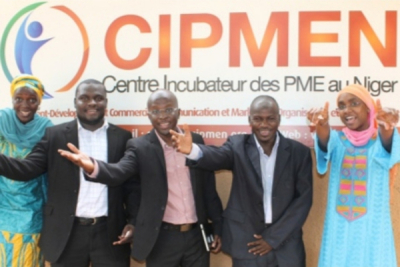
CIPMEN (Centre Incubateur des PME au Niger) was founded in Niamey in April 2014 as a public-private business incubator focused on small and medium enterprises in environment, renewable energy, agribusiness and, later, ICT and fintech.
CIPMEN aims to incubate and train SMEs in Sahel-relevant sectors and to build a wider regional incubation network.
The incubator runs recurring programmes such as the Café Numérique fintech forum, the Hack the Goals Niger hackathon, the eTakara.ne digital competition and the CODELOCCOL coding academy, with notable graduate companies including AgriPart, Tout Azimut, City Links and Niger Digital.
An early account from 2017 reported that CIPMEN had accompanied nearly 600 enterprises, trained more than 1,000 people, and that its supported companies had cumulatively generated about 700 million CFA francs in revenue, with backers at the time including Orange, the Sinergi fund, Bolloré, Total, Veolia and Bank of Africa. A later profile from 2023 described a narrower, more formal incubation track record -- 222 companies incubated and over 7,901 people trained through more than 30 events -- with backers by then including the government of Niger, the World Bank, the French Development Agency (AFD) and TotalEnergies.
The two independent accounts use different, seemingly incompatible counting methods for 'enterprises supported' (600 vs 222), most likely reflecting a narrower definition of formal incubation in the later report rather than a decline in activity; no independent audit reconciling the two was identified, so figures are reported here as self- and media-reported rather than externally verified.
Do you run this practice? Claim it — verified implementers get a public contact pathway and can propose corrections.
Where this practice's information was retrieved from, and when.
Zambia
Zambia's first tech hub, founded in 2011, had aided ~1,300 startups and channelled $2m+ by 2020 (TechCabal); by 2026 it …
Réunion
Since 2003, Réunion's public-private Technopole incubator has evaluated roughly 30 projects a year, incubating 83 in total, of which 51 …
Burkina Faso
Burkina Faso and the African Development Bank launched the third phase of a €13.62m rural incubator (PADEJ-MR) in July 2025, …
Mozambique
Since 2010, Maputo's ideiaLab has trained 1,000+ entrepreneurs a year and built a 25,700-member community. Its 2019 impact report found …
Open full copilot Grounded in cited practices — always check the sources.