Maria 01 — Helsinki's Former Hospital Turned Public-Nonprofit Startup Campus
Finland
Helsinki converted its oldest hospital campus, closed 2014, into Maria 01, a non-profit startup hub co-owned by the city; by …
Panama · Panama City · See the Panama profile · See the Panama City profile
Evidence: Observational / pre–post Top 50% 67/100 · Ask Evidence Copilot about this practice
Panama converted the former US Fort Clayton base into a 120-hectare innovation district. A 2024 economic-impact study found 260+ resident organisations, 11,378 jobs and roughly $314M in annual value-added, plus 300+ startups incubated in five years.
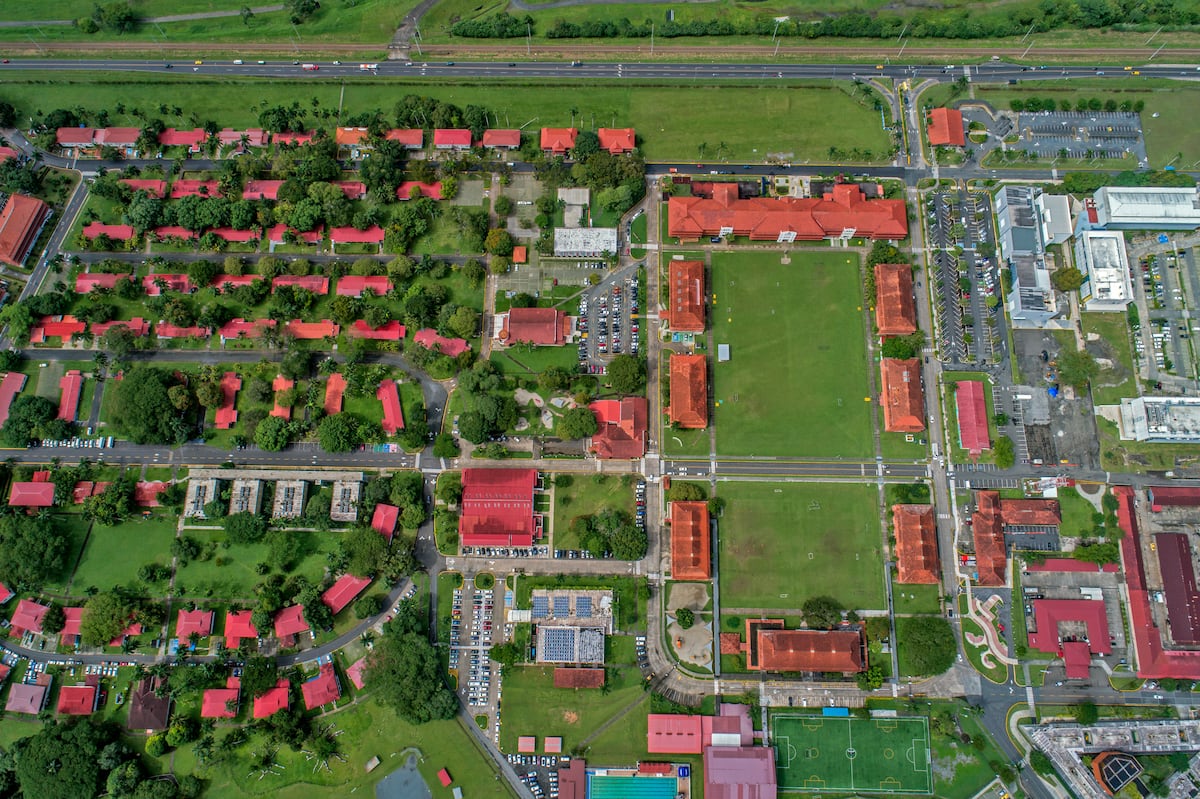
Ciudad del Saber (City of Knowledge) was created under Panama's Decree Law No. 6 of 10 February 1998, which transferred 120 hectares of the former US Fort Clayton military base to the newly formed Fundacion Ciudad del Saber following the formal handover on 30 November 1999. The private non-profit foundation operates under a renewable government contract carrying a special tax regime (exemptions from import duties, sales tax and property tax), most recently extended through 31 December 2027.
The foundation hosts UN agencies, NGOs, universities and private companies on the former base and runs incubation and acceleration programmes for startups, alongside entrepreneurship training aimed at broad participation including women.
A 2024 Ipsos economic-impact study found the district hosting 260+ resident organisations generating 11,378 direct jobs and roughly B/.314 million (~US$314M) in annual value-added to Panama's economy. Its incubation and acceleration programmes produced 300+ startups over the preceding five years, generating more than B/.21 million in combined revenue (24 going on to raise seed capital), while training 13,000+ entrepreneurs and 8,000+ women. A separate 2025 investment-platform summary gives lower snapshot counts (248 organisations, roughly 8,000 employees), likely reflecting a different measurement date or methodology.
The district's fiscal-exemption regime has drawn periodic domestic debate over alignment with international tax-transparency standards even as its operating contract keeps being renewed, but the Ipsos-measured scale of jobs and value-added makes this one of the better-evidenced innovation-district conversions in the corpus.
National / regional programmes
Indicative funding routes for practices of this type — always check each programme's current calls and eligibility rules.
Do you run this practice? Claim it — verified implementers get a public contact pathway and can propose corrections.
Where this practice's information was retrieved from, and when.
Finland
Helsinki converted its oldest hospital campus, closed 2014, into Maria 01, a non-profit startup hub co-owned by the city; by …
Spain
Barcelona rezoned 200 hectares of derelict Poblenou industry into 22@, now home to over 8,000 companies and 90,000+ jobs — …
Panama
A former U.S. Canal Zone military base became a Panamanian innovation district that in 2024 hosted 34 international organisations and …
Rwanda
60-ha pan-African innovation district in Kigali's Special Economic Zone (PPP: Africa50 + Rwanda Development Board). Carnegie Mellon Africa and Africa …
Open full copilot Grounded in cited practices — always check the sources.