Leuven 2030 — quadruple-helix climate-neutral city experiment
Belgium
City-wide non-profit (founded 2013) steering Leuven toward climate neutrality via a quadruple-helix model of government, knowledge institutions, companies and citizens. …
Sweden · Malmö · See the Sweden profile · See the Malmö profile
Top 74% 57/100 · Ask Evidence Copilot about this practice
Malmö's 14-member independent commission (2010–13), modelled on WHO's social-determinants commission, issued 24 goals and 72 actions. A 2019 evaluation found its social-investment idea took root in city organisation; health-gap impact cannot be attributed.
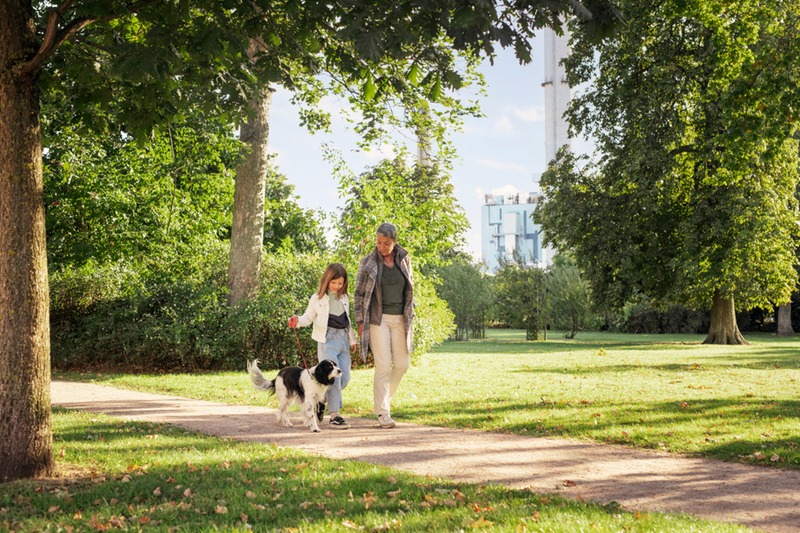
In 2010 Malmö's City Executive Board set up the Commission for a Socially Sustainable Malmö, chaired by Professor Emeritus Sven-Olof Isacsson, with fourteen independent commissioners from social science, health economics and urban studies. It was inspired by the WHO Commission on Social Determinants of Health. The city's own page notes that people in some parts of Malmö live almost seven years longer than people in others.
The commission reported in March 2013 with two overarching recommendations — a social-investment perspective to reduce inequities in living conditions, and more democratic city processes through 'knowledge alliances' — plus 24 goals and 72 actions. Its three priority areas were growing-up conditions for children and young people, democracy and influence, and social and economic conditions. In March 2014 the City Executive Board decided how to continue, drawing on the City Office's assessment and comments from about 70 consultation bodies; follow-up reports were published for 2015, 2016 and 2017.
Evidence is mixed and the sources are candid about it. A 2024 article in Socialmedicinsk tidskrift (Östergren & Balkfors) reports that an external evaluation in 2019 and a follow-up conference in 2023 indicated that the overarching recommendations, especially the first, had gained a durable foothold in the city organisation, and several concrete proposals had been implemented, although the Commission's own role was partly unclear. Health inequality showed a better trend than the national average over the follow-up period, but the authors state that the Commission's contribution cannot be reliably shown because many other factors are involved.
Lesson for other cities: a commission can change how a municipality frames and organises equity work, but should build in measurable baselines and attribution designs from the start if health outcomes are to be claimed.
Read the full analysis: https://malmo.se/Welcome-to-Malmo/Sustainable-Malmo/Commission-for-a-Socially-Sustainable-Malmo.html
Implementation detail (cost, timeline, staffing, conditions for success) is not yet available for this practice.
Do you run this practice? Claim it — verified implementers get a public contact pathway and can propose corrections.
Where this practice's information was retrieved from, and when.
Belgium
City-wide non-profit (founded 2013) steering Leuven toward climate neutrality via a quadruple-helix model of government, knowledge institutions, companies and citizens. …
Spain
Barcelona City Council built the open-source platform Decidim to run participatory budgeting and planning; its 2016 strategic-plan process drew 40,000+ …
Brazil
Porto Alegre's 1989 invention of neighbourhood budget assemblies raised sewer/water coverage from 75% to 98% of households by 1997 and …
Greece
City of Athens platform (since 2013) that maps and supports citizen-led initiatives, connecting community groups with city services, NGOs and …
Open full copilot Grounded in cited practices — always check the sources.