UK Peatland Code
United Kingdom
The UK's quality-assurance standard for peatland restoration: it issues verified carbon units for rewetting degraded peat, delivering bundled carbon, water …
Congo (the Democratic Republic of the) · Mbandaka · See the Congo (the Democratic Republic of the) profile
Evidence: Descriptive / self-reported Top 27% 53/100 · Ask Evidence Copilot about this practice
IKI-funded governance programme (2022-2027) for the Cuvette Centrale, the world's largest tropical peatland (145,500 km2, ~30.6 Gt carbon, Nature 2017), building cross-sectoral platforms, hydrological monitoring and FPIC-based community engagement in DRC and Congo-Brazzaville.
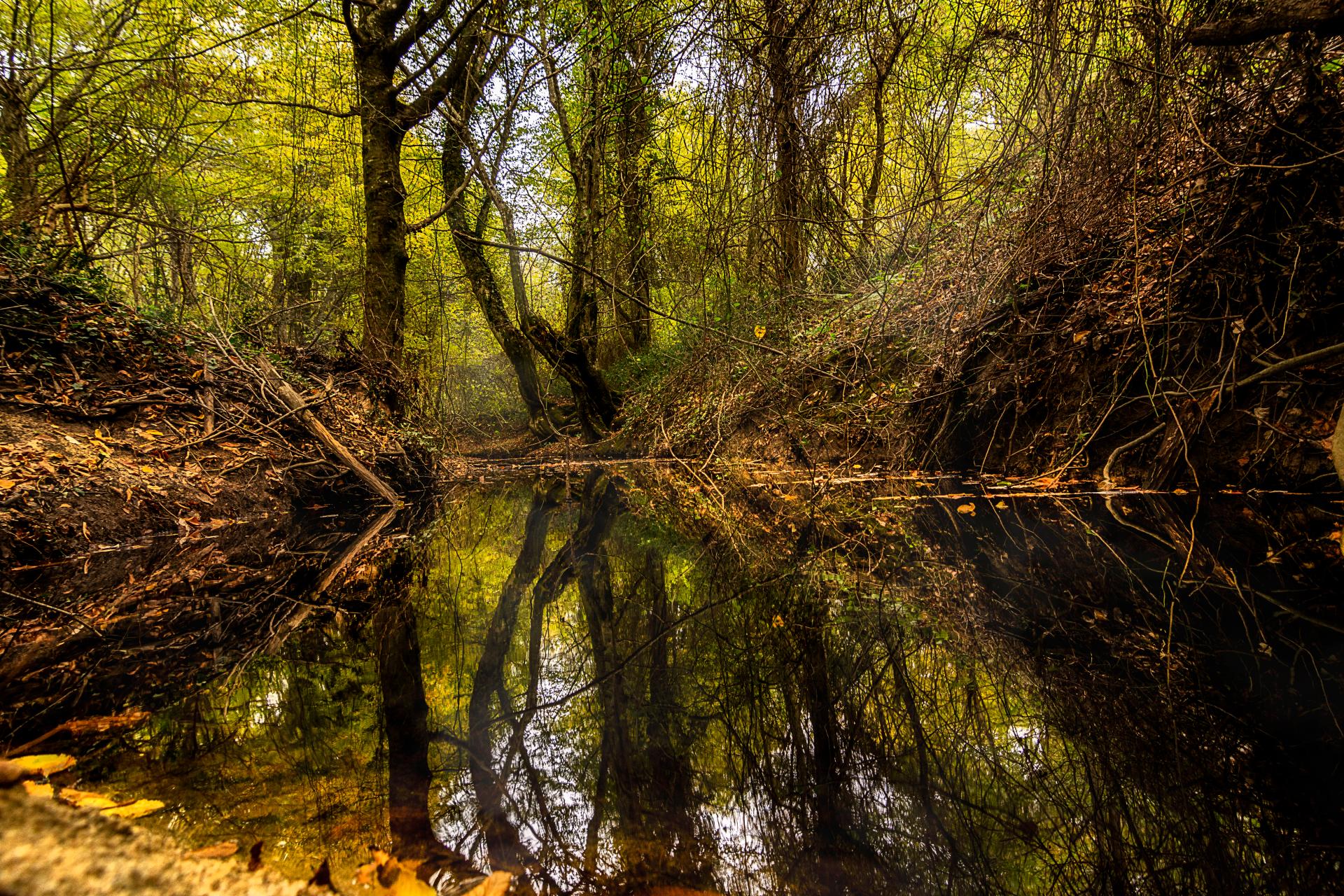
The Cuvette Centrale, spanning the Democratic Republic of Congo (DRC) and the Republic of Congo (RoC), is the world's most extensive tropical peatland complex. A 2017 Nature study (Dargie et al.) mapped roughly 145,500 km² of peat storing an estimated 30.6 billion tonnes of carbon. Since January 2022, the IKI-funded Congo Basin Peatlands project, implemented by FAO and UNEP/GRID-Geneva with national ministries, has worked to build the governance and evidence base needed to protect this carbon store around the Lac Télé-Lac Tumba landscape.
To build cross-sectoral governance structures, hydrological and land-use monitoring capacity, and FPIC-based community engagement to protect the Cuvette Centrale's peatland carbon store in both DRC and the Republic of Congo.
The programme established eleven cross-sectoral coordination platforms, formalised National Advisory Committees in both countries, and set up Scientific Task Forces to guide hydrological and land-use monitoring, including water-table modelling. It has also trained community members in DRC and RoC in practices such as improved rice cultivation, cocoa, beekeeping and fisheries intended to reduce pressure on peat forest, under a stated Free, Prior and Informed Consent (FPIC) process.
Water-table modelling in project sites recorded depths of 0.5-1.2 metres, a proxy tracked because peat dries and releases carbon when tables drop. Community engagement is reported as over 1,700 people involved (including 649 women), 120 stakeholders active across coordination platforms, and more than 2,000 farmers trained in DRC and 250 producers trained in RoC.
Independent scientists caution that the underlying carbon-stock estimate still rests on very sparse field data — only two 20-30 km transects have been surveyed across the entire Congo Basin — so monitoring, rather than final quantification, remains the project's core near-term achievement.
Do you run this practice? Claim it — verified implementers get a public contact pathway and can propose corrections.
Where this practice's information was retrieved from, and when.
United Kingdom
The UK's quality-assurance standard for peatland restoration: it issues verified carbon units for rewetting degraded peat, delivering bundled carbon, water …
Belarus
Belarus has rewetted 89,400 hectares of degraded peatlands since 2007—the largest UNDP-supported peatland restoration programme in Europe—cutting ~3 million tCO₂e …
Indonesia
World's largest forest-based avoided-emissions project: 157,875 ha of tropical peatland in Central Kalimantan verified at 7.5M tCO2e/yr under Verra VCS+CCB …
Estonia
Estonia's 2015–2021 LIFE Mires programme restored natural water conditions on nearly 8,000 hectares of drained peatland by closing 317km of …
Open full copilot Grounded in cited practices — always check the sources.