University of Sydney 'two-lane' assessment for the AI era
Australia
Instead of an unwinnable AI-detection arms race, Sydney redesigned assessment into two lanes — secure in-person assessment of core capability, …
Barbados · Bridgetown · See the Barbados profile · See the Bridgetown profile
Evidence: Descriptive / self-reported Top 89% 27/100 · Ask Evidence Copilot about this practice
Facing only a 36% CSEC Maths/English pass rate, CXC is launching AI-analysed low-stakes diagnostic tests for Years 7-9 in 2026, with CDB, CARICOM, OECS and UWI, to flag literacy/numeracy gaps early and trigger personalised interventions before students reach exam years.
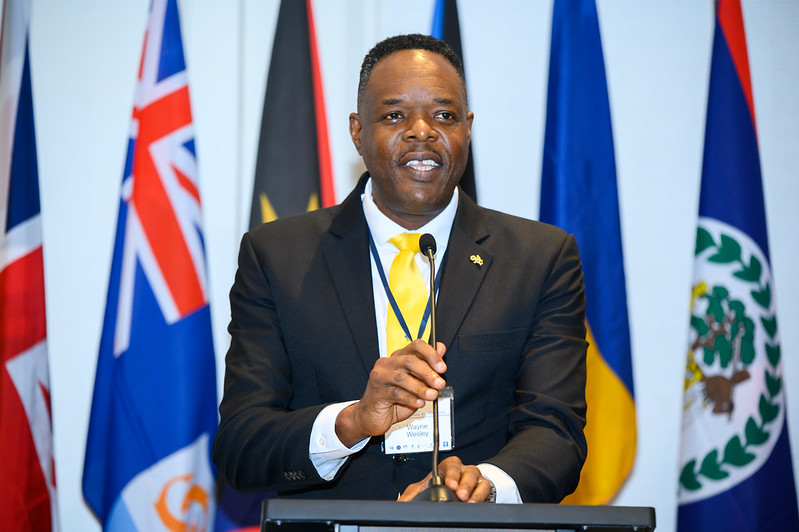
The Caribbean Examinations Council (CXC) faced a stark diagnosis: only 36% of candidates achieved acceptable grades in CSEC Mathematics in August 2024, part of a broader regional decline in numeracy and literacy. CXC announced its response — a new system of low-stakes, AI-analysed diagnostic assessments for students in Years 7-9 — at a regional digital-transformation symposium in the Cayman Islands in October 2024, alongside the Caribbean Development Bank, CARICOM Secretariat, OECS Commission, University of the West Indies and the Cayman Islands Ministry of Education.
Rather than a pass/fail exam, the planned tool will use AI to analyse each student's results and flag specific gaps — in reading comprehension or computation — so schools can design personalised, targeted interventions, with a launch set for 2026. CXC is pairing this with the Caribbean Targeted Education Certificate (CTEC), which breaks subjects into three modules so students can demonstrate progressive mastery on the way to full CSEC certification, and from 2026 will also permit supervised AI use in CAPE, CSEC and CCSLC school-based assessments.
As of the cited reports the diagnostic system had not yet launched, so there is published evidence of the problem it targets but no independent evidence yet of its effect on literacy or numeracy outcomes. World Bank education manager Andreas Blom publicly cautioned that these tools 'need to be bought, implemented and delivered' and that the region still has much to learn about using AI in assessment — a caution this record preserves rather than smooths over.
National / regional programmes
Indicative funding routes for practices of this type — always check each programme's current calls and eligibility rules.
Do you run this practice? Claim it — verified implementers get a public contact pathway and can propose corrections.
Where this practice's information was retrieved from, and when.
Australia
Instead of an unwinnable AI-detection arms race, Sydney redesigned assessment into two lanes — secure in-person assessment of core capability, …
Croatia
CARNET's ESF+-funded BrAIn project piloted Croatia's first AI curriculum in VET schools, covering responsible AI use, plagiarism and authorship crediting; …
United Kingdom
Free AI writing-feedback tool by Cambridge University Press & Assessment (Sept 2016); assigns CEFR A1–C2 levels to EFL essays and …
Brazil
Espírito Santo's public schools used the Letrus AI platform to give ENEM essay writers rapid feedback; a J-PAL randomized evaluation …
Open full copilot Grounded in cited practices — always check the sources.