Rural Digital & Financial Literacy Toolkit – Uganda
Uganda
A Hive Colab/UNCDF/NITA-U toolkit delivered by 300 trained facilitators in five local languages reached 55,000 women, youth and refugees across …
Papua New Guinea · Wewak · See the Papua New Guinea profile
Evidence: Descriptive / self-reported Top 39% 76/100 · Ask Evidence Copilot about this practice
In Wewak and Maprik, East Sepik Province, a tablet-based biometric ID pilot let village chiefs vouch for undocumented residents, enrolling 2,548 people — 47% women — and opening bank accounts on the spot without internet or electricity.
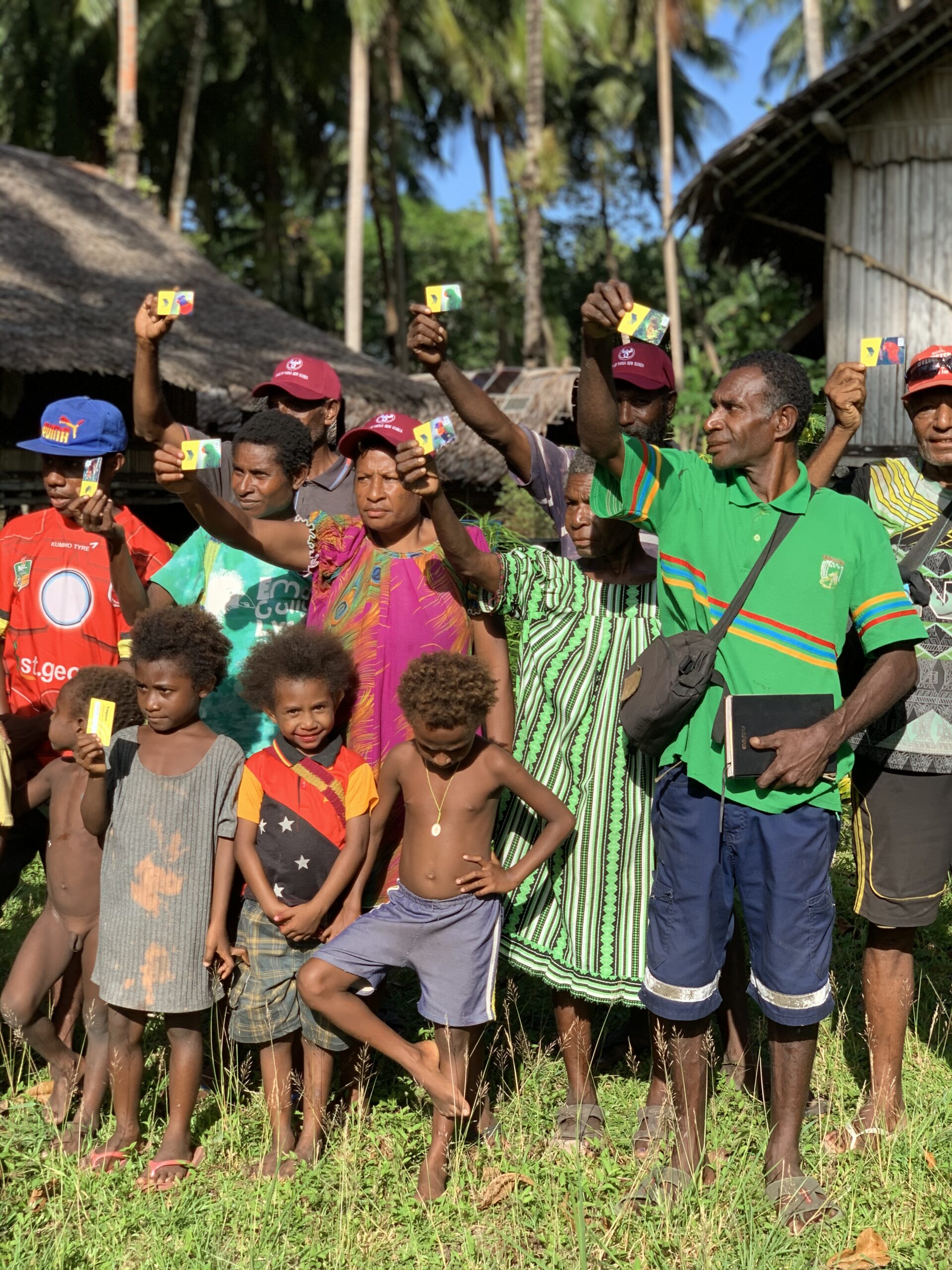
The Bank of Papua New Guinea (BPNG), working with technology provider Digizen and executing banks MiBank and Mama Bank, piloted a Digital Bank ID Card between December 2022 and March 2023 in villages around Wewak and Maprik, East Sepik Province -- an area with poor connectivity and limited electricity.
Field agents used a tablet with a camera and fingerprint reader to capture each resident's photo, fingerprints and identity details, issuing a near-field-communication (NFC) smart card on the spot. Where a person lacked official documentation, a recognised local vouching authority -- such as a village chief already holding a card and PIN -- could digitally co-sign to confirm their identity, cutting verification from months to minutes.
The pilot enrolled 2,548 subsistence farmers and small traders, 47% of them women, most of whom had never held a bank account, and enrolled residents could open bank accounts immediately. Documented institutional outputs included an electronic Know-Your-Customer (e-KYC) framework and BPNG's first regulatory sandbox in the Pacific region.
The Asian Development Bank, which backed the pilot, has not published longer-term data confirming enrollees' continued account activity beyond the trial period.
National / regional programmes
Indicative funding routes for practices of this type — always check each programme's current calls and eligibility rules.
Do you run this practice? Claim it — verified implementers get a public contact pathway and can propose corrections.
Where this practice's information was retrieved from, and when.
Uganda
A Hive Colab/UNCDF/NITA-U toolkit delivered by 300 trained facilitators in five local languages reached 55,000 women, youth and refugees across …
Kenya
Safaricom's M-Pesa turned basic phones into bank accounts across Kenya. A landmark Science study found it lifted 194,000 households out …
Togo
Togo built a fully digital, mobile-money cash-transfer system using satellite imagery and phone data to target its poorest citizens during …
Pakistan
Facing a JazzCash agent network that was 99.9% male, JazzCash iteratively redesigned onboarding around female agents and group events — …
Open full copilot Grounded in cited practices — always check the sources.