Ask Izzy — Digital Service-Finder for People Experiencing Homelessness
Australia
Ask Izzy is a free, anonymous mobile web app from Melbourne-based not-for-profit Infoxchange that helps people experiencing or at risk …
United Kingdom · Glasgow · See the United Kingdom profile
Launched in 2021 with £1.5m of Scottish Government funding, Digital Lifelines Scotland has distributed 3,044 devices and 3,845 connectivity packages to 5,502 people affected by drug use and homelessness, with impact confirmed by a peer-reviewed 2024 Harm Reduction Journal study.
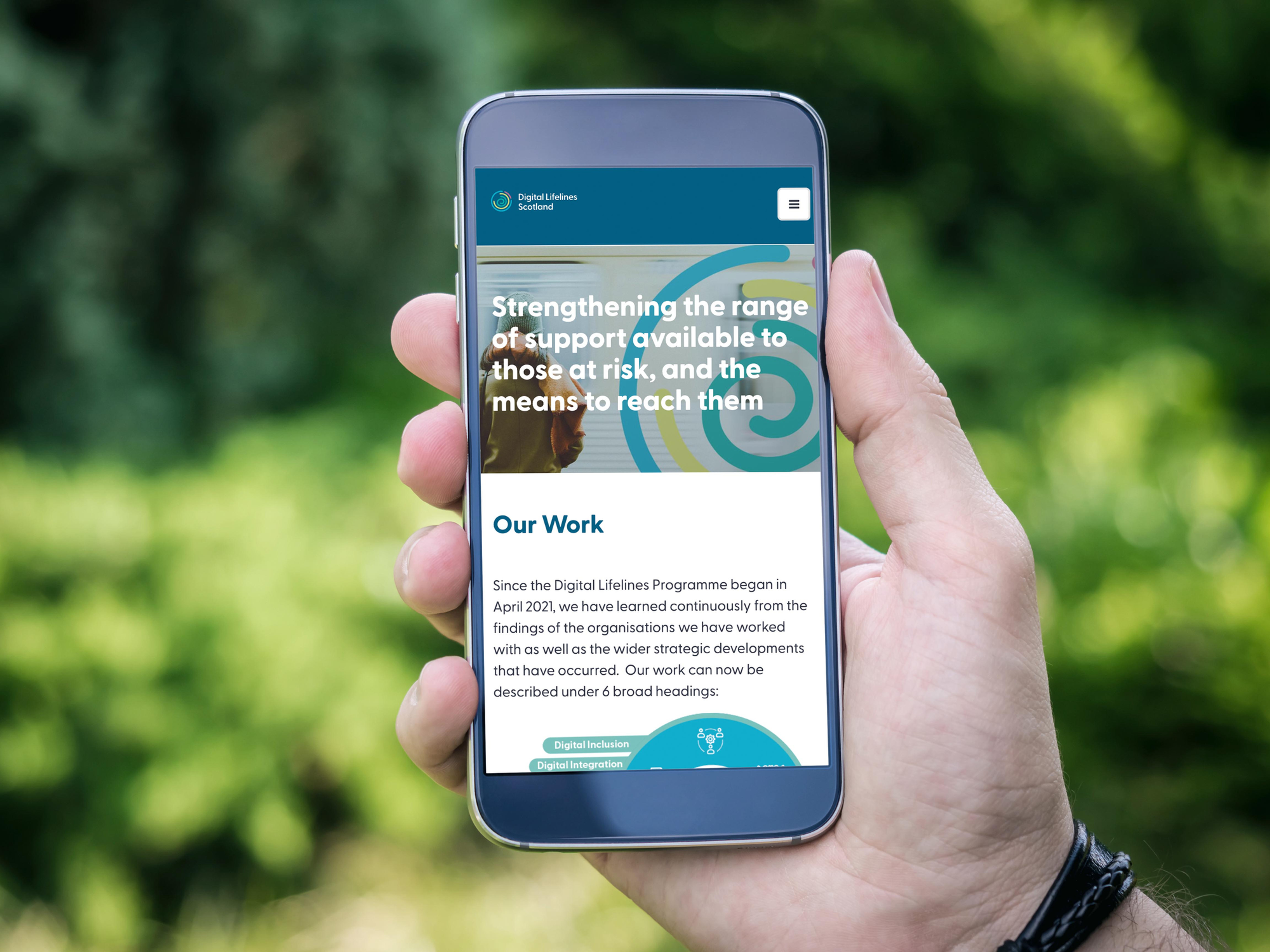
Digital Lifelines Scotland (DLS) launched in April 2021 as a Scottish Government-funded national programme, managed by the Digital Health & Care Innovation Centre (DHI) with partners including SCVO and Simon Community Scotland. It distributes smartphones, tablets, data connectivity and peer digital-skills support to people who use or have used drugs, many of whom are also affected by homelessness and social isolation, to help them stay connected to harm-reduction, health and social-care services.
Across its first phases, DLS distributed £1.5m in grants to 35 frontline organisations, reaching 5,502 people with digital access and skills support, providing 3,044 devices and 3,845 connectivity packages, and upskilling 518 staff and volunteers through 24 peer-learning sessions. A peer-reviewed 2024 study in Harm Reduction Journal, based on a survey of 19 and interviews with 21 service users, found the devices helped participants stay in touch with support services and reduce isolation, while also documenting barriers such as inconsistent charging access and device theft.
An independent 2025 evaluation likewise found a measurable positive impact, and the programme won the 2025 Holyrood Digital Health and Care Award for Digital Inclusion. Given the small evaluation sample (19 surveyed, 21 interviewed) relative to the number of people reached, findings should be read as promising service-user perceptions rather than population-level proof of harm reduction.
Implementation detail (cost, timeline, staffing, conditions for success) is not yet available for this practice.
Where this practice's information was retrieved from, and when.
Australia
Ask Izzy is a free, anonymous mobile web app from Melbourne-based not-for-profit Infoxchange that helps people experiencing or at risk …
Venezuela
Since 2000, Venezuela's government-run Infocentro network has offered free public computer and internet access nationwide, growing from a single pilot …
Germany
Since May 2020, Berlin nonprofit Neue Chance has equipped homeless people with smartphones, laptops and tablets alongside one-to-one digital coaching …
United Kingdom
The ultimate aim for St Mungo’s Recovery College is to get their clients back into employment and help them build …
Open full copilot Grounded in cited practices — always check the sources.