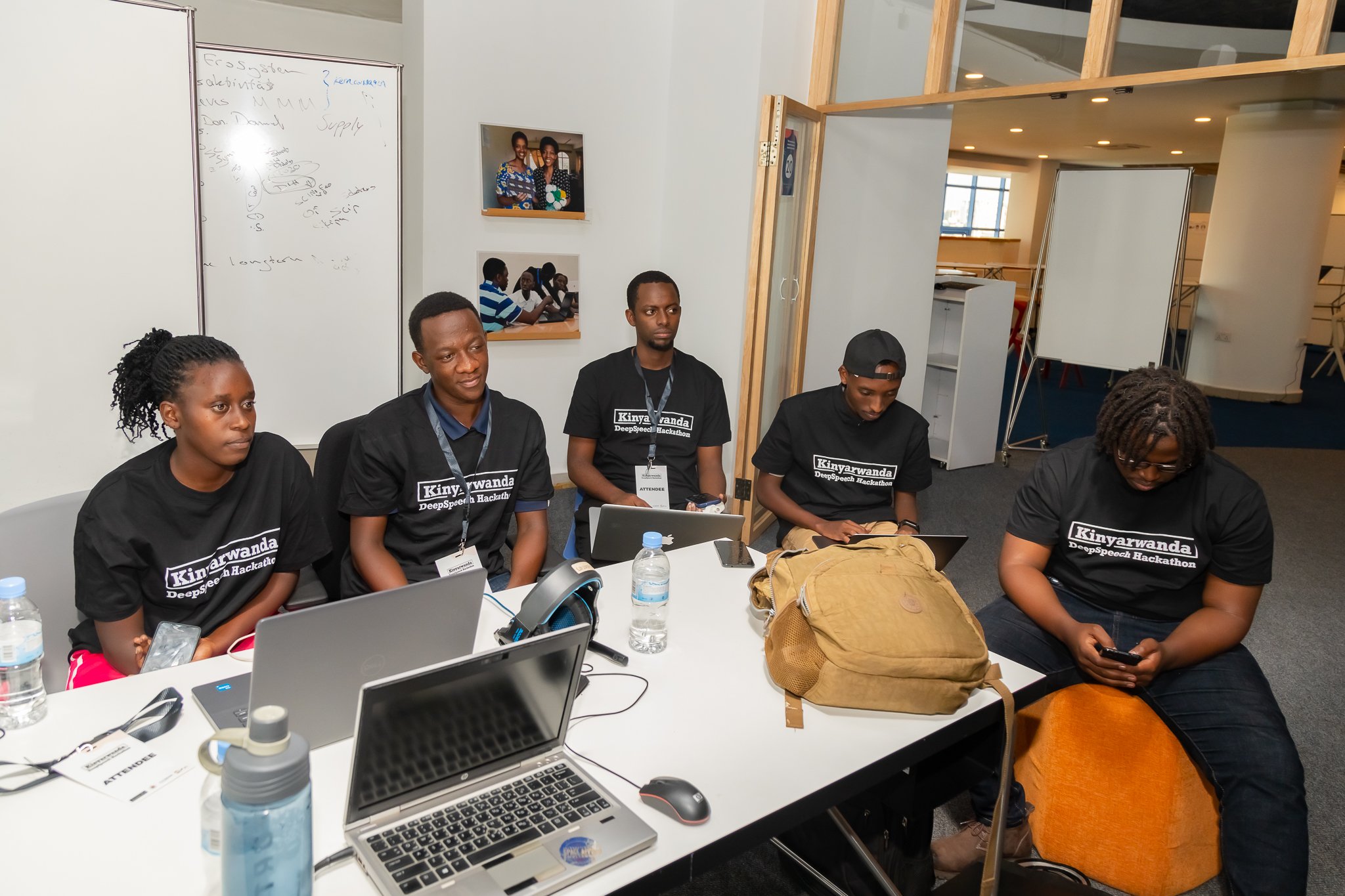
Kigali-based Digital Umuganda crowdsourced one of the largest open Kinyarwanda voice datasets (1,700+ hours from 840+ contributors) via Mozilla Common Voice, then built Mbaza, a Kinyarwanda voice chatbot that delivered COVID-19 information with GIZ.
1,700+ hours
Kinyarwanda speech hours crowdsourced (by May 2021)
840+
Contributors (by May 2021)
12,000,000+
Kinyarwanda speakers (language reach)
Details
Maturity
Established
Promoter
Digital Umuganda
Period
2019–present
Keywords
voice technology, open data, public health communication, language technology
Context
Digital Umuganda grew out of a 2019 Kigali hackathon with Mozilla, addressing the near-total absence of Kinyarwanda voice data (spoken by over 12 million people) on major speech-AI platforms, funded through Germany's 'FAIR Forward -- AI for All' programme (BMZ/GIZ).
Objectives
The project aimed to crowdsource an open Kinyarwanda speech dataset via Mozilla's Common Voice project and use it to build practical Kinyarwanda-language voice AI services.
Activities
Community recording drives grew the Kinyarwanda Common Voice dataset to more than 1,700 hours from over 840 contributors by May 2021; the team then built 'Mbaza,' a Kinyarwanda voice-and-text chatbot with GIZ delivering COVID-19 health information, and has continued developing speech-to-text infrastructure with releases through 2025.
Results
The Kinyarwanda dataset became one of Common Voice's largest non-English datasets, and Mozilla published a dedicated lessons-learned account covering challenges such as standardising Kinyarwanda orthography for transcription and balancing speaker samples by age, gender and dialect.
Conclusions
The project shows sustained, multi-year technical continuity (2019-2025) and rare documented-learning transparency, though most reach figures beyond the Mozilla-hosted dataset size are self-reported by partner organisations rather than independently audited.
Implementation
Indicative cost
Medium (€50k–€500k) — Donor-funded (GIZ/BMZ FAIR Forward) crowdsourcing campaign and AI development team; moderate ongoing cost given reuse of an open-source data platform.
Time to results
Medium (1–3 years) — From 2019 hackathon to a 1,700+ hour dataset by 2021 and continued technical releases through 2025 (6+ years).
Staffing & skills
Digital Umuganda team (CEO Audace Niyonkuru), community volunteer voice contributors (840+), GIZ/BMZ FAIR Forward technical and funding partner, Mozilla Common Voice platform team
Conditions for success
large-scale community crowdsourcing of voice recordings
donor technical-assistance funding (GIZ/BMZ)
partnership with an existing open-data platform (Mozilla Common Voice) rather than building infrastructure from scratch
attention to linguistic issues (orthography standardisation, speaker demographic balance)
Common failure modes
standardising Kinyarwanda orthography for transcription was a documented recurring difficulty
most downstream reach/impact figures are self-reported by partner organisations
Where it fits
Governance type
local tech non-profit/social enterprise with international donor partnership
Scale
national language (Kinyarwanda, 12M+ speakers)
Income level
low-income
Do you run this practice?
Claim it —
verified implementers get a public contact pathway and can propose corrections.
Data sources
Where this practice's information was retrieved from, and when.
A five-year national programme building open-source Icelandic speech recognition, synthesis, machine translation and spell-check so a ~small language stays usable …