Novissi: AI-Targeted Digital Cash Transfers and Togo's ASTRE Social Registry
Togo
Togo built a fully digital, mobile-money cash-transfer system using satellite imagery and phone data to target its poorest citizens during …
India · New Delhi · See the India profile · See the New Delhi profile
Evidence: Observational / pre–post Top 31% 84/100 · Ask Evidence Copilot about this practice
Launched in 2021, India's e-Shram portal has registered over 310 million informal workers into a national database, but independent reviews find only a fraction gain real benefits — a cautionary case on the gap between digital registration and inclusive design.
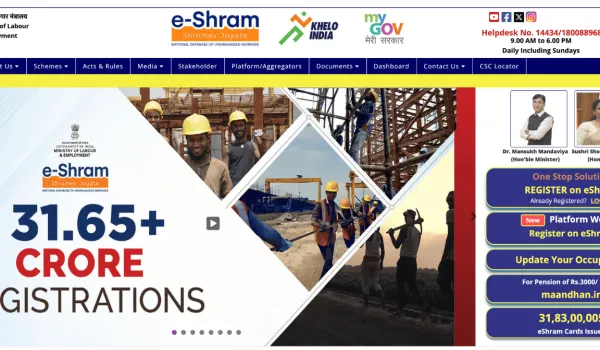
India's Ministry of Labour and Employment launched the e-Shram portal on 26 August 2021 to create the country's first unified digital registry of unorganised-sector workers — domestic workers, street vendors, construction labourers, and gig and platform workers who sit outside formal social protection. By August 2025 more than 310 million workers had registered, nominally linked to 20 welfare and employment schemes across 11 ministries.
Independent reviews (WIEGO, 2023; reporting by Scroll.in and ThePrint) found the registration interface hard for its intended users to navigate — a difficult CAPTCHA, confusing address fields, no copy-paste, and a two-step OTP flow that assumes reliable phone and network access. More than 80% of registrations are completed through paid Common Service Centre intermediaries charging roughly Rs 20-30 each. As of 2024, only about 5.1 million registrants (around 0.16% of those registered) had gone on to enrol in the flagship PM-SYM pension scheme.
e-Shram shows that at national scale, registering people in a digital database is not the same as delivering them real benefits — interface design choices and the downstream link from registration to benefit enrolment matter as much as raw reach. Civil-society groups have had to run door-to-door registration drives to close the gap the platform's own design leaves open.
National / regional programmes
Indicative funding routes for practices of this type — always check each programme's current calls and eligibility rules.
Do you run this practice? Claim it — verified implementers get a public contact pathway and can propose corrections.
Where this practice's information was retrieved from, and when.
Togo
Togo built a fully digital, mobile-money cash-transfer system using satellite imagery and phone data to target its poorest citizens during …
Kazakhstan
Kazakhstan's Ministry of Labor and Social Protection, with UNDP, built a scoring system covering 6M+ families across 120 wellbeing indicators, …
Somalia
A train-the-trainer cascade - 21 WFP partner organisations to community mobilisers - delivered two rounds of mobile-money and digital-literacy training …
India
India's Unique Disability ID (UDID) replaces fragmented paper certificates with one national digital card spanning 21 disability categories, linked to …
Open full copilot Grounded in cited practices — always check the sources.